

22 October 2025 The Hindu Editorial
What to Read in The Hindu Editorial( Topic and Syllabus wise)
Editorial 1: Turning tides
Context
Pakistan’s internal security cannot be restored through external aggression against Afghanistan.
Introduction
The Taliban’s return to power in Afghanistan (2021) marked a turning point in South Asian geopolitics. For Pakistan, it seemed a strategic success, fulfilling its long-held vision of a friendly regime in Kabul. Yet, the victory soon turned hollow, as the rise of the Tehrik-e-Taliban Pakistan (TTP) reignited cross-border militancy and exposed Pakistan’s contradictory security policies.
Background: Taliban’s Return and Pakistan’s Reaction
- When the Taliban recaptured Kabul in August 2021after two decades of insurgency, Pakistan perceived it as a tactical victory.
- Then Prime Minister Imran Khan hailed itas Afghans having “broken the shackles of slavery.”
- However, this development reinvigorated the Tehrik-e-Taliban Pakistan (TTP)— a group distinct from, but ideologically aligned with, the Afghan Taliban.
Rising Militancy within Pakistan
- Over the past four years, Khyber Pakhtunkhwaand adjoining tribal districts have witnessed a sharp rise in militant attacks.
- In 2025 alone, militancy-related violence claimed over 2,400 lives, according to an Islamabad-based think tank.
- Pakistan accuses the Afghan Taliban of providing sanctuary to the TTP, leading to growing cross-border hostilities.
Escalation: Air Strikes and Ceasefire
- On October 9, 2025, while Afghan Foreign Minister Amir Khan Muttaqiwas visiting India, Pakistan launched air strikes in Kabul, allegedly targeting TTP bases.
- These strikes triggered a week of retaliatory attacksacross the border, killing dozens on both sides.
- A fragile ceasefire, brokered by Qatar, eventually brought temporary calm.
Shifting Dynamics: From Patron to Adversary
- During the insurgency years, Pakistan sheltered and supported the Afghan Taliban, expecting loyalty in return.
- Once in power, however, the Taliban sought independent state-to-state relations, ending the old patron-client
- This transition exposed deep structural contradictionsbetween Islamabad and Kabul.
The TTP Factor and Ideological Spillover
- The Pakistani Taliban (TTP)oppose:
- The merger of tribal areaswith Khyber Pakhtunkhwa,
- The secular structureof the Pakistani state, and
- The imprisonment of their cadres.
- Inspired by the Afghan Taliban’s success, the TTP has intensified its insurgency inside Pakistan.
Key Flashpoints in Bilateral Relations
- Durand Line Dispute:
- The colonial-era boundary remains unrecognized by Kabul, leading to frequent border clashes.
- Refugee Deportations:
- Pakistan’s decision to expel thousands of Afghan refugeeshas further strained ties.
- India’s Diplomatic Outreach:
- New Delhi’s cautious engagement with the Taliban regimehas heightened Pakistan’s insecurity.
Pakistan’s “New Doctrine”
- By striking targets inside Kabul, Pakistan is setting a precedent— holding the Afghan government directly responsible for cross-border militancy.
- This approach mirrors India’s post-Uri and Balakot doctrine, which emphasized overwhelming retaliationagainst terrorism.
Strategic Miscalculations
- Pakistan’s current security turmoil is largely self-inflicted:
- It pursued a contradictory policy— combating terrorism domestically while nurturing militant proxies abroad.
- Its two-decade support for the Taliban, aimed at gaining “strategic depth”against India, has boomeranged.
Conclusion
Pakistan’s Taliban gamble has exposed the dangers of contradictory statecraft — fighting and fostering militancy simultaneously. Air strikes may display strength but cannot resolve structural insecurity. Unless Islamabad reorients its Afghan policy toward stability and cooperation, continued violence and blowback will deepen internal fractures, leaving Pakistan trapped in the very instability it once exported.
Editorial 2: Unreliable air and noise data, real-time deception
Context
When monitoring networks distort data, policy, public trust, and global credibility all weaken.
Introduction
Policy is only as strong as the credibility of the data it rests on. In recent months, two major failures in India’s environmental monitoring systems — Delhi’s Real-Time Air Pollution Network and Lucknow’s National Ambient Noise Monitoring Network — have exposed deep flaws in governance. Both initiatives were launched with much fanfare, yet their scientific shortcomings have severely undermined public trust and weakened India’s international credibility.
Unreliable Data and the Crisis of Environmental Governance
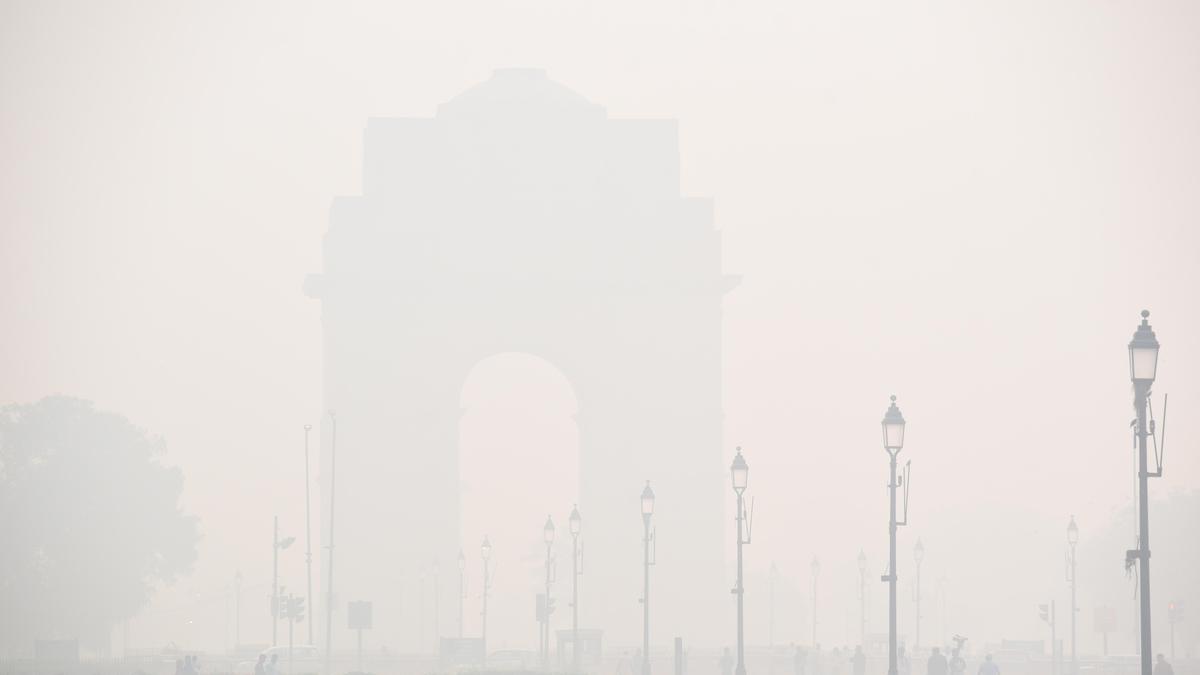
- For decades, Indian city air has been unfit to breathe, with Delhiamong the worst.
- Audits and inquiries— including a recent CAG report — expose multi-level flaws in the monitoring network.
- Sensorsare misplaced: under tree cover, behind walls, or near other obstructions, skewing readings.
- The Delhi governmenthas even proposed installing sensors in cleaner locations, risking systematic underestimation of pollution.
- Official dashboardsoften label air as “moderate” while citizens choke in toxic smog, creating a data-reality gap.
- This isn’t just a technical glitch; it is a governance failurethat erodes public trust.
- When the evidence base is unreliable, public pollution policylacks a legitimate foundation — what, exactly, can it stand on?
The importance of sound data
- Every action plan for Delhi—whether on stubble burning, vehicular limits, or industrial emissions—must rely on robust, scientifically sound data.
- If the data are distorted or unrepresentative, not only policiesbut their direction and outcomes are compromised.
- Weak monitoringundermines India’s global obligations, including the Paris Agreement and WHO Air Quality Standards.
- In Lucknow, the problem mirrors Delhi’s. In 2017, noise pollution levelsin seven Indian cities exceeded CPCB limits.
- Then Environment Minister Anil Madhav Davehad flagged serious flaws in urban noise-control policy in Parliament.
- The noise monitoring networkwas faulty — sensors failed to capture true decibel levels.
- India still follows the outdated Noise Pollution (Regulation and Control) Rules, 2000, which are below WHO norms, weakly enforced, and carry negligible penalties.
- Technology without scientific disciplinebecomes mere spectacle.
- Shiny hardware without rigourcreates opacity, where hazardous pollution levels are downplayed as “moderate.”
- In a democracy, misleading the public on health dataerodes trust and accountability.
- Flawed numbersenable policy inaction, silencing citizens’ voices seeking their right to health and life.
- In Delhi, inaccurate Air Quality Index (AQI)readings often delay judicial action.
- In Lucknow, faulty noise dataweaken fundamental rights under Articles 19 and 21.
- The Supreme Court, in a recent order, transferred noise pollution pleasnear Delhi Airport to the National Green Tribunal (NGT), recognising that such cases need expert adjudication.
- This marks a constitutional shift— noise pollution is now seen not merely as a nuisance, but as a public health and fundamental rights issue.
The missing pillars
- The CPCBhas clear guidelines on sensor location, calibration, and periodic audits, yet enforcement remains weak due to political pressure and lack of independent scientific oversight.
- It is ironicthat Class-1 quality sensors for air and noise monitoring, installed at huge public cost, lack independent review panels—unlike international standards.
- In the absence of third-party auditsand transparent systems, public trust in official data continues to erode.
- The Air Quality Life Index(Energy Policy Institute) reveals that if Delhi’s air met WHO norms, life expectancycould increase by 8.2 years; across India, pollution cuts life expectancy by nearly five years.
- Such data manipulationby agencies diverts attention from accountability and action.
- The issue is not about devices, but about public health— new studies link NO₂ and PM₂.₅ exposure to weakened lungs and accelerated myopia.
- When air quality indices misrepresent reality, children with asthmaand elderly citizens face unsafe conditions.
- Flawed monitoring systemsmean preventable harm — behind every misleading dataset lies human suffering.
Science as the foundation
- Science must anchor environmental monitoringto ensure accuracy and credibility.
- Sensorsshould be installed as per strict standards, under the supervision of independent experts.
- Raw datamust remain publicly accessible, backed by regular third-party audits for accountability.
- Establish citizen oversight mechanismsto enhance trust and transparency.
- The experiences of Delhi and Lucknowshow that monitoring cannot be a bureaucratic formality.
- Real-time systemsare valuable only when they reflect actual ground conditions.
- In an era of rapid urbanisation, authentic environmental datais vital to shape policy, inform citizens, and define India’s global standing.
- A misleading data regimeharms public health, reflected in children’s lungs and citizens’ sleepless nights.
- Scientific rigour, transparency, and public trustmust form the foundation of India’s environmental monitoring revolution.
- Without these, real-time networksrisk turning into real-time deception.
Conclusion
India’s environmental governance stands at a crossroads. Robust data integrity, scientific rigour, and transparent oversight are no longer optional — they are essential to protect public health and uphold constitutional rights. Without credible monitoring, every policy risks becoming performance without purpose. Restoring trust in data is the first step toward real, accountable, and sustainable environmental action.
