

25 December 2025 The Hindu Editorial
What to Read in The Hindu Editorial( Topic and Syllabus wise)
Editorial 1: New labour codes, the threats to informal workers
Context
Unorganised workers have largely been excluded from consideration across all the labour codes, except the one dealing with social security.
Introduction
Trade unions and workers’ organisations have consistently opposed the labour codes of 2019 and 2020. The four codes -covering industrial relations, wages, social security, and occupational health and safety– were enacted without tripartite consultation among workers, employers, and the government at the Indian Labour Conference (ILC). With their implementation now underway, many hard-won labour rights across sectors are being undermined or dismantled.
While the effects on organised sector workers are being actively discussed, debated, and documented,
the labour codes also pose serious risks to unorganised sector workers,
who constitute over 90% of India’s workforce and contribute nearly 65% of the GDP,
As Tamil Nadu considers framing rules under the Social Security Code,
it is crucial to foreground the grave threats these Codes pose specifically to unorganised workers.
Myth of Universalisation and Consolidation
The Union Government presents the labour codes as a means to consolidate existing laws and universalise social security, but these claims are misleading.
Unorganised workers are largely excluded from all codes except the one related to social security.
In the name of consolidation, several existing protections available under sector-specific laws have been weakened or repealed.
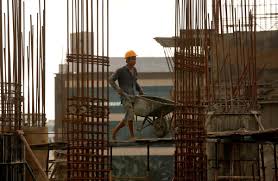
Laws such as the Building and Other Construction Workers (BOCW) Act, 1996, which provided targeted safeguards, have been undermined, leaving informal workers more vulnerable.
Erosion of Occupational Safety and Health Protections
Nearly 180 safety rules under the BOCW Act ensuring protection at construction sites are absent from the new Occupational Safety, Health and Working Conditions (OSHWC) Code.
This dilution is especially dangerous given the hazardous nature of construction work and the high incidence of workplace deaths in the sector.
The shift from physical inspections to a web-based system weakens enforcement of workplace safety and minimum wage laws, violating international labour standards.
Occupational diseases common among informal workers—such as silicosis in construction, cancer from pesticide exposure in agriculture, and chronic ailments among salt workers—are ignored under the OSHWC Code.
The absence of a comprehensive occupational health policy contradicts global norms that require identification, treatment, and rehabilitation of work-related illnesses.
With sector-specific laws repealed and ESI coverage unavailable, unorganised workers are left with no state-backed mechanism to address their health and safety concerns.
Unequal Social Security Framework
Under the Social Security (SS) Code, organised workers are provided with clearly defined social security benefits,
while informal workers are relegated to vaguely worded “welfare schemes” with no concrete guarantees.
The abolition of sector-specific cesses following GST reforms—without any effective replacement—has dismantled a key funding source for workers in beedi, salt, mining, and other informal sectors.
As a result, there are no assured funds, either through employer contributions or Union government support, dedicated to the welfare of informal workers.
Centralisation and Threat to State-Level Welfare Boards
The SS Code envisages a single welfare board for all unorganised workers, ignoring the diverse sectors in which informal labour is employed, except construction and gig work.
Even in construction, the centralised e-Shram registration system raises concerns about the Centre gaining control over accumulated welfare funds, estimated at around ₹1 lakh crore.
In Tamil Nadu, the Code threatens the dissolution of 39 existing sector-specific welfare boards that currently provide targeted protections.
There are no saving clauses to preserve these State-level boards or their benefits, such as old-age pensions, maternity support, and educational assistance for workers’ children.
This serious erosion of established welfare mechanisms, repeatedly flagged by trade unions and worker movements, explains why Tamil Nadu remains cautious and continues to delay framing rules under the SS Code.
Threat to State-Level Welfare Architecture
Some States, including Andhra Pradesh, have shut down their welfare boards following the introduction of the labour Codes.
Tamil Nadu, by contrast, has a robust workers’ welfare framework under the Tamil Nadu Manual Workers Act, 1982,
an architecture painstakingly built through sustained union struggles and worker advocacy.
The State is estimated to have around three crore informal workers,
with nearly two crore workers registered across its sector-specific welfare boards.
Conclusion
To safeguard the welfare of informal workers, the State government must protect its welfare boards and State-level labour laws at all costs. Tamil Nadu, following the example of Kerala, should refrain from implementing the labour codes or notifying rules under them. Instead, it must insist on saving clauses that preserve and protect the existing State-level welfare architecture built for workers over decades.
Editorial 2: Magnetic moment
Context
India’s clean energy transition must not compromise green compliance or environmental standards.
Introduction
Rare earth elements have emerged as strategic enablers of the clean-energy transition, linking climate ambitions, industrial policy, and geopolitics. While limited in volume, a few critical materials exert outsized influence over EVs, wind energy, and advanced manufacturing. The central policy challenge today is building resilient, affordable, and environmentally credible supply chains.
Rare earths at the crossroads of policy and geopolitics
By end-2025, rare earth elements sit at the intersection of climate goals, industrial strategy, and geopolitics
Though modest in volume, a small set of critical elements acts as gatekeepers for key clean-energy technologies
The core challenge is not demand, but building resilient and affordable supply chains
Countries must avoid repeating environmental damage and governance failures while scaling supply
Magnets as the real bottleneck
The principal constraint lies in high-performance permanent magnets, especially neodymium-iron-boron (NdFeB)
These magnets are indispensable for EV motors and wind turbines
Disruptions in this narrow segment transmit economy-wide shocks, even if other rare earths are available
Chemical refining, more than mining, determines control—keeping China central to global supply chains
India’s strategic shift towards magnet manufacturing
India’s late-2025 strategy prioritises magnet manufacturing over mining alone
The ₹7,280-crore scheme targets 6,000 tonnes of annual capacity for sintered rare-earth magnets
Domestic production can reduce high-impact import dependence
It strengthens downstream manufacturing in EVs, wind components, and advanced electronics
Structural challenges and the road ahead
India’s rare-earth source—monazite beach sands—is linked with thorium, creating strict regulatory complexity
The National Critical Mineral Mission must convert exploration data into separation and manufacturing capacity
Scaling the midstream needs bankable projects, long-term offtake commitments, and process innovation
Success hinges on translating policy intent into industrial capacity, with environmental credibility embedded
Conclusion
India’s shift from mining to magnet manufacturing reflects a sharper understanding of supply-chain power. Yet success will depend on overcoming regulatory complexity, scaling midstream capacity, and embedding environmental governance. Converting policy vision into industrial capability can reduce import dependence and strengthen strategic autonomy, but only if execution matches ambition and sustainability remains non-negotiable.
