

10 January 2026 The Hindu Editorial
What to Read in The Hindu Editorial( Topic and Syllabus wise)
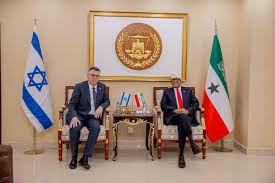
Editorial 1: Somaliland is no longer a diplomatic endnote
Context
Israel’s recognition has propelled Hargeisa into the centre of great-power competition in the Horn of Africa.
Introduction
Israel’s decision, in December 2025, to recognise Somaliland as an independent sovereign state marks a major diplomatic rupture in the Horn of Africa. Beyond the immediate diplomatic fallout, the move carries broader strategic risks: it could intensify Cold War–style proxy rivalries, provoke economic and political coercion, and further militarise an already volatile maritime corridor across the Red Sea and adjoining waters.
China’s dilemma
- Strategic stakes in the Horn of Africa
Much of the discussion has centred on Israel’s maritime strategy and the reactions of regional actors, West Asian states, and Türkiye, but the most complex strategic challenge lies with China.
For Beijing, Somaliland sits at the crossroads of three vital interests: upholding the “One China” principle, protecting the Red Sea maritime corridor, and managing intensifying great-power rivalry in Africa.
Viewed through this lens, China’s response has been largely predictable. It has condemned Israel’s move as legitimising separatism, reiterating that Somaliland is an “inseparable part” of Somalia, a position shaped above all by domestic sensitivities over Taiwan.
However, Somaliland poses a more difficult case than many contested territories. Over more than three decades, it has sustained relative stability, built functioning institutions, and conducted competitive elections, standing in sharp contrast to Somalia’s chronic insecurity.
While China rejects internal legitimacy as a sufficient basis for statehood, Somaliland’s endurance as a de facto state exposes the limits of Beijing’s rigid sovereignty doctrine.
- The Taiwan factor
China’s dilemma is sharpened further by Taiwan. In 2020, Somaliland established official ties with Taipei, directly challenging the “One China” principle.
The presence of a Taiwanese representative office in Hargeisa, along with expanding technical, medical, and economic cooperation, has made Somaliland a clear outlier in Africa.
Apart from Somaliland, only Eswatini remains diplomatically aligned with Taiwan, underscoring why Hargeisa has become a particularly sensitive flashpoint for Beijing’s foreign policy.
Strategic and economic stakes
China’s concerns extend well beyond ideology to hard geostrategic and economic interests.
The Bab el-Mandeb Strait, linking the Red Sea with the Gulf of Aden, is a vital choke point for Chinese trade and energy flows under the Maritime Silk Road.
Beijing has repeatedly characterised this route as a “jugular vein” of global commerce, underlining its centrality to China’s external trade.
China’s first overseas military base in Djibouti, established in 2017, was designed precisely to protect these interests and ensure a permanent security presence near this maritime bottleneck.
From this perspective, Israel’s recognition of Somaliland threatens to disturb a carefully managed regional balance.
Strategic dilemmas and policy options
If Somaliland gains broader international legitimacy, it could evolve into an alternative security and logistics hub along the Gulf of Aden, particularly with backing from Israel, the United Arab Emirates (UAE), and potentially the United States.
For China, the emergence of a rival intelligence and security ecosystem close to Djibouti is deeply unsettling, risking a dilution of Beijing’s leverage in a region where it has invested heavily in ports, bases, and political ties.
Beijing therefore faces a difficult trade-off: it must oppose Somaliland’s recognition and close off diplomatic space for Taiwan, yet excessive pressure could push Hargeisa closer to China’s rivals, including Taiwan, Israel, and Western powers.
Heavy-handed economic coercion or overt political interference could also damage China’s carefully cultivated image as a partner committed to non-interference.
As a result, Beijing may turn to hybrid tactics, including selective economic pressure, elite lobbying, and targeted information campaigns to shape narratives around territorial integrity and external interference.
China is also likely to rely on diplomatic leverage, particularly its position on the UN Security Council, to block any momentum toward wider international recognition of Somaliland.
Complexities of other geopolitical factors
China’s increasingly vocal pro-Palestinian position adds a further layer of complexity to its response.
By presenting itself as a champion of Palestinian rights and openly criticising Israel’s actions in Gaza, Beijing strengthens its normative opposition to Israel’s recognition of Somaliland.
This posture resonates strongly with Arab states and the Global South, reinforcing China’s image as a counterweight to Western and Israeli narratives.
At the same time, it risks drawing China deeper into Middle Eastern political rivalries, complicating its traditionally pragmatic and neutral approach to the region.
The broader geopolitical environment sharpens this dilemma even further.
Ethiopia’s 2024 memorandum of understanding to recognise Somaliland in exchange for port access, rising U.S. congressional interest in Somaliland as a democratic and strategic partner, and tacit backing from the UAE all point toward a potential geopolitical realignment.
Each additional expression of support or recognition would erode China’s capacity to diplomatically isolate Somaliland and steadily raise the strategic costs of preserving the existing status quo.
Conclusion
Ultimately, China’s challenge extends beyond blocking Somaliland’s recognition to limiting Taiwanese visibility, constraining Israeli and Western access to the Red Sea, and preventing a rival security architecture near Djibouti. Israel’s decision has forced Beijing into a delicate balance between principle and pragmatism. No longer a diplomatic footnote, Somaliland now sits at the heart of great-power competition in the Horn of Africa, exposing the limits of China’s sovereignty and security framework in an increasingly strategic region.
Editorial 2: Fearing de-dollarisation
Context
U.S. moves in the oil sector highlight its deepening anxiety over shifting global trade patterns and evolving financial structures.
Introduction
The renewed U.S. focus on oil sanctions, Russia, and Venezuela under President Donald Trump signals more than coercive geopolitics. It reflects growing unease over the petrodollar’s erosion, the rise of non-dollar energy trade, and the strategic implications of the global energy transition, especially as China reshapes energy markets and financial norms.
Trump’s Sanctions Push and Oil Politics
Legislative urgency: President Donald Trump pushed the Russia Sanctions Bill with unusual speed, seeking authority to impose tariffs up to 500% on countries purchasing Russian oil, officially to weaken Moscow’s war economy.
Venezuela context: This move followed closely after the capture of Venezuelan President Nicolás Maduro on January 3, after which Mr. Trump repeatedly highlighted Venezuela’s vast oil reserves as a key U.S. strategic interest.
Petrodollar Under Pressure
Underlying motive: The parallel focus on Russian sanctions and Venezuelan oil points less to pure geopolitical punishment and more to safeguarding the petrodollar’s dominance.
Historical backdrop: For decades, oil pricing and settlement in U.S. dollars reinforced the dollar’s central role in global finance.
Shift Away from the Dollar
Post-2014 acceleration: After sanctions following Russia’s Crimea annexation in 2014, and especially after the Ukraine invasion (2022), major consumers began bypassing the dollar.
India and China’s role: India imported large volumes of discounted Russian crude after 2022, while China purchased even more, aligning energy security with non-dollar settlement experiments.
Rise of Alternative Currencies
Yuan in energy trade: China’s growing use of the yuan in oil transactions has advanced the internationalisation of the renminbi.
Indian signals: India has reportedly paid for some Russian crude in yuan, indicating subtle but meaningful shifts in energy commerce norms.
Energy Transition and Strategic Anxiety
Changing demand: The global energy transition, especially rapid electric vehicle adoption led by China, is reshaping long-term oil demand.
“Return to oil” narrative: Mr. Trump’s rhetoric must be read against this backdrop, as China’s EV dominance challenges not only oil markets but the economic and financial structures long favouring U.S. power.
China, BRICS, and Financial Architecture
Containment logic: U.S. pressure on Venezuela and its oil-focused hard line on Moscow appear aimed more at curbing China’s expanding influence than resolving discrete geopolitical disputes.
Systemic stakes: The idea of a parallel currency arrangement within BRICS further unsettles the dollar-centric order, underscoring that the real contest is over the future architecture of global trade and finance, not just oil.
Conclusion
Ultimately, America’s aggressive oil diplomacy reveals a struggle to preserve dollar dominance amid profound change. As China, BRICS economies, and major consumers experiment with alternative currencies and new energy systems, what is at stake is not merely control over oil flows, but the future architecture of global trade and finance in a rapidly transforming world.
