

12 January 2026 Indian Express Editorial
What to Read in The Indian Express ( Topic and Syllabus wise)
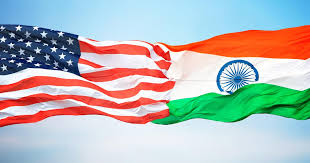
Editorial 1: India–US Relations — Beyond Optimism to Strategic Depth
Introduction
India–US relations stand at a critical juncture shaped by geopolitical flux, economic uncertainty, and evolving power equations. While both countries repeatedly express optimism about bilateral ties, but the optimism alone cannot substitute for long-term strategic planning. A mature partnership must rest on institutional mechanisms, policy predictability, and mutual sensitivity to each other’s strategic constraints.
Context and Background
Over the last two decades, India–US ties have transformed from estrangement to engagement, marked by cooperation in defence, technology, education, and people-to-people exchanges.
However, recent global developments — such as protectionist trade tendencies, reshaping of global supply chains, conflicts in Europe and West Asia, and China’s assertiveness — have added complexity to bilateral relations.
India’s growing strategic importance in the Indo-Pacific aligns with US interests, yet divergences persist on trade, immigration, climate commitments, and India’s strategic autonomy.
Key Issues Highlighted
Trade and Economic Engagement: Despite growing bilateral trade, unresolved issues such as tariffs, market access, digital taxation, and visa policies continue to create friction. While supply-chain resilience and friend-shoring offer opportunities, absence of a comprehensive trade framework limits long-term economic synergy.
Strategic and Defence Cooperation: India and the US have strengthened defence ties through foundational agreements (LEMOA, COMCASA, BECA) and joint military exercises. However, defence cooperation must evolve from buyer-seller dynamics to co-development and technology sharing, particularly in emerging domains like cyber security, space, and AI.
Strategic Autonomy vs Alignment: India’s foreign policy tradition emphasizes strategic autonomy. While the US expects closer alignment on global issues, India continues to balance ties with Russia, the Global South, and regional groupings. Managing these differences without mistrust remains a central challenge.
Domestic Reforms as Foreign Policy Enablers: The editorial implicitly links India’s internal reforms — labour laws, ease of doing business, regulatory certainty — with its external credibility. Economic resilience enhances diplomatic leverage.
Broader Analysis
India–US ties must be viewed through the prism of multi-alignment, not alliance politics.
Technology cooperation (semiconductors, clean energy, digital public infrastructure) is emerging as a new pillar.
Democratic values provide a normative glue, but transactional interests still dominate policy outcomes.
Historical experience shows that institutionalised engagement outlasts political cycles in both countries.
Challenges Ahead
Policy unpredictability due to leadership changes in the US
Trade disputes and protectionism
Divergent approaches to China and Russia
Balancing QUAD commitments with regional sensitivities
Way Forward
Establish long-term institutional frameworks beyond leadership personalities.
Conclude sector-specific trade and technology agreements.
Promote defence co-production under “Make in India”.
Enhance cooperation in climate finance and green technologies.
Maintain strategic autonomy while deepening convergence in shared interests.
Conclusion
India–US relations cannot rely on goodwill alone. Strategic patience, institutional depth, and domestic reform coherence are essential to convert mutual optimism into a stable and durable partnership. Hope must be backed by strategy.
| LEMOA
Logistics Exchange Memorandum of Agreement (2016) Allows mutual access to military bases for refuelling, repairs, and supplies. Not permanent basing—only case-by-case use. Improves operational reach and humanitarian assistance & disaster relief (HADR). COMCASA Communications Compatibility and Security Agreement (2018) Enables India to use secure, encrypted communication equipment from the US. Allows real-time sharing of high-end military data (air, sea, battlefield awareness). Enhances interoperability between Indian and US forces. BECA Basic Exchange and Cooperation Agreement (2020) Facilitates sharing of geospatial intelligence (satellite imagery, maps, navigation data). Improves accuracy of missiles, drones, and precision-guided weapons. Critical for modern warfare and surveillance. |
Editorial 2: Athlete Safety and Institutional Accountability — Lessons from NRAI’s Response
Introduction
The National Rifle Association of India’s (NRAI) prompt action in response to allegations of sexual misconduct involving a national-level coach marks a significant moment in Indian sports governance. At a time when sports bodies have often been accused of prioritising institutional reputation over athlete welfare, this episode reflects a growing shift towards accountability, ethical leadership, and athlete-centric governance.
Context and Background
Indian sports administration has historically been plagued by opacity, excessive concentration of power, and weak grievance redressal mechanisms. Several high-profile cases across different sports have exposed systemic failures in protecting athletes, particularly women and minors. Institutional inertia, delayed action, and conflict of interest have often compounded the trauma of victims.
Against this backdrop, the NRAI’s swift suspension of the accused coach, cooperation with law enforcement, and willingness to allow the legal process to take its course signal a departure from past practices. This response aligns with increasing public scrutiny, judicial expectations, and media focus on athlete safety.
Key Issues
Power asymmetry in the sports ecosystem: The athlete–coach–administrator relationship is inherently unequal. Coaches and selectors exert significant influence over training, selection, exposure, and career progression. This imbalance discourages athletes from reporting abuse and fosters a culture of silence. The NRAI case underscores how unchecked authority can be misused if not institutionally regulated.
Institutional responsibility and ethical governance: Sports federations are not merely event organisers; they are custodians of athlete welfare. Timely and transparent action reflects institutional maturity and ethical leadership. The NRAI response demonstrates that federations can act decisively without waiting for judicial compulsion or public outrage.
Legal and ethical frameworks: India possesses robust legal safeguards such as the POSH Act, 2013 and POCSO provisions. However, their implementation within sports bodies remains inconsistent. Internal Complaints Committees often exist only on paper, lack independence, or are poorly publicised. The case highlights the gap between legal intent and institutional practice.
Culture of silence and fear: Athletes frequently fear retaliation, career derailment, loss of sponsorship, and social stigma. This discourages reporting and enables repeat abuse. Institutional assurance—through immediate action, confidentiality, and victim support—is critical to breaking this culture of fear.
Broader analysis
Constitutional values: Athlete safety is integral to Article 14 (Equality), Article 21 (Right to Dignity), and principles of natural justice.
Governance perspective: Highlights the need for accountable, transparent, and responsive institutions.
Ethics dimension: Emphasises ethical leadership, duty of care, and moral responsibility of those in authority.
Global practices: International sports governance increasingly relies on independent oversight bodies, athlete commissions, and zero-tolerance policies.
National image: Ethical sports governance strengthens India’s credibility and soft power on the global sporting stage.
Challenges
Absence of independent and external oversight mechanisms
Conflict of interest within sports federations
Limited athlete representation in decision-making bodies
Weak enforcement and monitoring of existing legal safeguards
Over-reliance on ad hoc responses rather than systemic reform
Way Forward
Independent grievance redressal bodies: Mandate external, autonomous ethics and complaints committees.
Effective POSH compliance: Ensure functional, trained, and transparent Internal Complaints Committees.
Athlete charters: Clearly outline rights, safeguards, and reporting mechanisms.
Support systems: Provide psychological counselling, legal aid, and rehabilitation support to complainants.
Transparency measures: Periodic audits, public disclosures, and compliance reporting by federations.
Athlete participation: Institutionalise athlete representation in governance structures.
Conclusion
The NRAI episode demonstrates that principled and timely action is possible within Indian sports governance. However, isolated instances of responsiveness must evolve into systemic reform. Protecting athletes is not optional—it is foundational to ethical governance, sporting excellence, and the credibility of India’s sports institutions. Sustainable reform will depend on embedding accountability, transparency, and athlete welfare into the very architecture of sports administration.
| National Rifle Association of India (NRAI)
Founded: 1951 Headquarters: New Delhi Role: Apex body for shooting sports in India Affiliations: Indian Olympic Association (IOA), International Shooting Sport Federation (ISSF) Functions: Organises national shooting championships Selects Indian shooting teams for international events Regulates rifle, pistol, and shotgun disciplines |
