

23 January 2026 The Hindu Editorial
What to Read in The Hindu Editorial ( Topic and Syllabus wise)
Editorial 1: A piece of board
Context
India must resist the temptation to align itself with Trump’s peace board.
Introduction
India’s decision to skip the announcement of the Board of Peace (BoP) at Davos reflects a cautious and calibrated approach to a complex geopolitical proposal. While the initiative promises ceasefire oversight, humanitarian relief, and a pathway to a two-state solution, concerns over its mandate, representation, and potential erosion of multilateral norms have prompted New Delhi to pause. The moment calls for balancing principle, pragmatism, and strategic autonomy in a volatile regional context.
Background
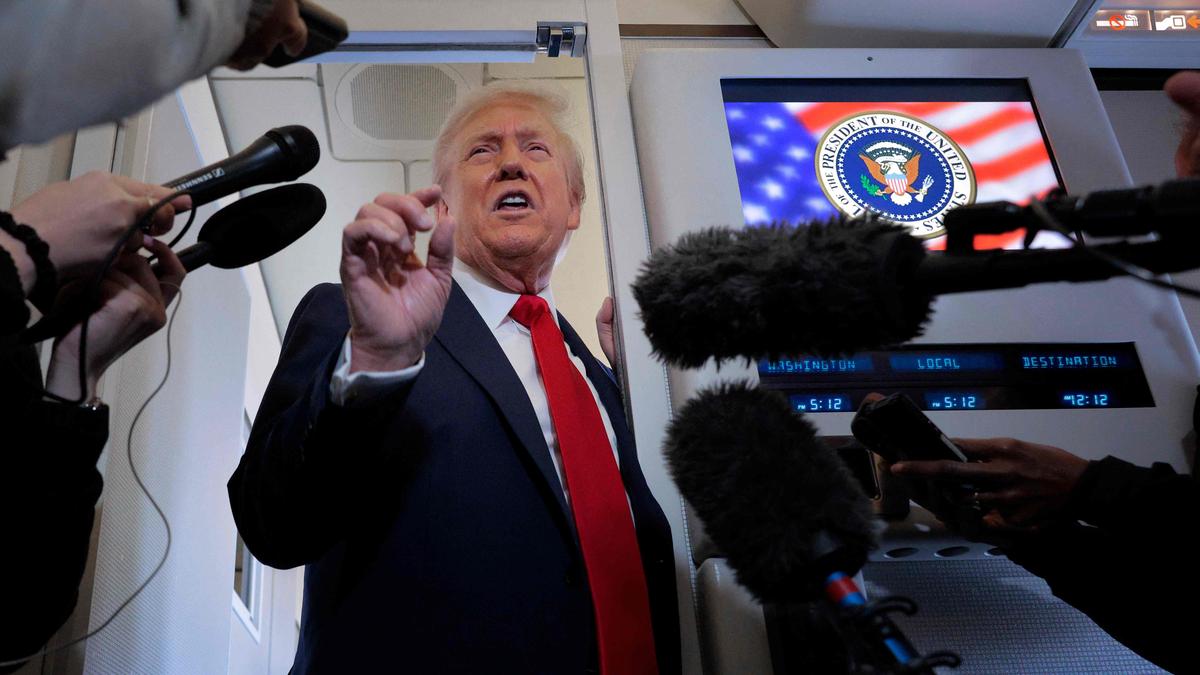
India skipped the announcement of the US President Donald Trump–led Board of Peace (BoP) charter at Davoson Thursday
The government is still deliberating on an invitation extended to Prime Minister Narendra Modi to join the Board
The Board of Peace is part of the Trump administration’s Phase 2 Gaza Peace Proposal
Purpose of the Board of Peace
Oversee security arrangements in Gaza
Coordinate humanitarian assistance
Supervise reconstruction efforts
Facilitate talks toward a two-state solution to the Israel–Palestine conflict
International Endorsement and Impact
The proposal was cleared by the UN Security Council, with Russia and China abstaining
Approval followed a ceasefire agreement between Israel and Hamas and the return of all living Israeli hostages
The plan has been welcomed for halting Israel’s bombing and ground operations
Over 70,000 Palestinians, including 20,000 children, were killed following Hamas-led terror attacks in October 2023
Why India Is Being Urged to Consider Joining
Around 20 countries have already joined the BoP
India has been a principled supporter of the Palestinian cause
India has consistently provided humanitarian assistance, including through UNRWA
Membership could allow India to directly assist Gaza’s population and aid reconstruction
Participation by UAE, Saudi Arabia, Israel, and Türkiye increases diplomatic pressure on India
Strained US–India relations and fragile trade negotiations make outright rejection risky
Concerns exist about provoking President Trump’s displeasure, as experienced by Emmanuel Macron
Why India Should Not Rush the Decision
India should not act out of fear of exclusion or fear of US retaliation
Leaked versions of the BoP charter suggest the mandate has been altered unilaterally
The latest charter reportedly does not explicitly mention Gaza
Donald Trump has appointed himself Chairman, with family and close associates on the Executive Board
The charter proposes expanding the BoP to other global conflicts, risking undermining the UN’s role
Concerns About Representation and Legitimacy
Palestinian participation is limited to technical experts, excluding Palestinian political leadership
This undermines countries like India that officially recognise Palestine
Israeli Prime Minister Netanyahu, accused of genocide by UN agencies, is included
The Palestinian President is excluded, raising questions of fairness and justice
Red Flags Specific to India
Pakistan’s decision to join the BoP is a major concern
There is a risk the BoP could take up the Kashmir issue under its peace mandate
The BoP’s two-tier membership structure, offering permanent seats for a $1 billion fee, is troubling
Membership could pressure India to contribute troops to the International Stabilization Force (ISF), a non-UN initiative
Risks of Participation
Lack of clarity in decision-making processes
Member states may become rubber stamps for arbitrary and unilateral directives
Potential endorsement of illegitimate outcomes affecting Palestinian self-determination
Recommended Approach for India
Continue consultations with international partners
Prioritise dialogue with Palestinian representatives themselves
Maintain strategic autonomy and independent judgment
Make a decision guided not only by pragmatism, but by India’s conscience and principles
Conclusion
India must resist pressure to act out of haste or fear, and instead ground its choice in legitimacy, fairness, and international law. With unanswered questions about the BoP’s structure, decision-making, and exclusion of Palestinian leadership, joining prematurely risks compromising India’s long-held positions. A decision guided by consultation, independent judgment, and moral conscience will best serve India’s global standing and commitment to a just peace.
Editorial 2: BRICS India summit needs a green and resilient agenda
Context
It is a critical necessity for the Global South, especially within an expanded BRICS framework.
Introduction
The next BRICS Summit will be hosted by India this year. Following its successful G20 presidency in 2023, India has the required infrastructure and institutional capacity in place. The key task now is to clearly define the Summit’s focus, ensuring it reflects India’s priorities, the BRICS agenda, and the urgent concerns of the Global South. Given the region’s growing climate vulnerabilities, resilience should be central, reinforcing India’s global leadership on an inclusive green agenda.
BRICS as a Balancing and Stabilising Force in a Polarised World
Need for a stabilising force
In a highly polarised global environment, collaborative multilateralism is under severe strain
Climate change cooperation has weakened, with the U.S. questioning its credibility and promoting fossil fuel expansion
The U.S. decision to withdraw from multiple international organisations, including climate-focused platforms, has deepened the vacuum
European nations, once climate leaders, now face domestic fatigue and security pressures, creating space for a new stabiliser
BRICS can step in to support collective action on sustainability and resilience
Diplomatic tightrope for India
BRICS is viewed with suspicion in Washington as anti-American and a challenge to the dollar-centric order
Given the breadth of India–U.S. relations, careful diplomacy is essential
Priorities include a viable trade deal, avoiding punitive tariffs, and managing sensitivities over Russian oil imports
India’s ability to balance interests was evident at the G20 Delhi Summit, showcasing multi-alignment, strategic autonomy, and leadership of the Global South
Climate Change as a Shared Priority
Broader developing-country coordination
The BASIC grouping (Brazil, South Africa, India, China) has been effective and remains relevant
An expanded BRICS platform brings greater weight by uniting major developing economies
This was evident in Belém, where development needs were protected while addressing fossil fuel transitions
Common climate vulnerabilities
Climate impacts affect all BRICS members, though in different forms and intensities
Risks span infrastructure, health, livelihoods, and ecosystems
Shared challenges include permafrost thaw, stress on the Amazon and Himalayas, and growing coastal and riverine vulnerabilities
Collective action on adaptation, resilience, equity, and sustainable development is in BRICS’ own interest
Leadership in global climate governance
Several BRICS countries have helped steer the climate process after the Paris Agreement
Recent climate conferences led by Brazil, Egypt, and the UAE sustained momentum post-COVID
BRICS can also respond to unilateral measures that dilute UNFCCC principles, such as carbon border mechanisms
Belém opened space for a broader climate–trade debate
Climate finance as a central outcome
The BRICS Leaders’ Framework Declaration on Climate Finance (Rio, July 2025) marked a key milestone
India has been particularly vocal in articulating the Global South’s finance demands
Engaging global financial institutions
Climate action hinges on adequate and accessible finance
There is a strong case for engaging World Bank and IMF leadership at BRICS Summits
Climate finance efforts cannot succeed without these institutions, especially amid reduced U.S. climate commitment and private capital pullback from ESG and green finance
Growing global weight of BRICS
The expanded BRICS now includes Egypt, Ethiopia, Indonesia, Iran, and the UAE
Together, they represent about half of the world’s population, around 40% of global GDP, and roughly 26% of global trade
This scale gives BRICS significant voice, leverage, and responsibility in shaping the global climate agenda
A Chance for India to Drive Change
Leadership opportunity
As BRICS chair this year, India is uniquely placed to steer collective global action
The focus can be on resilience and an inclusive green agenda that unites much of the developing world
This aligns with India’s national interests and is a critical imperative for the Global South
Geopolitical balancing
A proactive BRICS agenda allows India to balance China’s ambitions for global leadership on climate issues
It strengthens India’s role as a credible and independent voice on sustainability
Global resonance
An India-led emphasis on resilience at the BRICS Summit 2026 would find strong resonance across members
It would also align with Ethiopia’s priorities as the host of COP32 in 2027, reinforcing continuity in the global climate process
Conclusion
The BRICS Summit in India presents a timely opportunity to reposition the grouping as a stabilising force in a fragmented world. By prioritising climate resilience, equity, and sustainable development, India can align BRICS’ growing economic weight with the urgent needs of the Global South. A carefully balanced, inclusive green agenda would not only strengthen global climate governance but also reinforce India’s leadership, strategic autonomy, and credibility as a bridge between development imperatives and climate responsibility.
