

06 February 2026 Indian Express Editorial
What to Read in Indian Express Editorial ( Topic and Syllabus wise)
Article 1: Disaster Victim Identification (DVI) in India
Why in News: The National Disaster Management Authority (NDMA) has issued India’s first-ever Disaster Victim Identification (DVI) Guidelines and SOPs to ensure scientific identification and dignified handover of victims in mass fatality disasters.
Key Details
NDMA released the first national framework for systematic identification of disaster victims.
The guidelines adopt Interpol’s DVI standards, emphasising dental records, DNA, and fingerprints.
Forensic odontology and forensic archaeology are formally integrated into disaster response.
A proposal for a National Dental Data Registry has been recommended.
Disaster Victim Identification (DVI):
Definition: Disaster Victim Identification refers to the scientific process of identifying human remains following mass fatality incidents such as earthquakes, floods, air crashes, or industrial disasters.
Humanitarian and Legal Importance: Accurate identification ensures dignity of the deceased, psychological closure for families, and prevents legal disputes related to inheritance, insurance, and criminal liability.
Global Best Practice: Interpol recognises fingerprints, dental examination, and DNA profiling as the three primary identifiers in mass disasters.
UPSC Link: DVI falls under Disaster Management (GS Paper III) and links disaster response with forensic science and governance capacity.
Four-Stage DVI Process (As per NDMA Guidelines)
Stage 1 – Recovery of Human Remains: Systematic retrieval, tagging, documentation, and preservation of bodies and body fragments from disaster sites to prevent commingling.
Stage 2 – Post-Mortem Data Collection: Medico-legal examination including fingerprints, dental profiling, DNA sampling, and forensic documentation of remains.
Stage 3 – Ante-Mortem Data Collection: Collection of personal records, medical and dental history, photographs, and DNA samples from relatives and authorities.
Stage 4 – Reconciliation and Handover: Scientific matching of ante-mortem and post-mortem data, confirmation of identity, and dignified release of remains to families.
Role of Forensic Odontology: Why Teeth Matter
High Survivability of Teeth: Teeth withstand fire, trauma, and decomposition, making dental records crucial when fingerprints and facial features are destroyed.
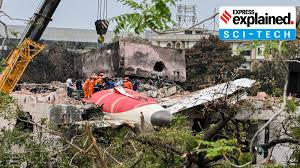
Lessons from Air India Crash (Ahmedabad): In heavily charred and commingled remains, forensic odontology alongside DNA enabled identification of over 250 victims.
Global Precedence: Dental identification has been widely used in tsunami (2004), 9/11 attacks, and aviation disasters.
Public Awareness: Experts suggest maintaining clear dental records or photographs, improving ante-mortem data availability.
National Dental Data Registry: A Strategic Proposal
Purpose: To create a central repository of ante-mortem dental records for faster and more accurate victim identification.
Governance Relevance: Enhances institutional preparedness and aligns India with global disaster response standards.
Challenges: Data privacy, standardisation of dental records, and integration with health databases must be addressed.
Long-Term Benefit: Reduces identification time, emotional distress, and misidentification risks in large-scale disasters.
Forensic Archaeology: An Emerging Tool
New Inclusion in DVI: The guidelines formally recognise forensic archaeology for locating, exhuming, and analysing buried or scattered remains.
Indian Experience: Ongoing projects in Arunachal Pradesh, Manipur, and Tripura identify WWII soldiers’ remains in collaboration with international agencies.
Disaster Utility: Especially useful in landslides, earthquakes, forested terrain, and historical mass burial sites.
Capacity Building: Highlights the need for interdisciplinary expertise in disaster response.
Gaps and Challenges in India’s DVI Framework
Institutional Coordination Deficit: Absence of a dedicated DVI Incident Commander leads to fragmented response at disaster sites.
Shortage of Skilled Professionals: India faces limited availability of forensic anthropologists, odontologists, and DNA experts, compounded by overburdened laboratories.
Operational Issues: Inconsistent tagging, weak chain of custody, and poor documentation increase misidentification risks.
Climate Change as Risk Multiplier: Increased frequency of floods, landslides, heatwaves, and cyclones complicates recovery and preservation of remains.
DVI and Disaster Governance in India
Alignment with Sendai Framework: Strengthens disaster preparedness, response efficiency, and institutional resilience.
Dignity-Centric Disaster Management: Moves beyond rescue and relief to include ethical handling of human remains.
Inter-Agency Collaboration: Integrates police, health services, forensic institutions, disaster response forces, and local administration.
Technology Integration: Encourages use of virtual autopsy, digital databases, GIS mapping, and biometric tools.
Conclusion
India’s first DVI guidelines mark a significant step towards humane, scientific, and accountable disaster management. Effective implementation requires investment in forensic infrastructure, training of specialised personnel, establishment of a National Dental Data Registry, and strong inter-agency coordination. As climate-induced disasters intensify, strengthening DVI capabilities will be crucial to uphold human dignity, legal certainty, and public trust in disaster governance.
EXPECTED QUESTION FOR UPSC CSE
Prelims MCQ
- With reference to Disaster Victim Identification (DVI), consider the following:
Interpol recognises fingerprints, dental records, and DNA as primary identifiers.
Dental identification is ineffective in cases of fire-related disasters.
Forensic archaeology is used only in criminal investigations.
Which of the above is/are correct?
1 only
2 and 3 only
1 and 2 only
1, 2 and 3
Answer: a
Article 2 : Missing Children in India
Why in News: Recent Delhi Police data (January 2024–2026) shows no major change in the number of missing children, easing fears of a sudden surge but highlighting persistent structural concerns.
Key Details
Around 1,700–1,800 persons go missing each January in Delhi, with children forming a significant share.
430 children were reported missing in January 2026, slightly lower than 2025 figures.
The 12–18 age group accounts for nearly 90% of missing children cases.
Police data indicates no involvement of organised trafficking gangs, though untraced cases remain a concern.
Scale and Trend of Missing Children
Stable Numbers over Three Years: Police records show missing children cases in Delhi have remained largely stable between January 2024 (436), 2025 (436), and 2026 (430), indicating no abnormal spike.
Age-wise Distribution: The 12–18 years category dominates, with over 380 cases annually, reflecting adolescent vulnerability rather than organised abduction.
Low but Critical Younger Age Group: Children in the 0–8 years group are fewer in number (around 30 cases annually) but carry higher risks of trafficking and illegal adoption.
Untraced Cases: Though tracing rates have improved, untraced cases persist, especially among adolescents, demanding long-term monitoring.
Causes Behind Missing Children
Adolescent Voluntary Runaways: Police assessments reveal most cases involve elopement, romantic relationships, or voluntary leaving after family disputes, particularly among girls aged 12–18.
Family and Social Stress: Poverty, domestic conflict, single-parent households, and disputes over mobile phones or personal demands are recurring triggers.
Urban Vulnerability: Migration, informal settlements, and weak community networks in cities like Delhi increase the likelihood of children going missing.
Digital Influence: Social media exposure and online relationships increasingly shape adolescent behaviour, adding a modern dimension to the problem.
Legal and Institutional Framework
Juvenile Justice (Care and Protection of Children) Act, 2015: Treats missing children as “children in need of care and protection”, mandating immediate police action.
Supreme Court Guidelines: FIR registration in missing children cases is mandatory, and delays can invite disciplinary action.
Role of Child Welfare Committees (CWCs): CWCs ensure rehabilitation, counselling, and reintegration of traced children.
Anti-Human Trafficking Units (AHTUs): Dedicated police units address trafficking risks, especially for younger children.
Policing Measures and Administrative Response
Operation Talash: Launched in 2022, this Delhi Police initiative focuses on tracing missing persons using district-level squads and coordinated databases.
Standard Operating Procedures (SOPs): Immediate alerts, field verification, CCTV analysis, and coordination with NGOs are followed in all child-related cases.
Priority to Vulnerable Groups: Children aged 0–8 years receive the highest priority due to higher trafficking risks.
Inter-State Coordination: Missing children networks operate across states, recognising mobility and migration patterns.
Broader National Context
National Crime Records Bureau (NCRB) Data: India reports over 90,000 missing children annually, with urban centres contributing a significant share.
Gender Dimension: A higher proportion of missing adolescents are girls, raising concerns around safety, early marriage, and exploitation.
Not Always Criminal: NCRB and police data show most cases are traced, reinforcing that missing does not always imply trafficking or crime.
Need for Preventive Approach: The issue is increasingly seen as social and developmental, not merely law-and-order related.
Way Forward
Shift from Reactive to Preventive Approach: While policing and tracing mechanisms have improved, long-term reduction in missing children cases requires preventive social interventions such as family counselling, school outreach, and early identification of at-risk adolescents.
Strengthen Family and Community Support Systems: Local communities, Resident Welfare Associations (RWAs), Anganwadi workers, ASHAs, and school counsellors should be trained to identify early signs of distress, conflict, or runaway tendencies among children.
Enhanced School-Based Interventions: Schools should integrate life-skills education, digital safety awareness, and emotional counselling to address adolescent issues related to peer pressure, relationships, and online influence.
Technology-Driven Tracking and Data Integration: Real-time integration of police databases, AHTUs, railway police, and child protection portals (like TrackChild) should be strengthened for faster tracing and inter-state coordination.
Focused Attention on Vulnerable Age Groups: Children in the 0–8 age group should receive highest priority with rapid response teams, biometric documentation, and monitoring to prevent trafficking and illegal adoption.
Post-Tracing Rehabilitation and Reintegration: Tracing alone is insufficient; psychological counselling, family mediation, and social rehabilitation must be ensured to prevent repeat incidents.
Inter-Departmental Coordination: Effective convergence between police, women and child development departments, education authorities, NGOs, and juvenile justice institutions is essential for holistic child protection.
Public Awareness and Responsible Media Reporting: Awareness campaigns should promote timely reporting of missing cases, while media must avoid sensationalism that may cause public panic.
Conclusion
While recent data suggests no alarming rise in missing children, stability at high numbers is itself a concern. A shift from reactive policing to preventive social interventions is essential. Strengthening family counselling, school-based awareness, digital safety education, and community vigilance can reduce voluntary runaways. Enhanced data integration, faster inter-state coordination, and psychosocial support for adolescents are critical to ensuring child safety in urban India.
EXPECTED QUESTIONS FOR UPSC CSE
Prelims MCQ
- With reference to missing children in India, consider the following statements:
FIR registration in missing children cases is mandatory.
Most missing children cases are linked to organised trafficking networks.
Adolescents form the largest proportion of missing children.
Which of the above is/are correct?
(a) 1 and 3 only
(b) 2 only
(c) 1 and 2 only
(d) 1, 2 and 3
Answer: (a)
Descriptive Question
- Evaluate the effectiveness of institutional mechanisms in addressing the problem of missing children in India. Suggest measures for improvement. (GS 2, 150 Words, 10 Marks)
Article 3: Decline in Road Accidents on National Highways
Why in News: Data tabled by the Ministry of Road Transport and Highways (MoRTH) shows an over 11% decline in road accidents and fatalities on National Highways in 2025, led by states like Uttar Pradesh and Madhya Pradesh.
Key Details
Road accidents on National Highways fell from 1,50,958 (2024) to 1,34,307 (2025).
Fatalities declined from 64,772 to 57,482, marking the first reduction in three years.
Uttar Pradesh, Madhya Pradesh, Punjab, Chhattisgarh and Telangana contributed the most to the decline.
Data is based on the Electronic Detailed Accident Report (eDAR) portal, a centralised accident data system.
Significance of National Highways in Road Safety
Disproportionate Fatality Burden: National Highways constitute only about 2.3% of India’s total road network, yet account for over 36% of total road accident deaths, highlighting their critical safety importance.
High-Speed and Mixed Traffic Risks: High vehicle speeds, heavy freight movement, and inadequate access control increase accident severity on NHs compared to urban roads.
Economic and Strategic Importance: NHs support logistics, inter-state trade, and mobility, making safety improvements essential for both human security and economic growth.
Global Context: India records the highest number of road accident fatalities globally, significantly higher than China and the United States, underscoring the urgency of reforms.
Key Trends in Road Accidents and Fatalities (2023–2025)
Reversal of Rising Trend: After increases in fatalities in 2023 and 2024, 2025 marks a clear downward shift, indicating early success of policy interventions.
State-Level Leadership: Uttar Pradesh recorded the largest absolute reduction, while Madhya Pradesh saw fatalities drop by nearly 38% in a single year.
Uneven Performance Across States: While several states improved, others like Gujarat, Jharkhand, Delhi, and Uttarakhand reported rising accidents or deaths, showing regional disparities.
Data-Driven Governance: The use of the eDAR portal has improved accuracy, real-time monitoring, and accountability in accident reporting.
Government’s Road Safety Strategy: The 4E Framework
Education: Road safety awareness campaigns, school-level education, and driver training programmes aim to address behavioural causes such as overspeeding and drunk driving.
Engineering (Roads): Identification and rectification of black spots, better signage, improved road geometry, and access-controlled highways reduce accident-prone conditions.
Engineering (Vehicles): Mandatory safety features like ABS, airbags, crash norms (Bharat NCAP) enhance vehicle safety standards.
Enforcement: Stricter penalties under the Motor Vehicles (Amendment) Act, 2019, along with e-challans and surveillance, deter traffic violations.
Emergency Care: Initiatives such as Golden Hour treatment, trauma care centres, and Good Samaritan protections improve post-accident survival rates.
Role of Technology and Institutional Reforms
Electronic Detailed Accident Report (eDAR): The portal integrates police, transport, health, and insurance data, enabling comprehensive accident analysis.
Data-Based Policy Making: Granular accident data helps identify causes, locations, and patterns, allowing targeted interventions.
Inter-Agency Coordination: Collaboration between MoRTH, state governments, police, and health departments strengthens implementation.
Monitoring and Accountability: Regular reporting to Parliament enhances transparency and performance evaluation.
Persistent Challenges and Emerging Concerns
Regional Disparities: Rising accidents in some states indicate uneven enforcement and infrastructure gaps.
Urban-NH Interface Risks: Accidents increase where highways pass through densely populated areas without proper access control.
Human Behaviour Factors: Overspeeding, non-use of helmets and seat belts, and fatigue remain major contributors.
Infrastructure Stress: Rapid expansion of highways without proportional safety audits can create new risk zones.
Conclusion
The decline in road accidents on National Highways in 2025 is a positive but fragile achievement. Sustained progress requires uniform enforcement across states, expansion of technology-driven monitoring, and greater focus on human behaviour change. Strengthening emergency response systems, integrating road safety into urban planning, and institutionalising regular safety audits can help India move towards the goal of safe, sustainable, and inclusive mobility.
EXPECTED QUESTIONS FOR UPSC CSE
Prelims MCQ
- With reference to road safety in India, consider the following statements:
National Highways account for less than 5% of India’s road network but over one-third of road fatalities.
The eDAR portal is used for real-time reporting and analysis of road accidents.
The Motor Vehicles (Amendment) Act, 2019 reduced penalties for traffic violations.
Which of the statements given above are correct?
(a) 1 and 2 only
(b) 2 and 3 only
(c) 1 and 3 only
(d) 1, 2 and 3
Answer: a
