

07 February 2026 The Hindu Editorial
What to Read in The Hindu Editorial ( Topic and Syllabus wise)
Article 1: Distressing regularity
Why in news: The Meghalaya rat-hole mine blast killing 18 workers highlights illegal mining risks, weak enforcement, unsafe conditions, and urgent need for governance, technology, and alternative livelihoods.
Key Details
Incident: February 5, Meghalaya rat-hole mine explosion killed 18 workers.
Cause: Illegal mines with no engineered supports, prone to collapse.
Legal status: Banned in 2014 by National Green Tribunal, yet continues.
Factors: High local dependence on coal, fragmented ownership, weak enforcement, patronage networks.
Worker risks: Accidents, polluted water, acid drains, unstable landscapes, degraded roads, child labour.
Supply chain: Illegal coal mixes with legitimate coal, hard to track.
Enforcement solutions: GPS tracking, drone/satellite monitoring, penalties shared with communities, prosecute intermediaries.
Meghalaya Rat-Hole Mining Tragedy
On February 5, an illegal rat-hole mine explosion in Meghalaya killed at least 18 workers.
Highlights that court supervision alone cannot replace effective governance.
Nature of Illegal Coal Mining in Meghalaya
Illegal mining persists despite legal restrictions, especially in northeast India.
Meghalaya’s coal belt features small landholdings, thin coal seams, weak enforcement, and fragmented supply chains.
Coal from illegal mines often enters legitimate markets via intermediaries.
Rat-hole mines are common: tunnels lack engineered supports, making them prone to collapses.
Legal and Social Context
National Green Tribunal ordered cessation of rat-hole mining in 2014, yet illegal operations continue.
Factors enabling illegal mining:
High local dependence on coal income
Fragmented ownership and contractorships
Patronage networks spreading accountability
Operators underreport accidents and avoid formal worker registration.
Apart from deaths, workers face polluted water, acid drains, unstable landscapes, degraded roads, and child labour.
Challenges in Supply Chain Control
Once extracted, illegal coal is hard to separate from legitimate sources.
Reducing illegal mining requires raising the expected cost of extraction and transport.
Proposed Measures for Enforcement and Prevention
Leverage technology:
Mandatory GPS tracking for coal carriers
Invalidate consignments deviating from approved routes
Integrate satellite and drone patrols with control rooms
Make illegal mining socially costly through:
Community monitoring
Sharing penalties with local bodies
Pressure intermediaries via:
Seizure of coal
Cancelled licences
Prosecution and blacklisting from auctions
Economic Alternatives and Labour Integration
Bans are ineffective without alternatives; the State should:
Provide credit and market linkages for horticulture, construction, small manufacturing, tourism
Use public works programs to absorb mining labour
Addressing Informal Labour and Contractor Accountability
Illegal mines continue to access informal labour markets.
Possible measures:
Allow worker testimony in exchange for amnesty
Aggressively pursue errant contractors
Rotate administrative postings in hotspot districts
Independently audit permits and mining activity
Enforcement alone risks pushing mining further underground
Conclusion
The February 5 tragedy underscores the urgent need for a multi-pronged approach combining enforcement, technology, community participation, economic alternatives, and labour regulation to end rat-hole mining safely.
Article 2: Cycles of revolt
Why in news: Balochistan is in the news due to insurgency, coordinated militant attacks, military reprisals, human rights concerns, strategic Gwadar port, and disputes over resource exploitation and local grievances.
Key Details
Largest province of Pakistan (~347,190 sq km, ~44% of land area).
Borders Iran (west), Afghanistan (northwest), Arabian Sea (south).
Population: ~12 million; sparsely populated.
Topography: Mountains (Sulaiman, Kirthar, Chagai), deserts (Kharan).
Climate: Arid to semi-arid; hot summers, cold winters in highlands, low rainfall.
Natural resources: Coal, copper, gold, chromite, natural gas.
Strategic ports: Gwadar on Arabian Sea, part of CPEC.
Rivers: Dasht, Hingol, Zhob (mostly seasonal).
Strategic importance: Trade route to Iran and Afghanistan, mineral wealth, CPEC connectivity.
Balochistan Attacks and Violence
January 31 attacks: Coordinated strikes by the Balochistan Liberation Army (BLA) killed 30 civilians and 18 security personnel.
Military response: Pakistan reportedly killed 150 Baloch fighters, but reprisals fail to improve security long-term.
Cycle of conflict: Reactive military measures, including after the March 2025 Jaffar Express hijacking, have not broken insurgency patterns.
Baloch coordination: Rebel groups, including BLA and Balochistan Liberation Front, formed Baloch Raaji Aajoi Sangar for unified operations.
Drivers of the Insurgency
Prolonged reliance on coercion by the Pakistani state fuels resistance.
Security deterioration along tribal borderlands intensified after the Taliban takeover in Kabul.
Baloch rebels and Tehreek-e-Taliban Pakistan exploit chaos for hit-and-retreat attacks, worsening internal security.
Economic and Strategic Context
Balochistan is resource-rich with minerals and strategic Arabian Sea access.
Hosts China-Pakistan Economic Corridor ($60 billion) and proposed mineral deals with American firms.
Local communities see limited benefits and lack transparency in extraction and infrastructure projects.
Human Rights Concerns
Crackdowns have led to enforced disappearances, extrajudicial killings, and arbitrary detentions.
Islamabad frequently blames India for unrest without verifiable evidence, avoiding internal accountability.
Historical Patterns
Since 1948, Balochistan experienced five major rebellions.
State responses rely on brute force, leading to only temporary lulls in violence.
Path to Peace
Long-term stability requires political reconciliation and addressing economic and political exclusion.
Opening dialogues with rebel groups and including locals in development projects are crucial.
Without political solutions, Pakistan risks perpetual conflict in Balochistan.
Way Forward
Prioritise political reconciliation with Baloch groups instead of only military action.
Address long-standing grievances: economic exclusion, political marginalisation, and lack of local participation in projects.
Ensure transparent development projects benefiting local communities.
Open dialogue channels with rebel groups for peaceful resolution.
Strengthen rule of law and protect human rights to reduce alienation.
Monitor and audit security operations to prevent abuses.
Conclusion
Sustainable peace in Balochistan requires a shift from coercion to dialogue, addressing historical grievances, and ensuring equitable economic development. Military action alone cannot end the insurgency. By fostering inclusion, transparency, and accountability, Pakistan can break the cycle of violence, restore trust with local communities, and secure long-term stability in its most strategic and resource-rich province.
EXPECTED QUETSION FOR PRELIMS:
Which major mountain ranges are found in Balochistan?
Himalayas and Karakoram
Sulaiman, Kirthar, and Chagai
Hindu Kush and Pir Panjal
Aravalli and Vindhya
Answer: b
Article 3: SC gives Telangana Speaker 3 weeks to rule on defections
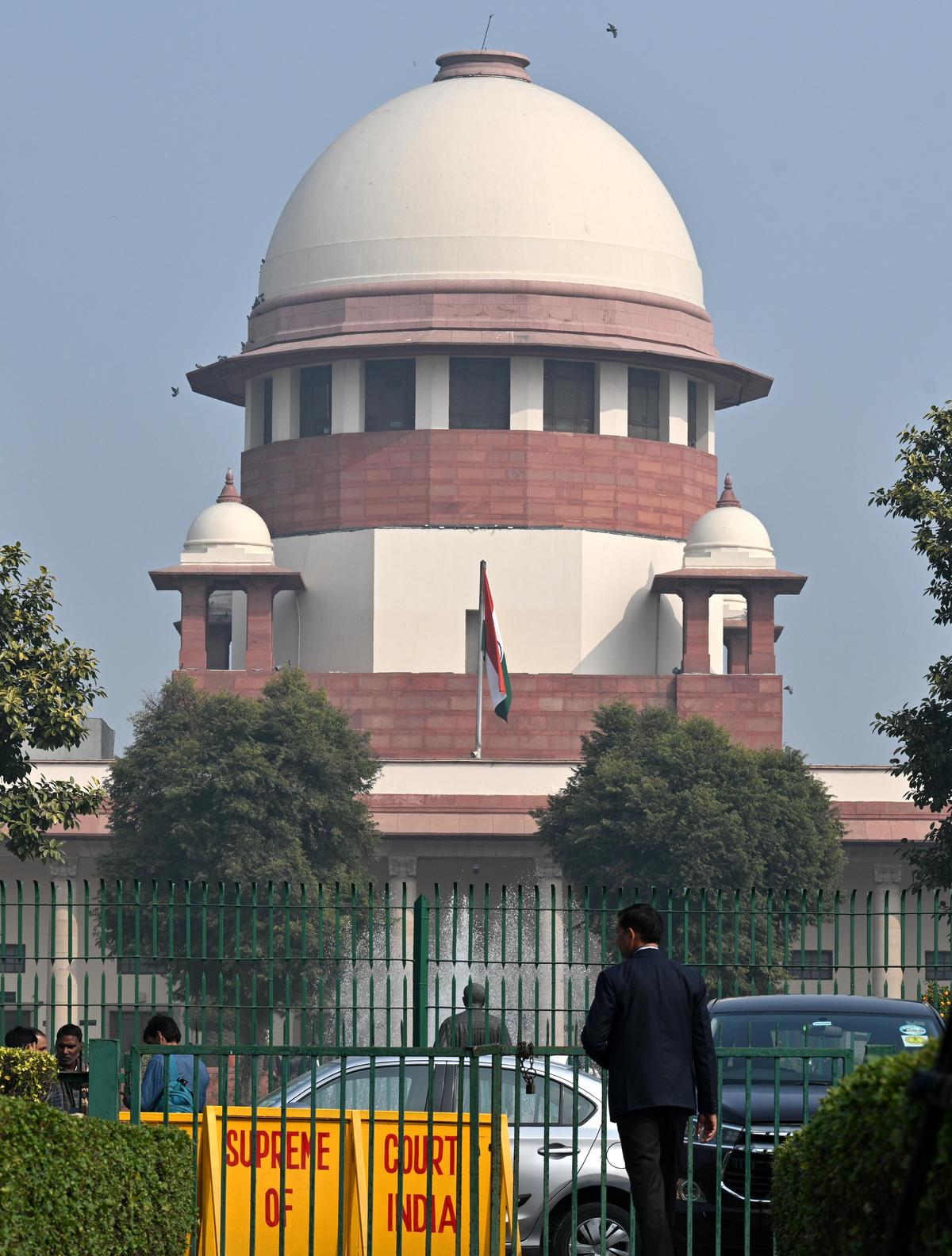
Why in news: The Supreme Court set a three-week deadline for the Telangana Assembly Speaker to decide pending defection petitions, warning that any further delay would amount to contempt of court.
Key Details
Supreme Court directed the Telangana Assembly Speaker to decide defection petitions within three weeks.
Case relates to two BRS MLAs accused of defecting to the Congress.
Speaker acts as a quasi-judicial authority under the Tenth Schedule.
Court warned that further delay would amount to contempt of court.
Earlier extensions had already been granted, showing judicial concern over delays.
Meaning of Defection
Defection occurs when an elected legislator leaves their political party or disobeys the party whip after being elected on that party’s ticket.
In India, defections are regulated by the Tenth Schedule of the Constitution to protect political stability and voters’ mandate.
Constitutional basis
Introduced by the 52nd Constitutional Amendment Act, 1985.
Strengthened by the 91st Constitutional Amendment Act, 2003, which removed the earlier “split” provision.
Applicable to Members of Parliament and State Legislatures.
Grounds for disqualification
Voluntarily giving up membership of the political party.
Voting or abstaining contrary to the party whip without prior permission.
Joining another political party after being elected.
Authority to decide
The Speaker/Chairman of the House decides disqualification petitions.
The Speaker acts as a quasi-judicial authority under the Tenth Schedule.
Judicial interpretation
The Supreme Court has upheld the constitutionality of the anti-defection law.
Judicial review is allowed in cases of mala fide, procedural irregularity, or constitutional violation.
Courts have emphasized the need for timely and impartial decisions by the Speaker.
Exceptions
Merger of political parties: Members are not disqualified if a prescribed majority supports the merger.
Independent members cannot join a party after election without disqualification.
Criticisms
Excessive power vested in the Speaker, who may act on party lines.
Limits legislative freedom of speech and vote.
Does not fully prevent political opportunism and horse-trading.
Significance
Promotes political stability.
Prevents unprincipled party switching.
Strengthens party discipline and respect for the electoral mandate.
Conclusion
The anti-defection law seeks to uphold political stability and protect the electoral mandate by discouraging unprincipled party switching. While it has reduced frequent defections, concerns remain regarding Speaker impartiality, delays in decisions, and limits on legislative freedom. Strengthening procedural clarity and ensuring timely, neutral adjudication are essential for preserving democratic integrity.
Descriptive question:
Critically analyse the anti-defection law in India with respect to its objectives, effectiveness, and challenges. (10 marks, 150 words)
