

11 March 2026 Indian Express Editorial
What to Read in Indian Express Editorial ( Topic and Syllabus wise)
Article 1: NCERT Textbook Controversy Debate
Why in News: The National Council of Educational Research and Training (NCERT) recently issued an unconditional apology and withdrew a Class 8 Social Science textbook after the Supreme Court took suo motu cognisance of content related to corruption in the judiciary.
Key Details
NCERT published a Class 8 Social Science textbook titled “Exploring Society: India and Beyond” containing a chapter on the role of the judiciary.
The book included a section discussing corruption in the judiciary, which drew strong criticism.
The Supreme Court imposed a blanket ban on publication and dissemination of the textbook and demanded accountability.
NCERT subsequently issued an unconditional apology and withdrew the book ahead of the Supreme Court hearing.
NCERT and Educational Governance in India
Role of NCERT: NCERT was established in 1961 under the Ministry of Education to develop school curricula, textbooks, and pedagogical guidelines across India. Its textbooks influence millions of students through the CBSE and many state boards.
National Curriculum Framework (NCF): NCERT prepares textbooks based on the National Curriculum Framework, which aims to promote constitutional values, critical thinking, and scientific temper among students.
Policy Context – NEP 2020: The National Education Policy 2020 emphasises competency-based learning and balanced perspectives in textbooks to ensure inclusive and responsible educational content.
Importance of Textbook Neutrality: Educational content must maintain academic accuracy, neutrality, and institutional respect, particularly when discussing constitutional institutions.
Constitutional Status and Role of the Judiciary
Guardian of the Constitution: The judiciary ensures that laws and executive actions comply with the Constitution. The Supreme Court is the final interpreter of constitutional provisions.
Judicial Review: Under Articles 13, 32, and 226, courts can review legislative and executive actions to protect fundamental rights.
Protection of Constitutional Morality: The judiciary has played a major role in expanding rights through landmark judgments such as Kesavananda Bharati (1973) and Maneka Gandhi (1978).
Public Trust in Institutions: Judicial legitimacy depends on public confidence. Educational narratives about institutions must be handled responsibly to maintain this trust.
Suo Motu Powers of the Supreme Court
Meaning of Suo Motu: “Suo motu” refers to the court taking action on its own initiative without a formal petition, usually to protect public interest or constitutional values.
Constitutional Basis: Although not explicitly mentioned in the Constitution, it derives from Articles 32, 136, 141, and 142, enabling the Court to ensure complete justice.
Role in Institutional Protection: The Court often uses suo motu powers in cases involving human rights violations, environmental concerns, or institutional integrity.
Recent Example: In the present case, the Court intervened to examine whether the textbook content undermined the dignity and credibility of the judiciary.
Academic Freedom vs Institutional Respect
Need for Critical Education: Modern education encourages critical thinking about governance institutions, including discussions about transparency and accountability.
Limits of Academic Criticism: However, criticism in textbooks must be factually accurate, balanced, and pedagogically appropriate for school-level understanding.
Risk of Oversimplification: Simplified narratives about corruption or institutional failures may create misleading perceptions among young learners.
Balancing Democratic Values: Democratic societies require both institutional accountability and respect for constitutional bodies, especially in educational discourse.
Accountability in Public Institutions
Institutional Responsibility: Government bodies responsible for education must ensure that textbook content undergoes rigorous academic review and peer evaluation.
Transparency in Curriculum Development: Inclusive consultations with subject experts, educators, and constitutional scholars help maintain credibility.
Judicial Oversight: Courts occasionally intervene when institutional actions affect constitutional values or public trust.
Democratic Debate: Such controversies highlight the importance of open debate about institutions while maintaining constitutional sensitivity.
Conclusion
The controversy underscores the importance of responsible educational content and institutional accountability. While democratic education must encourage critical thinking about governance structures, discussions should remain balanced and evidence-based. Strengthening review mechanisms in textbook preparation, ensuring expert consultation, and promoting constitutional literacy can help maintain both academic integrity and respect for democratic institutions.
EXPECTED QUESTIONS FOR UPSC CSE
Prelims MCQ
Consider the following statements regarding the Supreme Court’s suo motu powers:
They allow the Court to initiate cases without a formal petition.
They are explicitly mentioned in the Constitution of India.
They are often used to address issues of public interest.
Which of the statements given above are correct?
(a) 1 and 2 only
(b) 1 and 3 only
(c) 2 and 3 only
(d) 1, 2 and 3
Answer: (b)
Descriptive Questions
- Explain the concept of suo motu powers of the Supreme Court. How do these powers contribute to protecting constitutional values in India? (150 Words, 10 Marks)
Article 2: Declining Islamism and the Future of Iran’s Political Identity
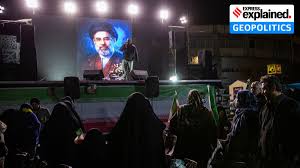
Why in News: The ongoing US–Israel military conflict with Iran in West Asia (2026) and the reported assassination of Iran’s Supreme Leader has revived debates on the future of Iran’s Islamic political system and the decline of Islamism globally.
Key Details
The conflict involving Iran, Israel, and the United States has intensified geopolitical tensions in West Asia (Middle East).
Iran’s political system originates from the 1979 Islamic Revolution, which established a theocratic republic.
Many Muslim countries oppose the war but are not mobilising ideological Islamic solidarity, indicating a shift in political narratives.
Experts suggest that Islam as a cultural and religious identity will persist, but Islamism as a political ideology may decline.
Geopolitical Context of the West Asia Conflict
Strategic Rivalry in West Asia: The region has long been a theatre of strategic competition involving Iran, Israel, the United States, and Gulf states. Iran’s influence through proxy groups like Hezbollah and regional alliances has shaped regional geopolitics.
US–Iran Tensions: Hostility intensified after the 1979 Iranian Revolution, when Iran replaced a pro-Western monarchy with a revolutionary Islamic republic, leading to decades of sanctions, nuclear disputes, and military confrontation.
Role of Israel in Regional Security: Israel views Iran as an existential threat due to its nuclear ambitions and support for anti-Israel groups. This has led to covert operations, cyber attacks, and targeted assassinations.
Strategic Importance of West Asia: The region controls nearly 30% of global oil production and key maritime routes such as the Strait of Hormuz, making conflicts there a global economic and security concern.
The Islamic Revolution of 1979 and Political Islam
Establishment of a Theocratic Republic: The 1979 Iranian Revolution led by Ayatollah Ruhollah Khomeini replaced the Shah’s monarchy with a system based on Velayat-e-Faqih (Guardianship of the Islamic Jurist).
Fusion of Religion and State: Iran became a unique political model where clerics hold ultimate political authority, unlike most Muslim-majority countries where governance is secular or monarchic.
Spread of Islamism as Political Ideology: The revolution inspired Islamist movements across the Muslim world, including groups influenced by thinkers such as Abul A’la Maududi and Sayyid Qutb.
Cold War Context: Islamism gained prominence during the Cold War, when ideological alternatives such as communism and nationalism competed for influence in developing countries.
Concept of Islamism and Its Decline
Definition of Islamism: Islamism refers to the belief that Islam should guide political governance and state institutions, often advocating the implementation of Sharia-based governance.
Post-Cold War Decline: After the end of the Cold War in 1991, ideological politics declined globally, weakening movements that sought to establish ideological states.
Failure of Political Islamist Movements: Experiences in countries such as Egypt (Muslim Brotherhood), Afghanistan, and Sudan have exposed governance challenges, reducing public enthusiasm for Islamist regimes.
Rise of Pragmatic Nationalism: Many Muslim societies increasingly prioritise economic development, national identity, and stability over ideological politics.
Shia Identity, Martyrdom, and Political Mobilisation
Centrality of Martyrdom in Shia Tradition: The concept originates from the martyrdom of Imam Hussain at the Battle of Karbala (680 CE), symbolising resistance against tyranny.
Role in Iranian Political Culture: The Iranian revolution incorporated this symbolism to mobilise citizens during events like the Iran-Iraq War (1980-88).
Martyrdom as Political Messaging: Leaders portraying themselves as martyrs can inspire collective resilience, national pride, and emotional solidarity among citizens.
Parallel with Global Political Ideals: The idea of sacrifice for justice has parallels in other traditions, including Mahatma Gandhi’s philosophy of moral resistance.
Iran’s Position in the Muslim World
Sectarian Divide: Iran is the largest Shia-majority country, while most Muslim countries are Sunni-majority, leading to geopolitical and ideological differences.
Limited Regional Support: Despite sympathy for Iran’s situation, many Muslim governments have avoided direct support due to geopolitical interests and diplomatic alignments.
Shift from Religious to Humanitarian Narratives: Protests against conflicts in Gaza and Iran are increasingly framed in human rights and humanitarian terms rather than purely Islamic solidarity.
Iran as an Independent Political Actor: Unlike stateless groups such as Hamas, Iran remains a sovereign state with military capacity, diplomacy, and geopolitical strategy.
Future of the Iranian Political System
Possible Military Consolidation: In times of crisis, the Islamic Revolutionary Guard Corps (IRGC) may gain greater influence, potentially leading to stronger military involvement in governance.
Transition to Hybrid Governance: Experts suggest Iran may gradually move towards less clerical dominance and more technocratic or nationalist leadership.
Persistence of Religious Identity: While political Islamism may decline, religious values and cultural traditions will continue to influence Iranian society.
Regional Geopolitical Implications: Changes in Iran’s governance could reshape regional alliances, nuclear negotiations, and the security architecture of West Asia.
Conclusion
The conflict in West Asia highlights the complex intersection of religion, geopolitics, and national identity. While Islamism as a political ideology may be weakening globally, religion continues to shape cultural and moral frameworks in many societies. For Iran, the coming years may witness a transition towards more pragmatic governance while retaining religious symbolism in public life. Understanding these transformations is essential for analysing the evolving geopolitics of West Asia and its implications for global security.
EXPECTED QUESTIONS FOR UPSC CSE
Prelims MCQ
- The doctrine of Velayat-e-Faqih, associated with Iran, refers to:
(a) Islamic economic system
(b) Guardianship of Islamic jurists in governance
(c) Separation of religion and state
(d) Military rule in Islamic states
Answer: (b)
Descriptive Question
- Discuss the role of the 1979 Iranian Revolution in shaping political Islam in West Asia. Evaluate the contemporary relevance of Islamism in global politics. (250 Words, 15 Marks)
Article 3: Impeaching the Chief Election Commissioner
Why in News: The Opposition has initiated efforts to move a motion to remove the Chief Election Commissioner (CEC) over allegations of biased conduct, bringing attention to the constitutional process of impeachment.
Key Details
The opposition parties are working to move a motion for the removal of the Chief Election Commissioner citing alleged biased conduct.
The Constitution provides that the CEC can be removed in the same manner as a judge of the Supreme Court.
The process involves Parliamentary approval with special majority after an investigation.
The Chief Election Commissioner and Other Election Commissioners Act, 2023 reiterates the constitutional provisions governing removal.
Constitutional Status of the Election Commission of India
Article 324 of the Constitution: Article 324 establishes the Election Commission of India (ECI) and vests it with the superintendence, direction, and control of elections to Parliament, State Legislatures, and the offices of President and Vice President.
Independent Constitutional Body: The ECI is designed as an independent authority to ensure free and fair elections, which are the cornerstone of democratic governance in India.
Composition of the Commission: The Commission consists of the Chief Election Commissioner and other Election Commissioners, whose number is determined by the President.
Tenure and Service Conditions: Election Commissioners generally have a six-year tenure or until the age of 65 years, whichever is earlier, ensuring administrative stability and independence.
Institutional Importance: The Election Commission conducts national elections involving nearly 970 million registered voters, making it one of the largest democratic exercises in the world.
Constitutional Safeguards for the Chief Election Commissioner
Security of Tenure: Article 324(5) provides that the CEC cannot be removed except in the same manner and on the same grounds as a Supreme Court judge, ensuring independence from executive pressure.
Protection from Arbitrary Removal: This safeguard ensures that the government cannot dismiss the CEC without Parliamentary approval, protecting the impartial functioning of the electoral process.
Removal of Other Election Commissioners: Other Election Commissioners can only be removed on the recommendation of the CEC, which prevents political interference in the functioning of the Commission.
Institutional Autonomy: These provisions collectively strengthen the credibility and neutrality of electoral administration.
Comparative Constitutional Design: Similar safeguards exist for other constitutional authorities such as judges of the Supreme Court and the Comptroller and Auditor General.
Legal Framework Governing Removal of the CEC
Article 324(5) of the Constitution: It explicitly states that the CEC shall not be removed except in the same manner as a judge of the Supreme Court, linking the process to judicial impeachment provisions.
Article 124(4): Removal of Supreme Court Judges: According to this provision, a judge can be removed by the President after an address by both Houses of Parliament supported by a special majority.
Grounds for Removal: The Constitution specifies “proved misbehaviour or incapacity” as the only grounds for removal.
Judges (Inquiry) Act, 1968: This Act lays down the detailed procedure for investigation and parliamentary approval in cases of judicial impeachment.
2023 Election Commission Act: The Chief Election Commissioner and Other Election Commissioners (Appointment, Conditions of Service and Term of Office) Act, 2023 reiterates that the removal process for the CEC follows the constitutional mechanism.
Parliamentary Procedure for Removal
Initiation of Motion: A motion for removal must be signed by at least 100 members of the Lok Sabha or 50 members of the Rajya Sabha.
Admission of the Motion: The Speaker of the Lok Sabha or Chairman of the Rajya Sabha decides whether the motion should be admitted.
Constitution of an Inquiry Committee: If admitted, a three-member committee is formed consisting of:
A Supreme Court judge
A Chief Justice of a High Court
A distinguished jurist
Investigation and Report: The committee investigates allegations and submits a report on whether misbehaviour or incapacity is proved.
Parliamentary Voting: If the committee finds the charges valid, both Houses of Parliament must pass the motion with a special majority (majority of total membership and two-thirds of members present and voting).
Importance of Independence of the Election Commission
Ensuring Free and Fair Elections: The Election Commission plays a crucial role in safeguarding electoral integrity, which is fundamental to representative democracy.
Maintaining Public Trust: The credibility of elections depends heavily on the perceived neutrality and independence of the Commission.
Preventing Political Interference: Constitutional safeguards protect the Commission from executive or partisan pressures.
Democratic Stability: Free and fair elections ensure peaceful transfer of power, which is essential for political stability.
Global Democratic Benchmark: India’s electoral management system is often cited as a model for large-scale democratic processes worldwide.
Conclusion
The constitutional design of the Election Commission aims to balance accountability with independence. While mechanisms exist to remove the Chief Election Commissioner in cases of proven misconduct, the stringent process ensures that removal cannot be used for political purposes. Strengthening institutional credibility, transparency in electoral processes, and bipartisan respect for constitutional bodies is essential to preserve the integrity of India’s democratic system.
