

28 March 2026 Indian Express Editorial
What to Read in Indian Express Editorial ( Topic and Syllabus wise)
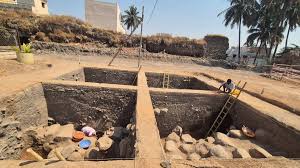
Article 1: Ancient Heritage Excavation
Why in News: The Archaeological Survey of India (ASI) has initiated large-scale scientific excavation at the Balirajgarh site to uncover evidence of ancient settlement linked to the Videha Kingdom.
Key Details
Excavation is being conducted at Balirajgarh, believed to be the gateway to ancient Mithila civilisation.
The site spans ~176 acres with massive brick fortifications and multi-period habitation evidence.
Artefacts from Mauryan, Sunga, Kushan, Gupta, and Pala periods have been previously found.
Modern techniques like satellite mapping and trench excavation are being used for scientific study.
Archaeological Significance of Balirajgarh
Ancient Urban Settlement Evidence: Balirajgarh shows signs of a well-planned fortified settlement, with brick structures indicating advanced urbanisation comparable to early historic sites in India.
Continuity of Civilisation: Excavations suggest habitation across multiple periods including Mauryan to Pala eras, reflecting cultural continuity and evolution over centuries.
Link to Videha Kingdom: Scholars associate the site with the ancient Videha Kingdom (Mithila region), known from Vedic and later texts, indicating its historical importance.
Mythological Association: Local traditions connect the site with King Bali, highlighting the overlap of mythology and archaeology in reconstructing India’s past.
Role of the Archaeological Survey of India (ASI)
Nodal Heritage Institution: Established in 1861, ASI is responsible for archaeological research, excavation, and conservation of monuments under the Ministry of Culture.
Scientific Excavation Methods: The use of satellite imagery, GIS mapping, and stratigraphic excavation ensures accuracy in identifying settlement layers and timelines.
Protected Site Status: Balirajgarh has been an ASI-protected site since 1938, ensuring legal protection and regulated exploration.
Cultural Resource Management: ASI plays a key role in balancing heritage preservation with development, ensuring sustainable utilisation of archaeological sites.
Cultural and Historical Context of Mithila Region
Centre of Ancient Learning: Mithila was a prominent centre of Vedic scholarship and philosophy, associated with figures like King Janaka and traditions of Nyaya philosophy.
Contribution to Indian Culture: The region is known for Madhubani painting, classical literature, and rich cultural heritage.
Iron Age and Early Historic Phase: The excavation may confirm links to Iron Age settlements, potentially pushing back the timeline of organised habitation.
Trade and Economy: Artefacts such as punch-marked coins and beads indicate active trade networks and economic activity.
Archaeological Findings and Their Implications
Material Culture Evidence: Discovery of terracotta figurines, copper objects, and bone tools reflects technological advancement and social practices.
Urban Planning Indicators: Fortifications and structural remains suggest planned settlements, drainage systems, and administrative organisation.
Chronological Reconstruction: Stratified excavation helps establish a cultural sequence from Mauryan to later periods, aiding historical reconstruction.
Interdisciplinary Insights: Archaeology integrates with history, anthropology, and environmental studies to provide a holistic understanding of past societies.
Contemporary Relevance: Heritage and Development
Tourism Potential: Development of a museum and infrastructure can transform the site into a major cultural tourism hub, boosting local economy.
Cultural Diplomacy: Showcasing ancient civilisations enhances India’s soft power and global cultural standing.
Local Economic Growth: Heritage-based development can generate employment, infrastructure, and regional development in Bihar.
Challenges in Excavation: Issues like high water table, conservation costs, and encroachment pose challenges to archaeological work.
Conclusion
The excavation at Balirajgarh represents a significant step in uncovering India’s ancient past and strengthening cultural identity. Scientific exploration combined with sustainable development can transform such sites into centres of knowledge and economic growth. A balanced approach involving heritage conservation, community participation, and technological integration is essential to preserve India’s civilisational legacy for future generations.
EXPECTED QUESTIONS FOR UPSC CSE
Prelims MCQ
- The Archaeological Survey of India (ASI) functions under:
(a) Ministry of Education
(b) Ministry of Culture
(c) Ministry of Tourism
(d) Ministry of Home Affairs
Answer: (b)
Descriptive Question
- Discuss the significance of archaeological excavations in reconstructing ancient Indian history. Illustrate with the example of recent excavations in Bihar. (150 Words, 10 Marks)
Article 2: Solar Agriculture Reform
Why in News: The government is planning PM-KUSUM 2.0 with battery energy storage as the existing PM-KUSUM scheme (2019) expires in March 2026.
Key Details
PM-KUSUM scheme launched in 2019 to promote solarisation of agriculture pumps.
Government is considering battery storage integration in PM-KUSUM 2.0.
Objective is to address mismatch between solar generation and agricultural demand.
Scheme timeline extended; total installed capacity so far is ~12 GW against 34.8 GW target.
PM-KUSUM Scheme: Objectives & Components
Clean Energy in Agriculture: PM-KUSUM aims to reduce farmers’ dependence on diesel and grid electricity by promoting solar irrigation, supporting India’s renewable energy targets.
Three Key Components:
Component A: Decentralised solar plants (up to 2 MW each) for local power generation.
Component B: Standalone solar pumps in off-grid areas, improving irrigation access.
Component C: Solarisation of grid-connected pumps (individual and feeder-level).
Capacity Target: The scheme aims to add 34.8 GW solar capacity, making agriculture a key contributor to India’s energy transition.
Farmer Income Support: Farmers can sell surplus power to DISCOMs, creating an additional income stream and enhancing rural livelihoods.
Performance and Implementation Challenges
Slow Progress: Against the target of 34.8 GW, only about 12 GW capacity has been installed as of 2026, indicating implementation bottlenecks.
Component-wise Status:
Component A: ~8394 MW installed
Component B: Over 10 lakh solar pumps installed
Component C: Over 13 lakh pumps solarised at feeder level
Financial Constraints: Delays in loan disbursement and financial closure by banks have slowed project execution.
Institutional Coordination Issues: Differences between ministries and states have affected uniform implementation and monitoring.
Solar Generation vs Agricultural Demand Mismatch
Demand Pattern: Agricultural electricity demand is high in morning and evening, depending on irrigation cycles.
Solar Supply Pattern: Solar energy generation peaks at midday and declines after sunset, creating a supply-demand gap.
Operational Challenges: This mismatch leads to grid instability, power wastage, and inefficient utilisation of solar energy.
Impact on DISCOMs: Power distribution companies face difficulties in load balancing and supply management, increasing financial stress.
Battery Energy Storage: Need and Significance
Bridging Supply-Demand Gap: Battery storage can store excess solar energy during peak generation and supply it during high demand periods.
Grid Stability: It enhances grid reliability and flexibility, reducing fluctuations and ensuring continuous power supply.
Policy Debate:
Ministry of Power suggests 4-hour storage capacity
MNRE proposes 2-hour capacity, reflecting cost vs efficiency considerations
Global Trend: Integration of storage is a key feature in modern renewable systems, aligning India with global energy transition practices.
PM-KUSUM 2.0: Policy Evolution
Inclusion of Battery Storage: PM-KUSUM 2.0 is expected to integrate Battery Energy Storage Systems (BESS), making the scheme more efficient.
Timeline Extension: Government has extended deadlines for financial closure and project completion, ensuring continuity.
Stakeholder Consultations: Ministries of Power, MNRE, and Finance are involved, indicating multi-sectoral policy design.
Focus on Energy Transition: The scheme is positioned as a pillar of India’s renewable energy and climate commitments.
Significance for Indian Economy & Environment
Doubling Farmers’ Income: Solarisation reduces input costs and provides additional revenue from power sales.
Energy Security: Reduces dependence on fossil fuels and imports, strengthening energy independence.
Climate Commitments: Supports India’s Nationally Determined Contributions (NDCs) and net-zero goals.
Sustainable Agriculture: Promotes clean irrigation practices, reducing carbon footprint and environmental degradation.
Conclusion
PM-KUSUM 2.0 represents a crucial step towards integrating renewable energy with agriculture. The inclusion of battery storage can address structural inefficiencies and enhance scheme effectiveness. Going forward, improved financing mechanisms, better coordination among stakeholders, and technological innovation are essential to realise the full potential of solar agriculture and ensure sustainable rural development.
Article 3: Lunar Exploration & Space Economy
Why in News: The NASA has unveiled a roadmap for sustained lunar presence alongside the upcoming Artemis II mission, signalling a new phase of space exploration.
Key Details
Artemis II will send four astronauts around the Moon, marking the first human lunar mission since the Apollo Program era.
NASA aims to establish a permanent human base on the Moon for long-term stays.
The Moon is being developed as a launchpad for deeper space missions, including Mars.
Increasing participation of countries like India, China, and Japan indicates a multipolar space race.
Artemis Programme & Evolution of Lunar Missions
Shift from Exploration to Sustainability: Unlike Apollo missions focused on symbolic landings, the Artemis programme aims for long-term human presence, marking a transition from exploration to habitation.
Phased Mission Architecture: Artemis I tested systems successfully, while Artemis II will carry astronauts around the Moon, followed by human landing missions planned around 2028.
Return After Five Decades: The last human Moon mission was Apollo 17 in 1972, indicating a major technological and strategic revival after more than 50 years.
Integration of Public–Private Partnerships: NASA is increasingly relying on private players like SpaceX and international collaborations, reflecting the commercialization of space.
Strategic Importance of the Moon
Gateway to Deep Space Exploration: The Moon serves as a testing ground for technologies required for Mars missions, including life support systems and long-duration space travel.
Resource Utilisation (ISRU): Lunar resources like water ice (for oxygen and fuel) can enable sustainable missions, reducing dependence on Earth-based supplies.
Scientific Research Potential: The Moon provides insights into the early solar system, geological evolution, and space weathering processes.
Geopolitical Significance: Establishing a lunar base enhances strategic dominance in space, similar to how maritime dominance shaped global power.
Permanent Lunar Base & Space Infrastructure
Concept of Lunar Habitat: NASA plans a permanent base similar to the International Space Station, enabling continuous human presence.
Regular Missions & Logistics: Missions are planned at six-month intervals, carrying astronauts, fuel, and equipment, ensuring sustained operations.
Technological Requirements: Challenges include radiation protection, temperature extremes (-173°C to 127°C), and microgravity adaptation, requiring advanced engineering solutions.
Use of Nuclear Energy: NASA’s plans for nuclear-powered propulsion (e.g., Space Reactor-1) could significantly enhance efficiency for interplanetary missions.
Changing Global Space Landscape
From Bipolar to Multipolar Competition: Unlike the US-Soviet rivalry of the Cold War, space exploration now includes multiple actors like India, China, Japan, and private companies.
India’s Growing Role: ISRO has emerged as a key player with missions like Chandrayaan-3 and plans for human spaceflight (Gaganyaan).
Rise of Space Economy: The global space economy is projected to exceed $1 trillion by 2040, driven by satellite services, exploration, and commercialization.
International Collaboration: Initiatives like the Artemis Accords promote peaceful use of space, resource sharing, and global cooperation.
Challenges and Concerns in Lunar Exploration
High Costs and Sustainability: Space missions involve massive financial investments, raising concerns about economic feasibility for developing countries.
Space Governance Issues: Existing frameworks like the Outer Space Treaty (1967) lack clarity on resource exploitation and property rights.
Environmental Concerns: Increasing missions may lead to space debris and ecological disturbance on celestial bodies.
Technological and Human Risks: Long-duration missions pose risks such as radiation exposure, psychological stress, and system failures.
Conclusion
The Artemis programme signifies a shift from symbolic exploration to sustained human presence in space, positioning the Moon as a gateway to Mars and beyond. For India, this presents opportunities to strengthen its space capabilities, enhance international cooperation, and leverage the emerging space economy. A balanced approach focusing on innovation, sustainability, and global governance will be crucial in shaping the future of space exploration.
EXPECTED QUESTIONS FOR UPSC CSE
Prelims MCQ
Which of the following statements about the Artemis programme is correct?
(a) It aims only at robotic exploration of the Moon
(b) It seeks to establish long-term human presence on the Moon
(c) It is a joint mission of NASA and Roscosmos only
(d) It replaces the International Space Station
Answer: (b)
Descriptive Question
- “The Artemis programme marks a paradigm shift from exploration to habitation in space.” Discuss its significance for global space geopolitics and India. (250 Words, 15 Marks)
