

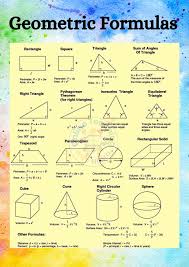
How To Handle Complex Geometry And Mensuration Problems In Detail
HOW TO HANDLE COMPLEX GEOMETRY AND MENSURATION PROBLEMS IN DETAIL
1. Probability – The Basics
🔹Definition:
Probability (P) = (Favorable Outcomes) / (Total Outcomes)
🔹Key Rules:
- Probability is between 0 and 1.
- Mutually Exclusive Events: Two events cannot occur together.
- Complementary Probability:
P(A′)=1−P(A)P(A’) = 1 – P(A)P(A′)=1−P(A)
Tips for Solving Probability Problems
|
Tip |
Use |
|
Count favorable outcomes carefully |
Avoid double-counting |
|
Use “at least” and “at most” cases carefully |
Often solved by complements |
|
Understand “with replacement” vs “without replacement” |
Affects total outcomes |
|
Use Tree Diagrams |
For compound events |
|
Learn combinations (nCr) |
For drawing-based problems |
2. Permutations and Combinations (P & C)
🔹 Permutation: Arrangement
Order matters
Formula:
- nPr=
🔹 Combination: Selection
Order doesn’t matter
Formula:
- nCr =
Common P & C Use Cases in Bank Exams
|
Situation |
Use |
|
Arranging digits/letters |
Permutation |
|
Forming teams/groups |
Combination |
|
Selecting cards |
Combination |
|
Placing people in seats |
Permutation |
|
“At least”/“At most” constraints |
Combination logic or complements |
1. Learn and Revise Core Formulas
🔹2D Shapes
|
Shape |
Area Formula |
Perimeter |
|
Square |
a2 |
4a |
|
Rectangle |
l×b |
2(l+b) |
|
Triangle |
b× h |
Sum of sides |
|
Circle |
πr2 |
2πr |
|
Trapezium |
(a+b) h |
Sum of all sides |
🔹3D Shapes
|
Solid |
Volume |
Surface Area |
|
Cube |
a 3 |
6a2 |
|
Cuboid |
l×b×hl |
2(lb+bh+hl) |
|
Cylinder |
Π r2h |
2πr(h+r) |
|
Cone |
Π r2h |
πr(l+r) |
|
Sphere |
Π r2 |
4πr2 |
2. Understand the Logic Behind Formulas
For example:
- Area of triangle is derived from the rectangle:
A triangle is half a rectangle ⇒12×base×height\frac{1}{2} × base × height21×base×height - Volume of cone is 1/3 of a cylinder.
Understanding this helps in visualizing compound figures.
3. Use Step-by-Step Problem Solving
🔹 Step 1: Identify shape(s) involved
Sometimes questions combine shapes like cylinders and hemispheres.
🔹 Step 2: Break the figure into known parts
Example: Composite shape = cone + hemisphere.
🔹 Step 3: Apply formula with proper units
Ensure conversions (cm², m², etc.)
Geometry in Word Problems
Common scenarios in bank exams:
- Area of paths around fields
- Paint required for surfaces
- Volume of tanks, cylinders
- Fencing a garden (Perimeter)
Example: A path 2 m wide runs around a rectangle 20 × 10 m.
Find area of the path.
Outer rectangle = (20+4)(10+4)=24×14=336(20+4)(10+4) = 24×14 = 336(20+4)(10+4)=24×14=336
Inner = 200
Path area = 336 – 200 = 136 m²
Common Mistakes to Avoid
|
Mistake |
Fix |
|
Using wrong shape formula |
Memorize and categorize shapes |
|
Ignoring units |
Always convert to same unit |
|
Mixing surface area & volume |
Clarify what the question asks |
|
Not visualizing composite shapes |
Draw diagram when needed |
Tips to Master These Topics
- Make a formula chart for regular revision.
- Practice application-based questions, not just direct formula use.
- Solve questions involving multiple shapes (composite figures).
- Learn tricks to find diagonals, medians, angles.
- Use elimination strategy in MCQs for approximation-based answers.
Recommended Resources
- Books:
- Arithmetic by Magme Medal
- Quantitative Aptitude by Magme Medal
Final Prep Strategy
|
Topic |
Goal |
|
Probability |
Master basic definitions and card/dice problems |
|
Permutation & Combination |
Practice selection/arrangement patterns |
|
Mensuration |
Memorize formulas + solve word problems |
|
Geometry |
Learn angle/line properties, apply them in puzzles |
