

The Significance Of Financial Inclusion In India
What is Financial Inclusion?
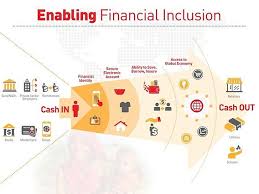
Financial Inclusion means providing access to useful and affordable financial services—like banking, credit, insurance, remittances, and pensions—to all individuals and businesses, especially the poor and underserved, in a fair and transparent manner.
In simple terms: Bringing the unbanked and underbanked population into the formal financial system.
Definition by RBI
“The process of ensuring access to appropriate financial products and services needed by vulnerable groups such as weaker sections and low-income groups at an affordable cost in a fair and transparent manner by mainstream institutional players.”
Objectives of Financial Inclusion
|
Objective |
Description |
|
Universal Access |
Provide basic banking services to every citizen |
|
Reduce Informal Lending |
Move people away from moneylenders and towards formal credit |
|
Promote Savings Culture |
Encourage saving habits in rural and semi-urban areas |
|
Empowerment |
Financial empowerment of women, farmers, and small businesses |
|
Inclusive Growth |
Reduce poverty and bridge the rural-urban divide |
Importance of Financial Inclusion in India
1. Empowers the Marginalized
- Gives access to bank accounts, credit, pensions, insurance, etc.
- Enables direct transfer of government subsidies (e.g., LPG, MNREGA payments)
- Reduces dependency on exploitative informal lenders
2. Improves Financial Stability
- Broadens the deposit base for banks
- Mobilizes savings and improves liquidity in the system
- Makes the financial system more robust and inclusive
3. Facilitates Direct Benefit Transfers (DBT)
- Reduces leakages and corruption in subsidy delivery
- Money reaches beneficiaries directly into their bank accounts
4. Promotes Economic Growth
- Enables entrepreneurship through micro-credit
- Promotes rural development
- Enhances overall GDP growth and consumption
5. Supports Agricultural and MSME Sectors
- Enables farmers to access Kisan Credit Cards, crop insurance
- Helps small businesses get loans under MUDRA and other schemes
Key Financial Inclusion Initiatives in India
|
Initiative |
Year |
Objective |
|
PMJDY (Pradhan Mantri Jan DhanYojana) |
2014 |
Universal access to bank accounts |
|
PMJJBY/ PMSBY / APY |
2015 |
Insurance and pension for low-income groups |
|
MUDRA Yojana |
2015 |
Credit for micro and small enterprises |
|
RBI Basic Savings Bank Deposit Account (BSBDA) |
2012 |
No-frills accounts |
|
Financial Literacy Week |
Annual |
Awareness campaign by RBI |
|
Jan Dhan-Aadhaar-Mobile (JAM) Trinity |
Ongoing |
Digital infrastructure for financial access |
|
Business Correspondent (BC) Model |
2006 |
Agents bring banking services to remote areas |
|
Digital India Movement |
2015 |
Strengthen digital financial services |
Role of RBI in Financial Inclusion
- Mandated banks to open branches in underserved areas
- Encouraged Financial Literacy Centres (FLCs)
- Promotes Banking Correspondents and mobile banking
- Publishes Financial Inclusion Index annually
- Monitors progress through the Financial Inclusion Plan (FIP)
Challenges to Financial Inclusion in India
|
Challenge |
Explanation |
|
Low Financial Literacy |
Many people don’t understand banking products |
|
Digital Divide |
Limited internet access in remote/rural areas |
|
Language Barriers |
Many services not localized |
|
Infrastructure Gaps |
Lack of banking branches and ATMs in remote regions |
|
Fraud and Cybersecurity Issues |
Risk of digital fraud in the absence of awareness |
Financial Inclusion in Banking Exams
Topics Frequently Asked
|
Question Type |
Example |
|
MCQs |
What is PMJDY? / What is the full form of APY? |
|
Short Notes |
Write about Jan DhanYojana / MUDRA scheme |
|
Essay |
Role of financial inclusion in economic development |
|
Interview |
How does financial inclusion impact rural India? / How will you promote it as a banker? |
Sample MCQs
- Which of the following schemes is NOT related to financial inclusion?
A) PMJDY
B) PMSBY
C) APY
D) UDAY Scheme - What is the purpose of the MUDRA Yojana?
A) Providing housing loans
B) Promoting digital payments
C) Funding the unfunded
D) Insurance to senior citizens - What does JAM stand for?
A) Joint Agricultural Mission
B) Jan Arogya Money
C) Jan Dhan-Aadhaar-Mobile
D) Jio Airtel Money
Model Interview Question
Q: How can you, as a bank officer, contribute to financial inclusion in your area?
A:
- I would organize financial literacy camps
- Promote zero-balance savings accounts
- Assist in enrollment for government schemes like PMJJBY and APY
- Ensure doorstep banking services via Business Correspondents
- Promote digital banking usage and UPI payments
Conclusion
Financial Inclusion is not just a goal—it’s a pathway to equitable growth.
In India, it has transformed how the poor access banking and benefit from government schemes.
For banking aspirants, understanding its significance equips you for:
- Awareness sections in exams
- PI/GD discussions
- Bank job responsibilities
“A truly inclusive financial system empowers the people, strengthens the nation, and drives sustainable growth.”
