

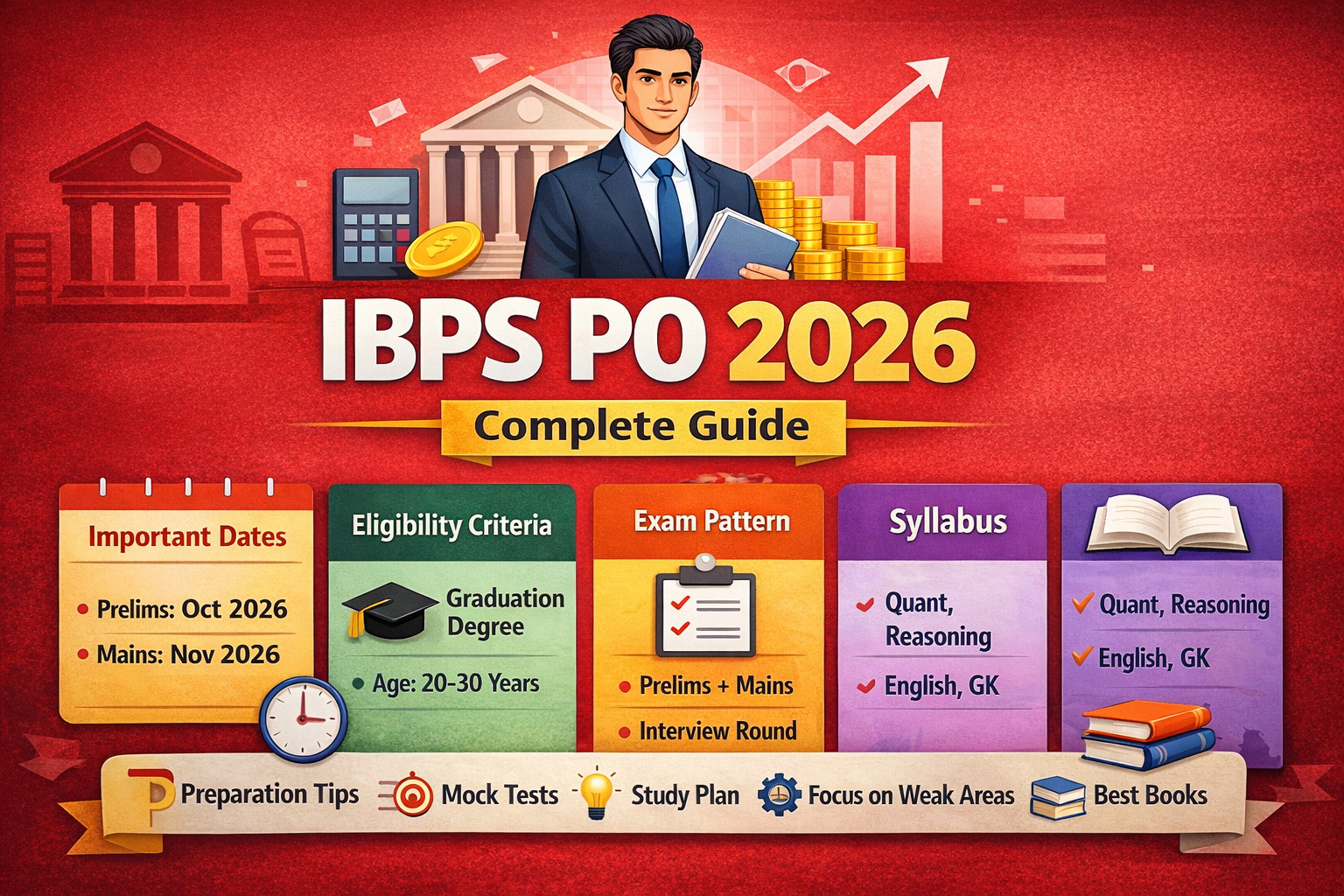
Breaking Down The IBPS PO Exam Pattern: Key Areas To Focus On
The IBPS PO (Institute of Banking Personnel Selection – Probationary Officer) exam is one of the most competitive banking exams in India. Every year, lakhs of aspirants apply, but only a small percentage make it to the final selection. Understanding the exam pattern thoroughly is the first and most important step toward success.
This article breaks down the IBPS PO exam pattern and highlights the key areas you must focus on to maximize your score.
Overview of IBPS PO Exam Structure
The IBPS PO selection process consists of three stages:
- Preliminary Examination (Prelims)
- Main Examination (Mains)
- Interview
Each stage plays a crucial role, and candidates must clear each one to move to the next.
1. IBPS PO Preliminary Exam Pattern
The Prelims is the first screening stage. It tests your speed, accuracy, and basic understanding.
Exam Structure:
|
Key Points:
- Sectional timing is fixed
- Negative marking: 0.25 marks per wrong answer
- Only qualifying in nature (marks not counted for final merit)
Key Focus Areas for Prelims
1. English Language
- Reading Comprehension
- Cloze Test
- Error Detection
- Sentence Improvement
Tip: Focus on vocabulary and daily reading habits.
2. Quantitative Aptitude
- Simplification & Approximation
- Number Series
- Data Interpretation (DI)
- Arithmetic (Profit & Loss, Time & Work, etc.)
Tip: Speed calculation and shortcut techniques are essential.
3. Reasoning Ability
- Puzzles and Seating Arrangement
- Syllogism
- Inequality
- Coding-Decoding
Tip: Practice puzzles daily—this section is scoring but time-consuming.
2. IBPS PO Mains Exam Pattern
The Mains exam is more advanced and analytical. It carries significant weight in the final selection.
Exam Structure:
|
Descriptive Test:
- Essay Writing: 25 marks
- Letter Writing: 25 marks
- Time: 30 minutes
Key Focus Areas for Mains
1. Reasoning & Computer Aptitude
- High-level puzzles
- Input-output
- Logical reasoning
- Basic computer knowledge
Tip: Practice complex puzzles with time constraints.
2. Data Analysis & Interpretation
- Caselet DI
- Data Sufficiency
- Probability
- Quantity Comparison
Tip: Strong conceptual clarity in arithmetic is crucial.
3. English Language
- Reading Comprehension (advanced)
- Para jumbles
- Vocabulary-based questions
Tip: Focus on comprehension skills and grammar accuracy.
4. General Awareness
- Banking Awareness
- Current Affairs (last 4–6 months)
- Static GK
Tip: Daily current affairs preparation is non-negotiable.
5. Descriptive Test
- Essay topics: Economy, Banking, Social Issues
- Letter writing: Formal and Informal
Tip: Practice writing clearly and within word limits.
3. Interview Round
Candidates who clear Mains are called for the interview.
Key Aspects:
- Banking awareness
- Current affairs
- Communication skills
- Confidence and personality
Tip: Be honest, calm, and well-prepared with basic banking concepts.
Sectional Cut-Off and Overall Strategy
- Each section has a cut-off
- You must clear both sectional and overall cut-offs
- Balance is more important than excelling in just one section
Smart Preparation Strategy
1. Focus on Strong + Weak Areas
Identify your strengths and weaknesses early and plan accordingly.
2. Mock Tests Are Essential
- Take full-length mock tests regularly
- Analyze your performance deeply
3. Time Management
- Practice with timers
- Learn when to skip difficult questions
4. Consistency Over Intensity
Daily practice is more effective than last-minute preparation.
Common Mistakes to Avoid
- Ignoring sectional timing practice
- Not revising current affairs
- Avoiding mock test analysis
- Spending too much time on one question
Final Thoughts
Cracking the IBPS PO exam is not just about hard work—it’s about smart preparation and understanding the exam pattern deeply. By focusing on key areas, practicing regularly, and maintaining consistency, you can significantly improve your chances of success.
