

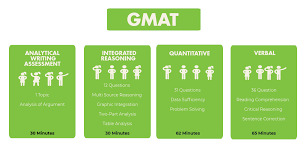
GMAT Exam: How To Strategize For The 36 Questions In 65 Minutes
Time pressure is one of the biggest challenges in the GMAT Quantitative section. With 36 questions to be solved in just 65 minutes, test-takers must balance speed, accuracy, and smart decision-making. Many candidates struggle not because they lack knowledge, but because they fail to manage time strategically.
This guide will walk you through proven strategies to handle all 36 questions efficiently, maximize your score, and avoid common timing pitfalls.
1. Understand the Time Constraint Clearly
The GMAT Quant section is designed to test not only your math skills but also your ability to:
- Make quick decisions
- Prioritize questions
- Work under pressure
Let’s break it down:
- Total time: 65 minutes
- Total questions: 36
- Average time per question: ~1 minute 48 seconds
This does not mean you should spend equal time on every question. Some questions will take less than a minute, while others may require more time.
2. Set Time Benchmarks (Checkpoint Strategy)
Instead of tracking every question individually, divide the test into segments.
Recommended Time Checkpoints:
- After 10 questions → ~18 minutes used
- After 20 questions → ~36 minutes used
- After 30 questions → ~54 minutes used
This leaves about 10–11 minutes for the last 6 questions.
Why this works:
- Prevents last-minute panic
- Helps maintain steady pacing
- Allows adjustment if you fall behind
3. Start Strong, But Don’t Overinvest Early
The first few questions are important in an adaptive test, but spending too much time on them can hurt overall performance.
Avoid:
- Spending 4–5 minutes on early questions
- Trying to solve everything perfectly
Instead:
- Aim for accuracy within reasonable time
- Move on if stuck after ~2.5 minutes
4. Categorize Questions Quickly
As soon as you read a question, mentally classify it:
- Easy → solve quickly (under 1.5 minutes)
- Medium → standard effort (around 2 minutes)
- Hard → decide quickly whether to attempt or skip
This skill improves with practice and helps you allocate time efficiently.
5. Use Smart Solving Techniques
To save time, rely on strategic approaches instead of lengthy calculations:
a. Plugging in Numbers
Useful for algebraic expressions and variable-based problems.
b. Backsolving
Start from answer choices and test which one works.
c. Estimation
Avoid exact calculations when approximation is sufficient.
d. Elimination
Remove clearly incorrect options to narrow choices quickly.
These methods can significantly reduce solving time without sacrificing accuracy.
6. Master Data Sufficiency Timing
Data Sufficiency (DS) questions can be tricky and time-consuming if approached incorrectly.
Key tips:
- Focus on whether data is sufficient, not the exact answer
- Avoid unnecessary calculations
- Memorize answer choice patterns (A–E structure)
Spend no more than:
- ~2 minutes per DS question
7. Avoid Getting Stuck (The 2-Minute Rule)
One of the biggest mistakes is spending too long on a single question.
If:
- You don’t see a clear approach within 60–90 seconds
- You feel stuck after trying one method
Then:
- Eliminate wrong options
- Make an educated guess
- Move on
Remember:
Spending 4 minutes on one question can cost you 2–3 questions later.
8. Maintain a Steady Pace Throughout
Many students:
- Start too fast and burn out
- Or start too slow and panic later
Instead:
- Maintain a consistent rhythm
- Regularly check your timing checkpoints
- Adjust pace gradually if needed
9. Handle Difficult Questions Strategically
The GMAT is adaptive, so you will encounter difficult questions.
When you do:
- Don’t panic
- Recognize that difficulty often indicates you’re doing well
- Focus on making the best possible decision quickly
Sometimes, guessing on a very hard question is the smartest move.
10. Leave Time for the Final Stretch
The last 5–6 questions are critical.
Avoid:
- Reaching the final questions with only a few minutes left
Instead:
- Ensure you have at least 8–10 minutes remaining
This allows you to:
- Read questions carefully
- Avoid careless mistakes
- Finish strong
11. Practice Under Real Exam Conditions
To execute your strategy effectively, you must train under realistic conditions.
Use official tools from the Graduate Management Admission Council to:
- Take full-length mock tests
- Practice timing strategies
- Build stamina
12. Analyze Your Timing After Practice Tests
After each mock test, review:
- Where you spent too much time
- Which questions slowed you down
- Whether you followed your checkpoints
Adjust your strategy accordingly.
13. Balance Speed and Accuracy
Speed without accuracy lowers your score. Accuracy without speed leads to incomplete sections.
The goal is:
- Solve efficiently, not hurriedly
- Avoid careless mistakes
- Maintain consistent performance
Final Thoughts
Successfully handling 36 questions in 65 minutes requires more than math skills—it requires discipline, awareness, and strategic thinking.
Key Takeaways
- Use time checkpoints
- Avoid overinvesting in difficult questions
- Apply smart solving techniques
- Maintain steady pacing
- Practice under timed conditions
Conclusion
The GMAT Quant section is as much a test of time management as it is of mathematical ability.
When you:
- Control your pace
- Make smart decisions
- Stay calm under pressure
You transform the challenge of 36 questions in 65 minutes into a manageable and conquerable task.
