
22 April 2026 The Hindu Editorial
What to Read in The Hindu Editorial ( Topic and Syllabus wise)
Article 1: Lustre or bluster?
Why in news: The Index of Eight Core Industries shows a 0.4% contraction in March 2026, reflecting an economic slowdown triggered by the West Asia crisis and supply disruptions.
Key Details
The Index of Eight Core Industries recorded a 0.4% contraction in March, marking the worst performance in 19 months due to the West Asia crisis.
Four out of eight sectors contracted, with the fertilizer sector declining sharply by 24.6% constraints in natural gas imports.
Weak performance in steel and cement indicates a slowdown in construction and investment activity.
The India Meteorological Department has forecast a below-normal monsoon, raising concerns over agriculture and rural demand.
Rising inflation, global uncertainties, and stagnating incomes are increasing pressure on economic recovery.
Emerging Signs of Economic Slowdown
Data is increasingly indicating a slowdown in the Index of Eight Core Industries due to the West Asia crisis.
The March data, which is the first after the outbreak of conflict, shows a contraction of 0.4% compared to the previous year.
This marks the worst performance in 19 months, though it was largely anticipated.
The slowdown reflects the immediate impact of global geopolitical tensions on India’s economy.
Sector-wise Performance and Key Declines
Out of the eight core sectors, four sectors contracted, one remained unchanged, and two recorded significant slowdowns.
The fertilizer sector emerged as the worst performer with a sharp decline of 24.6%.
This decline is mainly due to disruptions in natural gas imports, which are essential for fertilizer production.
Meanwhile, domestic natural gas output grew by 6.4%, indicating uneven sectoral performance.
Impact on Agriculture and Infrastructure
The agricultural sector faces additional stress due to predictions by the India Meteorological Department of a below-normal monsoon influenced by El Niño.
A poor monsoon is likely to reduce crop output and weaken rural demand, which is already subdued.
Slowdowns in steel and cement production indicate a decline in construction and infrastructure activity.
Companies are delaying investments, reflecting weak business confidence.
Broader Economic Pressures
Weak performance in sectors like coal, crude oil, petroleum products, and electricity has further dragged overall growth.
The economy recorded its lowest full-year growth in 2025–26 since the COVID-19 pandemic.
External factors such as supply disruptions, fuel shortages, and global uncertainty are key contributors.
These trends highlight India’s vulnerability due to its dependence on imports.
External Risks and Policy Challenges
Much of the slowdown is driven by external global factors, including geopolitical conflicts and trade tensions.
During the tenure of Narendra Modi, earlier economic gains were supported by low inflation and strong foreign investment.
However, concerns over trade frictions with Donald Trump had already begun affecting investor confidence.
Rising inflation and stagnant household incomes now pose serious challenges.
The government must take stronger measures to restore economic growth and maintain India’s image as a global economic bright spot.
Conclusion
India’s economic slowdown reflects growing vulnerability to global shocks and structural weaknesses at home. External disruptions, combined with weak domestic demand and inflationary pressures, pose serious risks to sustained growth. The government must prioritise resilient supply chains, boost rural demand, and restore investor confidence through stable policies. Strengthening domestic capacity will be crucial to maintaining long-term economic stability and growth momentum.
Descriptive Question:
- “Discuss the impact of global geopolitical conflicts on India’s core sector performance and economic growth. Suggest measures to enhance economic resilience.” (150 words, 10 marks)
Article 2: Invidious speech
Why in news: The issue is in news as PM’s April 18 speech during elections allegedly violated the Model Code of Conduct, raising concerns over ECI’s inaction and electoral fairness.
Key Details
Narendra Modi delivered a televised address during the enforcement of the Model Code of Conduct (MCC), raising concerns over electoral neutrality.
The speech, broadcast on Doordarshan and Sansad TV, included criticism of opposition parties such as Congress, DMK, TMC, and Samajwadi Party.
Opposition leaders, academics, and activists have urged the Election Commission of India to take action for alleged MCC violations.
The ECI’s delayed response has raised questions about its impartiality and consistency, especially compared to its actions against opposition parties.
Past instances, including the 2019 anti-satellite test speech and NaMo TV broadcasts, suggest a pattern of regulatory leniency towards the ruling leadership.
Context and Nature of the Controversy
The address by Narendra Modi on April 18 raised serious concerns regarding electoral propriety.
In 2019, a similar speech following an anti-satellite missile test was criticised for being aired during the enforcement of the Model Code of Conduct.
The recent speech is considered more problematic due to its explicit political messaging during the election period.
This incident highlights recurring concerns about compliance with election norms by those in power.
Content of the Speech and Allegations
The speech was broadcast on state-run platforms like Doordarshan and Sansad TV.
The Prime Minister accused opposition parties of blocking women’s reservation and delimitation Bills.
He used strong and controversial language, referring to their actions as a “sin of foeticide”.
The speech appeared to make a direct electoral appeal to voters in states such as Tamil Nadu and West Bengal.
Opposition Response and Institutional Demand
Several Opposition parties, along with academics and activists, filed complaints with the Election Commission of India.
They demanded strict action against the Prime Minister for allegedly violating the Model Code of Conduct.
Critics argued that the violation was clear and undisputed, requiring prompt intervention.
However, the Election Commission has shown delay and silence in responding to these concerns.
Pattern of Past Actions by the ECI
The Election Commission has previously allowed the continuation of the Prime Minister’s radio programme during elections.
It also permitted NaMo TV broadcasts in 2019, raising questions about regulatory consistency.
In 2024, a notice regarding a controversial speech was sent to the party president instead of the Prime Minister.
Such instances suggest a pattern of leniency or selective enforcement of election rules.
Implications for Democracy and Electoral Integrity
The delay in action raises concerns about the neutrality and independence of the Election Commission.
Critics argue that such inaction creates loopholes for indirect campaigning through official platforms.
If prior approval was granted, the Commission must ensure transparency and accountability in its decision-making.
Continued inaction risks undermining public trust, electoral fairness, and institutional credibility.
Conclusion
The credibility of electoral democracy depends on the impartial enforcement of rules like the MCC. Any perceived bias or inaction by the Election Commission of India risks undermining public trust and electoral fairness. Timely, transparent, and consistent action is essential to uphold democratic integrity. Strengthening institutional independence will ensure that elections remain free, fair, and credible in both perception and practice.
Article 3: Challenges for India’s informal urban workforce
Why in news: Recent worker protests in Noida highlight rising urban precarity, declining bargaining power, and informalisation, raising concerns about labour rights, living conditions, and sustainability of India’s urban development model.
Key Details
Informal dominance: Nearly 90% workforce in India is informal; urban areas show low regular salaried jobs (as per Periodic Labour Force Survey), increasing vulnerability.
Declining labour power: Workers’ bargaining strength has weakened vis-à-vis state institutions and employers, especially in informal sectors lacking legal protections.
Urban transformation: Cities shifted from industrial production hubs (e.g., mill closures in Mumbai and Ahmedabad) to centres of survival-based economies.
Policy shift: The Washington Consensus led to reduced rights-based services and increased privatisation and market-driven governance.
Precarious living conditions: High rents, slum concentration, debt dependence (noted in Reserve Bank of IndiaBulletin 2025), and exposure to climate risks worsen urban inequality.
Rising Urban Worker Protests
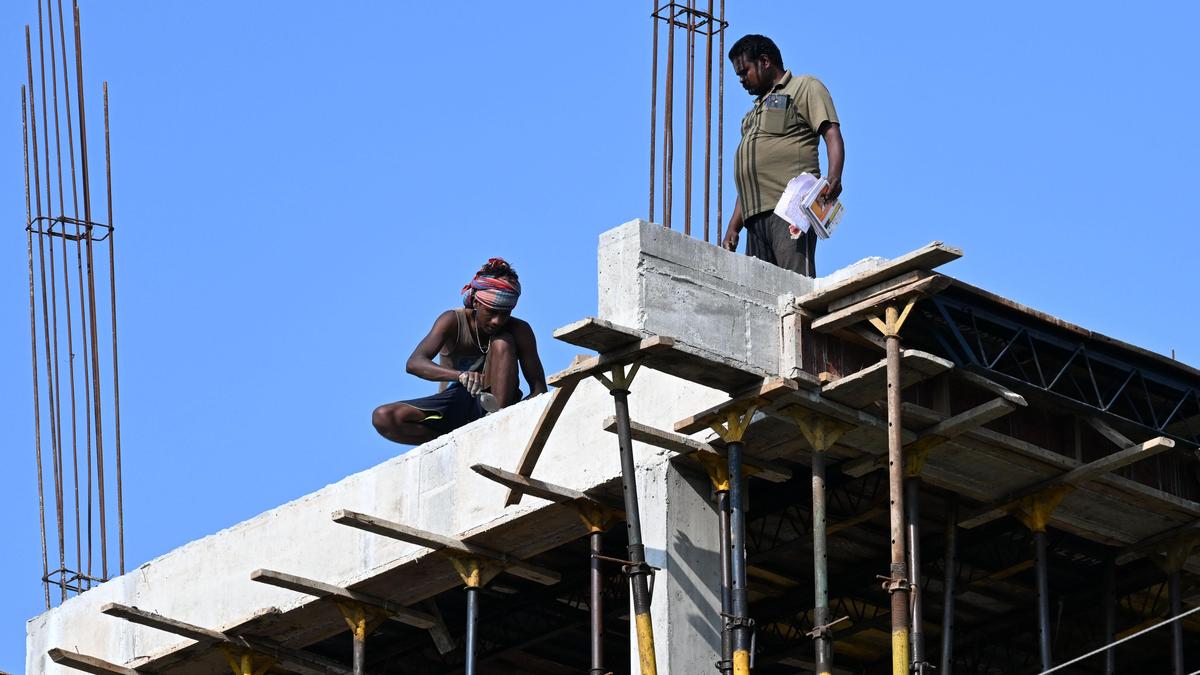
Recent protests by workers in Noida’s industrial units highlight the deepening insecurity in urban employment.
These demonstrations are not isolated events but indicate a wider structural crisis across Indian cities.
Similar unrest may soon spread to other urban centres facing comparable conditions.
Declining Bargaining Power of Workers
Over the decades, workers—especially in the informal sector—have seen a steady erosion of bargaining strength.
Both the state (municipal, State, Union) and employers now dominate labour relations.
This imbalance has reduced workers’ ability to secure fair wages and protections.
Dominance of Informal Employment
Nearly 90% of India’s workforce is employed in the informal sector.
In urban areas, regular salaried jobs remain limited, as shown by PLFS data.
A majority of workers survive in unstable, unregulated, and low-security jobs.
Transformation of Urban Economy
Cities have shifted from industrial production hubs to centres focused on basic survival and social reproduction.
Closure of mills and factories (e.g., Mumbai, Ahmedabad) weakened organised labour systems.
Urban life now revolves around meeting essential needs like food, water, and childcare rather than stable employment.
Shift from Rights to Market-Based Services
Under the influence of the Washington Consensus (coined by John Williamson), the state reduced its role in rights-based welfare.
Focus shifted to privatisation, fiscal discipline, and liberalisation.
Essential services like health, education, and water increasingly became market-driven and fee-based.
Urban Precarity and Policy Challenges
Urban workers face a combination of informal jobs, insecure housing, and high living costs.
Around 40% of the urban poor live in slums, often spending 30–50% of income on rent.
Many settlements are located in hazard-prone areas, worsening vulnerability.
Issues are intensified by privatisation, eviction drives, weakened labour laws, and debt traps due to reliance on informal credit.
Initiatives like workers’ councils (e.g., Kerala Urban Commission) aim to include informal workers in governance and build stronger labour alliances.
Conclusion
India’s urban crisis reflects a structural imbalance between growth-led policies and labour welfare. Addressing urban precarity requires strengthening labour rights, expanding affordable housing, ensuring access to basic services, and integrating informal workers into governance. Inclusive urban planning, as seen in participatory models like workers’ councils, can help rebuild equitable cities while balancing economic growth with social justice and resilience.
Descriptive Question:
- “Urbanisation in India has led to the informalisation and precarity of labour rather than inclusive growth.” Critically examine with suitable examples. (10 marks, 150 words)
