

25 April 2026 Indian Express Editorial
What to Read in Indian Express Editorial ( Topic and Syllabus wise)
Article 1: AI Security Governance
Why in News: Anthropic is in talks with India to safeguard critical infrastructure from emerging cybersecurity threats posed by its advanced AI model Mythos.
Key Details
Anthropic is engaging with India to secure banking, energy, and telecom infrastructure from AI-driven cyber risks.
Its new AI model Mythos can autonomously detect serious software vulnerabilities, raising global concerns.
The Government of India has initiated discussions through the Ministry of External Affairs and financial regulators.
The Finance Ministry has advised banks to maintain high vigilance and coordination mechanisms against AI-based threats.
Critical Infrastructure Security in India
Definition & Importance: Critical infrastructure includes sectors like banking, power, telecom, transportation, and defence, whose disruption can severely impact national security and economic stability.
Legal & Policy Framework: India protects such assets under the Information Technology Act, 2000, and policies like the National Critical Information Infrastructure Protection Centre (NCIIPC) guidelines.
Growing Vulnerabilities: Increasing digitalisation, cloud computing, and interconnectivity have expanded the attack surface, making infrastructure more vulnerable to cyberattacks.
Recent Focus Areas: The financial sector, digital payments (UPI), and smart grids are particularly sensitive, requiring real-time threat monitoring and resilience planning.
Artificial Intelligence and Cybersecurity Threats
AI as a Double-Edged Sword: AI enhances cybersecurity through automation but also enables advanced cyberattacks such as automated hacking, phishing, and malware generation.
Mythos Model Risk: Anthropic’s Mythos reportedly identifies critical vulnerabilities in operating systems and browsers, outperforming most human experts.
Weaponisation of AI: AI tools can be used to exploit zero-day vulnerabilities, posing unprecedented risks to governments and corporations.
Global Concern: Countries like the US are studying such models to develop defensive capabilities, indicating AI’s growing role in national security.
India’s Cybersecurity Architecture
Institutional Framework: India has established bodies like CERT-In, NCIIPC, and National Cyber Coordination Centre (NCCC) for cyber defence.
National Cyber Security Policy (2013): Aims to create a secure cyber ecosystem, though it requires updating to address AI-driven threats.
Digital India & Risks: Initiatives like Digital India and fintech expansion have increased efficiency but also created new vulnerabilities in cyber space.
Capacity Challenges: India faces a shortage of skilled cybersecurity professionals and lacks advanced indigenous AI defence capabilities.
Global AI Governance & Strategic Competition
Geopolitics of AI: AI is becoming a tool of strategic competition among major powers like the US, EU, and China, especially in cyber warfare and surveillance.
Regulatory Efforts: The European Union’s AI Act and global discussions on AI ethics highlight the need for responsible AI governance.
Democratic Collaboration: Companies like Anthropic advocate for “allied democracies” collaboration to ensure secure and ethical AI deployment.
India’s Position: India is emerging as a key player, balancing innovation, regulation, and security concerns in AI governance.
Financial Sector Vulnerability & Preparedness
High-Risk Sector: Banking systems are prime targets due to large-scale digital transactions and sensitive data.
Government Response: The Finance Ministry has urged institutions to maintain high vigilance and coordination mechanisms against AI-based threats.
Systemic Risk: AI-driven cyberattacks can trigger financial instability, data breaches, and loss of public trust.
Need for Coordination: Strengthening collaboration among RBI, banks, and cybersecurity agencies is crucial for real-time response mechanisms.
Ethical AI & Responsible Deployment
Precautionary Approach: Anthropic has restricted public release of Mythos, reflecting the principle of “safety before scalability”.
Project Glasswing: Designed to help companies strengthen cyber defences before AI deployment, indicating proactive risk mitigation.
Ethical Concerns: Issues like misuse, bias, and lack of accountability require robust ethical frameworks.
India’s AI Policy Direction: India is working towards responsible AI frameworks focusing on inclusivity, safety, and innovation.
Conclusion
India must adopt a multi-layered cybersecurity strategy integrating AI capabilities, institutional coordination, and global cooperation. Updating cyber laws, investing in indigenous AI security tools, and strengthening public-private partnerships are essential. As AI evolves rapidly, ensuring secure, ethical, and resilient digital infrastructure will be critical for safeguarding national interests.
EXPECTED QUESTION FOR UPSC CSE
Prelims MCQ
- Which of the following institutions is responsible for responding to cybersecurity incidents in India?
(a) NITI Aayog
(b) CERT-In
(c) RBI
(d) SEBI
Answer: (b)
Article 2: Three Pathways for Energy Diversification
Why in News: Rising geopolitical risks such as potential disruption in the Strait of Hormuz have highlighted the urgent need for India to diversify its energy sources.
Key Details
India is highly dependent on imported crude oil and LNG, making it vulnerable to global disruptions.
Experts suggest three pathways: electrification, biofuels, and natural gas expansion.
India targets 500 GW non-fossil capacity by 2030 and long-term energy transition goals.
Domestic resources like biomass, manure, and rare earths can enhance energy resilience.
Energy Security & Import Dependence
High Import Dependency: India imports nearly 85% of crude oil and ~50% of natural gas, exposing the economy to price shocks and geopolitical instability. This impacts fiscal stability and inflation.
Strategic Vulnerability: The Strait of Hormuz handles about 20% of global oil trade, making disruptions a serious threat to India’s energy supply chain.
Energy Security Definition: Energy security refers to uninterrupted availability of energy at affordable prices, a key objective of India’s energy policy.
Link with Economy: Energy imports contribute significantly to the current account deficit (CAD), affecting macroeconomic stability.
Electrification & Renewable Energy Expansion
Non-Fossil Energy Targets: India aims for 500 GW renewable capacity by 2030 and long-term targets under Panchamrit commitments announced at COP26.
Sectoral Electrification: Electrification of transport (EVs), cooking (electric stoves), and industry reduces dependence on imported fossil fuels.
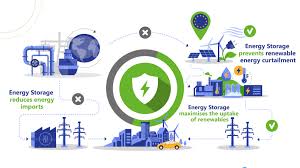
Energy Storage & Smart Grids: Technologies like AI, IoT, and battery storage systems are crucial to manage intermittency of solar and wind energy.
Rare Earth Minerals: India possesses deposits of rare earths needed for batteries and electronics, aligning with the Atmanirbhar Bharat initiative.
Bioenergy & Waste-to-Energy Potential
Biomass Availability: India generates around 950 million tonnes of agricultural residue annually, with ~400 million tonnes available for energy use.
Biogas & Biomethane: With 300 million cattle, India can produce up to 100 billion cubic metres of biogas annually, potentially replacing LNG imports.
Waste-to-Energy Initiatives: Schemes like GOBAR-Dhan Scheme promote converting waste into energy and manure.
Environmental Benefits: Biofuels reduce stubble burning, air pollution, and greenhouse gas emissions, contributing to climate goals.
Natural Gas & LNG Diversification
Cleaner Transition Fuel: Natural gas is considered a bridge fuel, emitting less carbon compared to coal and oil.
Global Supply Advantage: Unlike oil, natural gas is less cartelised (compared to OPEC), offering diversified sourcing options.
Pipeline Infrastructure: India has about 25,000 km of gas pipelines, but expansion is needed to reach remote and industrial areas.
Small-Scale LNG (SSLNG): SSLNG enables flexible distribution for transport, MSMEs, and city gas, overcoming pipeline limitations.
Challenges in Energy Diversification
Logistical Constraints in Biomass: Biomass is bulky and scattered, making collection, storage, and transport costly.
High Capital Investment: Renewable energy, storage systems, and infrastructure require large upfront investments.
Technological Gaps: Advanced technologies like hydrogen, storage, and carbon capture need further development.
Policy & Institutional Issues: Coordination between central and state governments remains a challenge in energy policy implementation.
Climate Commitments & Sustainable Development
Net Zero Target: India has committed to achieving Net Zero emissions by 2070, aligning energy diversification with climate goals.
Paris Agreement Linkage: Diversification supports India’s Nationally Determined Contributions (NDCs) under the Paris Agreement.
SDG Alignment: Contributes to SDG 7 (Affordable and Clean Energy) and SDG 13 (Climate Action).
Energy Transition Justice: Ensures a balanced shift without harming livelihoods, especially in coal-dependent regions.
Conclusion
India must adopt a multi-pronged energy diversification strategy combining electrification, bioenergy, and gas expansion. Policy support should include carbon credits, financial incentives, and infrastructure investment. Encouraging private participation, innovation, and decentralized energy systems will ensure long-term resilience. Energy security must align with economic growth, environmental sustainability, and strategic autonomy.
EXPECTED QUESTIONS FOR UPSC CSE
Prelims MCQ
- Which of the following best describes Small-Scale LNG (SSLNG)?
(a) LNG used only in large power plants
(b) LNG distributed through flexible, small-scale systems
(c) LNG extracted from biomass
(d) LNG used only for exports
Answer: (b)
Descriptive Questions
- Discuss the need for energy diversification in India and evaluate the three major pathways. (150 Words, 10 Marks)
Article 3: Culture and Constitutional Values
Why in News: The recent demise of Neela Bhagwat has renewed focus on khayal music, cultural reform, and freedom of artistic expression in India.
Key Details
Neela Bhagwat was a leading exponent of the Gwalior gharana of Hindustani classical music.
She expanded khayal beyond tradition by integrating social themes like feminism and humanism.
She contributed to preservation through documentation, teaching, and digital dissemination.
Her work reflects the intersection of culture, society, and constitutional values like freedom of expression.
Khayal Music Tradition
Origin and Evolution: Khayal emerged in the 18th century as a flexible vocal form combining melody (raag), rhythm (taal), and poetic text. It replaced the rigid dhrupad style with greater improvisation.
Gharana System: The Gwalior gharana is considered the oldest khayal tradition, known for clarity, structure, and ashtaang gayaki (eight stylistic elements).
Core Features: Khayal emphasises improvisation (alap, taan, bol-bant), allowing artists to creatively interpret ragas within a structured framework.
Cultural Significance: It represents India’s intangible cultural heritage, reflecting continuity, diversity, and guru-shishya parampara.
Role of Artists in Cultural Transformation
Tradition with Innovation: Neela Bhagwat maintained classical purity while introducing new compositions and themes, ensuring relevance in modern society.
Social Reform through Art: Her engagement with feminism and Marxism led her to challenge patriarchal narratives in traditional compositions.
Democratisation of Culture: By questioning hierarchy in music, she promoted inclusive participation and accessibility, aligning with democratic values.
Example: Incorporation of Kabir’s poetry reflects blending of spirituality with social critique, a hallmark of Bhakti tradition.
Cultural Institutions & Preservation
Documentation and Digitisation: She contributed to preserving music through recordings, notation, and online dissemination, important in the digital age.
Khayal Trust Initiative: Platforms like the Khayal Trust promote dialogue among artists and awareness among audiences, strengthening cultural ecosystems.
Interdisciplinary Collaboration: Collaboration with artists like Aruna Sairam bridged Hindustani and Carnatic traditions, promoting national integration.
Policy Relevance: Aligns with government initiatives like cultural preservation, Sangeet Natak Akademi support, and digital archiving.
Art, Society and Constitutional Values
Freedom of Expression: Article 19(1)(a) guarantees artistic freedom, enabling artists like Bhagwat to reinterpret tradition and question norms.
Equality and Gender Justice: Her feminist approach reflects constitutional ideals of equality (Article 14) and challenges cultural patriarchy.
Cultural Rights: Article 29 protects the right to conserve culture, making preservation efforts constitutionally significant.
Ethical Dimension: Art becomes a medium of social awareness, ethical reflection, and public discourse, linking culture with governance.
Way Forward
Strengthening Cultural Education: Integrate Indian classical music like khayal into school and higher education curricula under NEP 2020 to build cultural awareness and encourage youth participation.
Digital Preservation & Open Access: Promote large-scale digitisation of recordings, manuscripts, and oral traditions through platforms like Sangeet Natak Akademi to ensure long-term preservation and accessibility.
Institutional Support & Funding: Enhance financial and institutional backing for artists through grants, fellowships, and cultural missions, especially for lesser-known gharanas and practitioners.
Promoting Inclusivity & Gender Sensitivity: Encourage artistic spaces that are free from hierarchy and patriarchy, supporting women artists and socially relevant themes in line with constitutional values.
Cultural Diplomacy & Global Outreach: Use Indian classical music as a tool of soft power diplomacy by promoting international collaborations, festivals, and cultural exchanges.
Balancing Tradition and Innovation: Encourage artists to innovate within the classical framework, ensuring relevance without compromising authenticity.
Public Participation & Awareness: Organise interactive festivals, workshops, and community platforms to increase public engagement and revive interest in classical traditions.
Conclusion
The legacy of Neela Bhagwat highlights that Indian culture thrives when tradition coexists with innovation and social relevance. Strengthening institutional support, promoting digital archiving, and integrating cultural education can ensure that classical arts remain vibrant. In a constitutional democracy, art must continue to serve as a medium of freedom, dialogue, and social transformation.
EXPECTED QUESTIONS FOR UPSC CSE
Prelims MCQ
- Khayal music is associated with:
(a) Hindustani classical music
(b) Carnatic percussion
(c) Folk theatre
(d) Tribal dance
Answer: (a)
Descriptive Question
- “Art is a reflection of society and a tool of transformation.” Examine in the context of Indian classical music and constitutional values. (250 Words, 15 Marks)
