

The Role Of Plant Breeding In Agriculture: Key Concepts For Entrance Exams
Plant Breeding is a fundamental branch of agricultural science that focuses on improving crop varieties to meet the growing demands of food, nutrition, and sustainability. For students preparing for agriculture entrance exams, this topic is extremely important due to its high weightage, conceptual clarity, and direct application in farming.
This guide covers all the essential concepts, exam-focused topics, and preparation strategies you need to master Plant Breeding.
What is Plant Breeding?
Plant Breeding is the science of:
- Developing new crop varieties
- Improving yield, quality, and resistance
- Enhancing adaptability to environmental conditions
It combines principles of:
- Genetics
- Biotechnology
- Agronomy
Why Plant Breeding is Important
In Agriculture:
- Increases crop productivity
- Improves resistance to pests and diseases
- Enhances nutritional quality
- Helps crops adapt to climate change
In Exams:
- Frequently asked topic
- Includes both conceptual and factual questions
- Easy to score with proper understanding
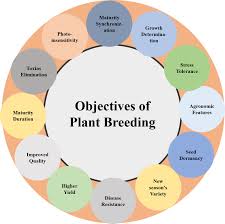
Key Objectives of Plant Breeding
- Higher yield
- Disease resistance
- Pest resistance
- Drought and stress tolerance
- Improved quality (taste, nutrition, shelf life)
- Early maturity
Important Concepts in Plant Breeding
1. Genetic Variation
Variation is the foundation of plant breeding.
Sources:
- Natural variation
- Mutations
- Hybridization
Without variation, improvement is not possible.
2. Selection Methods
Selection involves choosing the best plants.
Types:
- Mass Selection
- Selecting a group of superior plants
- Simple and widely used
- Pure Line Selection
- Selecting offspring from a single plant
- Leads to uniform varieties
- Clonal Selection
- Used for vegetatively propagated crops
3. Hybridization
Hybridization is the crossing of two genetically different plants.
Types:
- Intervarietal
- Interspecific
- Intergeneric
Benefits:
- Combines desirable traits
- Produces hybrid vigor (heterosis)
4. Heterosis (Hybrid Vigor)
Heterosis refers to:
- Superior performance of hybrid offspring compared to parents
Examples:
- Higher yield
- Better resistance
- Faster growth
5. Mutation Breeding
- Involves creating genetic variation using chemicals or radiation
- Produces new traits
Key Point:
Mutations are sudden and heritable changes.
6. Polyploidy
- Increase in the number of chromosome sets
Types:
- Autopolyploidy
- Allopolyploidy
Importance:
- Leads to larger plant size
- Improves crop quality
7. Biotechnology in Plant Breeding
Modern plant breeding uses advanced techniques:
- Genetic engineering
- Tissue culture
- Marker-assisted selection
Benefits:
- Faster development of new varieties
- Precise trait selection
8. Disease Resistance Breeding
- Developing crops resistant to diseases
- Reduces dependence on pesticides
Types of Resistance:
- Vertical resistance
- Horizontal resistance
Common Exam Questions in Plant Breeding
You may encounter:
- Definitions (heterosis, mutation, etc.)
- Differences (mass vs pure line selection)
- Applications (hybridization benefits)
- Concept-based MCQs
Important Terms to Remember
- Genotype vs Phenotype
- Dominant and recessive traits
- Homozygous vs heterozygous
- Inbreeding and outbreeding
- Germplasm
Study Strategy for Plant Breeding
1. Focus on Concepts
Understand:
- How traits are inherited
- Why certain methods are used
Avoid rote memorization without clarity.
2. Use Diagrams
Visual aids help in:
- Understanding hybridization
- Explaining genetic crosses
3. Make Comparison Tables
Example:
| Method | Feature | Use |
| Mass Selection | Simple | Cross-pollinated crops |
| Pure Line Selection | Uniform | Self-pollinated crops |
4. Practice MCQs
- Focus on previous year questions
- Identify repeated topics
5. Revise Regularly
Plant breeding includes many terms—regular revision is key.
Common Mistakes to Avoid
- Confusing selection methods
- Ignoring basic genetics
- Memorizing without understanding
- Not practicing questions
Pro Tips for High Scores
- Focus on definitions and differences
- Remember key examples
- Understand real-life applications
- Practice daily
Quick Revision Points
- Heterosis = Hybrid vigor
- Mutation = Sudden genetic change
- Hybridization = Crossing of plants
- Pure line = Genetically uniform
- Polyploidy = Multiple chromosome sets
Conclusion
Plant Breeding is a scoring and concept-driven topic in agriculture entrance exams. With a clear understanding of genetic principles, selection methods, and modern techniques, you can easily master this subject.
Approach it with clarity, consistency, and practice, and it will become one of your strongest areas in the exam.
Focus on concepts, revise regularly, and success will follow.
