

03 January 2026 Indian Express Editorial
What to Read in Indian Express Editorial( Topic and Syllabus wise)
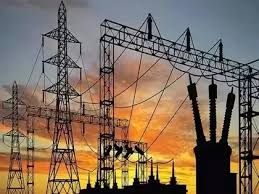
Editorial 1 : Power Sector Reforms
Context
India’s rapid expansion of renewable energy capacity has shifted the energy transition challenge from generation constraints to systemic issues in power distribution, tariff structures, demand management, and electricity market design.
Introduction
India has made significant progress in scaling up renewable energy, with solar and wind capacity crossing 180 GW and costs falling sharply. However, the transition to clean energy now faces structural bottlenecks rather than technological ones. The editorial argues that unless India reforms its distribution companies, redesigns tariffs, enables automated demand response, and deepens wholesale power markets, renewable energy will remain underutilised, financially disruptive, and politically contested.
Distribution Sector: The Key Bottleneck
- Distribution companies (discoms) act as the interface between generation and consumers, making them central to renewable integration.
- Persistently high AT&C losses of around 16% reflect power theft, billing inefficiencies, and technical weaknesses.
- Financial stress limits discom ability to invest in grid modernisation, forecasting tools, and balancing capacity.
- Past reforms (UDAY, RDSS) improved infrastructure and liquidity but failed to correct incentive and tariff distortions.
- Weak discom performance risks turning renewable growth into operational instability rather than energy security.
Rising Renewable Penetration and System Stress
- Increasing share of solar and wind introduces variability, intermittency, and forecasting uncertainty.
- Peak demand periods become sharper and more expensive due to misalignment between renewable output and consumption.
- Grid balancing, frequency management, and ramping capability become core system requirements.
- Discom incentives remain focused on electricity sales volumes rather than reliability, efficiency, or flexibility.
- Absence of performance-linked incentives discourages proactive renewable integration by discoms
Cross-Subsidisation and Revenue Erosion
- Electricity tariffs rely heavily on cross-subsidisation from commercial and industrial (C&I) consumers.
- Households and agriculture receive power at tariffs below cost for social and political reasons.
- High-tariff C&I consumers increasingly adopt rooftop solar, energy efficiency, and open access to reduce costs.
- Loss of high-margin consumers weakens discom revenue base while subsidy obligations persist.
- This creates a vicious cycle of rising tariffs for remaining users and further consumer exit.
Fixed Costs and Tariff Design Challenge
- Discom cost structures are dominated by fixed expenses such as network O&M and long-term PPAs.
- Energy efficiency and behind-the-meter solar reduce electricity sales but do not reduce fixed costs.
- Volumetric tariffs fail to recover fixed network costs when demand falls.
- Demand response lowers peak demand but may reduce revenues before cost savings materialise.
- Absence of separate fixed charges distorts price signals and discourages clean energy adoption.
Rooftop Solar and Net Metering Concerns
- Net metering compensates exported rooftop solar at retail tariffs that include network and cross-subsidy components.
- Daytime self-generation reduces grid purchases when solar output is high.
- Continued reliance on grid power during evenings and nights imposes capacity and reliability costs on discoms.
- Discoms effectively become backup service providers without adequate remuneration.
- Without reform, rooftop solar adoption deepens financial stress instead of enabling decentralised energy.
Role of Smart Meters and Time-of-Day Tariffs
- Nationwide mandate for time-of-day tariffs marks a shift toward cost-reflective pricing.
- Installation of nearly 49 million smart meters enables granular consumption measurement.
- Smart meters provide the technical foundation for dynamic pricing, demand response, and loss reduction.
- However, information asymmetry limits consumer ability to respond to price signals.
- Price-based demand response alone is insufficient without automation and digital support systems.
Need for Automated Demand Response
- Manual demand shifting is unrealistic for households and small businesses.
- Smart appliances, automated thermostats, and EV smart charging can shift load without consumer intervention.
- Automated demand response offers grid flexibility comparable to storage at significantly lower cost.
- Demand-side flexibility reduces peak procurement costs and renewable curtailment.
- Integrating automation enhances consumer comfort while supporting grid stability.
Wholesale Power Market Limitations
- Renewable energy resources are concentrated in specific regions, while demand is urban-centric.
- Despite a physically interconnected grid, electricity markets remain institutionally fragmented.
- Power exchanges handle only 7–9% of total electricity, limiting price discovery.
- Self-scheduling under long-term PPAs restricts least-cost dispatch.
- This leads to renewable curtailment even when green power is cheaper.
Need for Wholesale Market Reforms
- Market-Based Economic Dispatch (MBED) prioritises dispatch of lowest-cost generation nationally.
- Centralised economic dispatch improves utilisation of zero-marginal-cost renewables.
- CERC estimates annual savings of about $1.6 billion from MBED implementation.
- Integrating captive power plants would unlock underused flexible capacity.
- Deeper markets improve liquidity, competition, and investment signals.
Redefining the Role of Discoms
- Discoms must evolve from passive bill collectors to active system managers.
- Incentives should reward reliability, loss reduction, peak management, and flexibility.
- Proper tariff reform allows discoms to benefit from energy efficiency and rooftop solar.
- Performance-linked regulation aligns discom interests with climate and consumer goals.
- Strong discoms are essential for sustaining public support for energy transition
Conclusion
India’s renewable energy journey has entered a phase where system reform matters more than capacity addition. Without fixing distribution finances, modernising tariff design, enabling automated demand response, and integrating wholesale markets, clean energy risks creating inefficiencies and resistance. A transition focused on system optimisation, rather than generation alone, is critical to delivering reliable, affordable, and sustainable power.
Editorial 2 : Telecom Market Concentration
Context
India’s telecom sector, once characterised by intense competition and rapid innovation after liberalisation, is increasingly concentrated among a few players, raising concerns about market efficiency, consumer welfare, and the resilience of critical digital infrastructure.
Introduction
Telecom emerged as one of India’s biggest post-reform success stories, delivering low tariffs, wide coverage, and technological leapfrogging. However, persistent regulatory uncertainty, high spectrum costs, and legacy liabilities have led to consolidation. Today, the dominance of two private players—Reliance Jio and Bharti Airtel—alongside the financial distress of Vodafone Idea and the marginal role of BSNL, has weakened competitive dynamics. The editorial stresses the urgency of restoring a multi-player telecom ecosystem.
Market Concentration and Its Risks
- Two private players control nearly three-fourths of India’s telecom market, indicating a shift from competition to duopoly
- Vodafone Idea’s declining market share weakens the “third-player constraint” essential for price discipline
- BSNL’s limited presence reduces public-sector competitive pressure
- High concentration can lead to tacit coordination on tariffs and slower innovation
- Reduced contestability increases systemic risk if one major player faces operational or financial distress
Financial Stress of Vodafone Idea
- Total debt of about ₹2.3 lakh crore reflects accumulated AGR dues and spectrum liabilities
- Legacy policy uncertainty around AGR interpretation continues to burden balance sheets
- Shrinking subscriber base indicates declining consumer confidence and network quality concerns
- Limited capital expenditure affects 4G coverage expansion and delays 5G readiness
- Financial fragility threatens employment, vendor ecosystems, and banking exposure
Government Relief Measures and Their Significance
- Freezing of AGR dues improves short-term liquidity but does not eliminate core debt burden
- Rescheduling payments till FY 2041 reduces immediate cash flow stress
- Proposed induction of a private investor can restore managerial autonomy and market confidence
- Government exit would reduce moral hazard and regulatory conflict of interest
- Equity infusion is essential to fund network upgrades and spectrum utilisation
Need for a Level Playing Field
- Regulatory certainty is crucial for sustaining long-term investment in capital-intensive telecom infrastructure
- Uniform application of rules ensures competitive neutrality and investor trust
- Differential treatment risks distorting market outcomes and inviting litigation
- Spectrum pricing and renewal policies must balance revenue objectives with sector sustainability
- Predictable regulation lowers cost of capital and encourages technological innovation
Consumer Welfare and Digital Economy Implications
- Reduced competition can translate into higher tariffs and lower service quality over time
- Telecom is the backbone of Digital India, e-governance, and financial inclusion initiatives
- Affordable connectivity is essential for MSMEs, startups, and gig economy workers
- Market concentration could slow rural and remote area connectivity expansion
- Multi-player markets improve resilience and service continuity
Policy and Regulatory Perspective
- TRAIhas emphasised the importance of at least three private players for healthy competition
- Economic Surveynotes that excessive consolidation in network industries reduces consumer surplus
- CCIhighlights the need for contestable markets even where player numbers are limited
- DoTrecognises telecom as strategic infrastructure critical to national security and economic growth
- International experience (EU, South Korea) supports strong regulatory oversight to prevent duopolistic behaviour
Way Forward
- Facilitate timely capital infusion into stressed operators without distorting competition
- Rationalise spectrum pricing and payment schedules to reduce entry barriers
- Encourage infrastructure sharing to lower costs and improve network efficiency
- Strengthen BSNL through targeted reforms rather than protectionist measures
- Ensure regulatory independence and consistency across policy cycles
Conclusion
India’s telecom sector stands at a crossroads. Allowing excessive market concentration risks reversing decades of consumer welfare gains and undermining the digital economy. Ensuring the presence of multiple financially strong players through fair regulation, capital infusion, and policy stability is essential to sustain competition, innovation, and resilience in a sector that underpins India’s economic and digital future.
