
04 April 2026 Indian Express Editorial
What to Read in Indian Express Editorial ( Topic and Syllabus wise)
Article 1: Urban Air Pollution Governance
Why in News: The Delhi government has launched an early Air Pollution Mitigation Action Plan 2026 to tackle winter smog through regulatory, technological, and enforcement-based measures.
Key Details
Entry of only BS-VI, CNG, or electric goods vehicles from November to curb vehicular pollution.
Strict enforcement of ‘No PUC, No Fuel’ rule and decongestion of 62 pollution hotspots.
Expansion of public transport with a target of 13,760 buses (priority to e-buses) and 32,000 EV charging points.
Establishment of Green War Room, real-time monitoring systems, and ward-level ‘Vayu Rakshak’ teams.
Sources of Urban Air Pollution (Static Foundation)
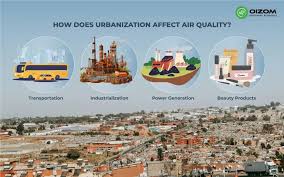
Vehicular Emissions: Vehicles contribute significantly to PM2.5 and NOx levels, especially in megacities like Delhi, where high vehicle density leads to persistent air quality deterioration.
Road Dust and Construction Activity: Dust from unpaved roads and construction sites accounts for nearly 30–40% of particulate pollution in urban areas, particularly during dry winter months.
Industrial and Biomass Burning: Industrial emissions and stubble burning in neighbouring states add to transboundary pollution, worsening seasonal smog conditions.
Meteorological Factors: Temperature inversion and low wind speed during winters trap pollutants, leading to severe AQI levels (often above 400 – “Severe” category).
Regulatory Measures & Policy Framework
Bharat Stage (BS-VI) Norms: Implementation of BS-VI emission standards significantly reduces sulphur content and vehicular emissions, aligning India with global emission standards.
‘No PUC, No Fuel’ Enforcement: Pollution Under Control (PUC) certification ensures vehicles meet emission norms; strict enforcement increases compliance and reduces polluting vehicles.
Graded Response Action Plan (GRAP): A statutory mechanism under the Commission for Air Quality Management (CAQM), GRAP imposes restrictions based on AQI levels.
Environmental Protection Framework: Laws like the Air (Prevention and Control of Pollution) Act, 1981 and policies under the National Clean Air Programme (NCAP) guide pollution control efforts.
Technological Interventions & Smart Governance
Intelligent Traffic Management System (ITMS): AI-based traffic systems optimise flow, reduce congestion, and lower emissions caused by idling vehicles.
Real-time Air Quality Monitoring: Expansion of monitoring networks and use of data analytics enable evidence-based policymaking and timely interventions.
Green War Room & Command Centre: Centralised platforms improve coordination among agencies, ensuring accountability, rapid response, and policy enforcement.
Dust Control Technologies: Use of mechanical sweepers, anti-smog guns, and mist systems helps reduce particulate matter from road dust and construction sites.
Sustainable Urban Mobility & EV Transition
Public Transport Expansion: Increasing bus fleet to 13,760 by 2028-29 aims to reduce dependence on private vehicles and lower per capita emissions.
Electric Mobility Push: Installation of 32,000 EV charging stations and promotion of e-buses, e-autos, and two-wheelers supports decarbonisation of transport.
Integrated Transport Systems: Integration of Metro, RRTS, and feeder services enhances last-mile connectivity, improving public transport usage.
Policy Support: Delhi’s EV policy aligns with India’s commitment to reduce carbon intensity and achieve net-zero targets by 2070.
Institutional Mechanisms & Multi-Level Governance
Commission for Air Quality Management (CAQM): A statutory body coordinating pollution control across Delhi-NCR, addressing inter-state pollution issues.
Local Governance – Vayu Rakshak Teams: Ward-level teams ensure grassroots monitoring, community participation, and enforcement of pollution norms.
Inter-State Coordination: Pollution sources like stubble burning require cooperation between Delhi, Punjab, Haryana, and UP.
Accountability & Time-bound Targets: Deadlines for landfill removal (e.g., Ghazipur by 2027) and emission monitoring systems enhance governance efficiency.
Environmental & Health Implications
Public Health Crisis: Air pollution is linked to respiratory diseases, cardiovascular issues, and premature deaths; India accounts for a high global pollution burden.
Economic Costs: Reduced productivity, increased healthcare expenditure, and environmental degradation impact economic growth.
Vulnerable Groups: Children, elderly, and urban poor are disproportionately affected, highlighting the need for inclusive policies.
Climate Change Linkage: Air pollutants like black carbon contribute to global warming, linking local pollution with global climate concerns.
Conclusion
Delhi’s early action plan reflects a shift from reactive to proactive governance in tackling air pollution. However, sustained success requires regional cooperation, strict enforcement, behavioural change, and long-term urban planning reforms. A combination of technology, policy, and citizen participation is essential to ensure clean air as a fundamental right.
EXPECTED QUESTIONS FOR UPSC CSE
Prelims MCQ
- Which of the following are major sources of urban air pollution?
Vehicular emissions
Road dust
Industrial discharge
Biomass burning
Select the correct answer:
(a) 1 and 2 only
(b) 1, 2 and 3 only
(c) 1, 2, 3 and 4
(d) 2 and 4 only
Answer: (c)
Descriptive Question
- Discuss the role of technological interventions and governance reforms in addressing urban air pollution in India. (150 Words, 10 Marks)
Article 2: Inflation & External Shocks
Why in News: The ongoing West Asia conflict and emerging El Niño conditions have raised concerns over a possible spike in India’s inflation beyond the RBI’s target range.
Key Details
Rising tensions in West Asia have pushed crude oil prices above $110–140 per barrel, impacting import-dependent economies like India.
India’s inflation had moderated to around 2% in FY 2025-26, creating room for lower interest rates.
El Niño conditions may disrupt monsoon patterns, affecting agricultural output and food inflation.
Combined shocks may push inflation beyond RBI’s tolerance band (2–6%), forcing policy tightening.
Inflation Targeting Framework in India
Flexible Inflation Targeting (FIT): India follows a 4% inflation target (±2%), mandated under the RBI Act, 1934, to balance growth and price stability.
Role of Monetary Policy Committee (MPC): The MPC adjusts repo rates to control inflation; breaching 6% requires RBI to explain corrective actions to the government.
Trade-off between Growth and Inflation: Moderate inflation supports investment and consumption, while high inflation erodes purchasing power and savings.
Recent Trend: Inflation declined to around 2% in FY 2025-26, enabling softer interest rates and improved credit growth.
Oil Price Shock and Imported Inflation
High Import Dependence: India imports nearly 85% of its crude oil, making it vulnerable to global price volatility.
Transmission Channels: Rising crude prices increase fuel costs, transport expenses, and production costs, leading to cost-push inflation.
Historical Evidence: Events like the 2008 oil shock and Russia-Ukraine war (2022) triggered inflation spikes in India.
Current Scenario: West Asia tensions, especially around the Strait of Hormuz, threaten supply disruptions, pushing prices above $140/barrel.
El Niño and Food Inflation Dynamics
Understanding El Niño: It is a climatic phenomenon causing higher temperatures and deficient rainfall, weakening the Indian monsoon.
Impact on Agriculture: Reduced rainfall affects crop yields, irrigation, and rural incomes, leading to supply shortages.
Food Inflation Link: Food constitutes nearly 45% of CPI, so disruptions significantly impact overall inflation.
Past Trends: Previous El Niño years (e.g., 2015-16) saw higher food prices and rural distress, affecting economic stability.
Combined Impact: Oil Shock and Climate Shock
Double Supply Shock: Simultaneous rise in crude oil prices and weak monsoon creates cost-push inflation from both energy and food sectors.
Inflation Projections: Estimates suggest inflation could rise to 5–6% at $100 oil, and even 7–9% if oil crosses $125–150 with severe El Niño.
Policy Constraints: RBI may be forced to raise interest rates, which could slow economic growth and investment.
Vulnerability of Households: Rising inflation disproportionately affects poor and middle-class households, reducing real income.
External Sector and Macroeconomic Implications
Current Account Deficit (CAD): Higher oil import bills widen CAD, increasing pressure on the rupee.
Exchange Rate Depreciation: A weaker rupee makes imports costlier, further fueling inflation.
Fiscal Pressure: Government may increase subsidies (fuel, fertiliser), impacting fiscal deficit targets.
Global Spillovers: Prolonged geopolitical conflicts disrupt global supply chains and investor sentiment.
Policy Responses and Government Measures
Monetary Policy Tools: RBI may use repo rate hikes, liquidity tightening, and inflation targeting mechanisms.
Supply-side Interventions: Government can reduce import duties, release buffer stocks, and manage exports to stabilise prices.
Energy Diversification: Promoting renewable energy, ethanol blending, and strategic reserves reduces oil dependence.
Agricultural Resilience: Investments in irrigation, climate-resilient crops, and crop insurance help mitigate monsoon shocks.
Conclusion
India faces a complex macroeconomic challenge due to the simultaneous impact of geopolitical and climatic shocks. A calibrated mix of monetary tightening, fiscal prudence, and structural reforms is essential to contain inflation without derailing growth. Strengthening energy security and climate resilience will be critical for long-term macroeconomic stability.
EXPECTED QUESTIONS FOR UPSC CSE
Prelims MCQ
- Consider the following statements regarding inflation in India:
RBI’s inflation target is 4% with a tolerance band of ±2%.
Food items have the highest weight in the Consumer Price Index (CPI).
India is self-sufficient in crude oil production.
Which of the above are correct?
1 and 2 only
1 and 3 only
2 and 3 only
1, 2 and 3
Answer: a
Descriptive Question
- “India’s inflation dynamics are increasingly shaped by external and climatic shocks.” Discuss with reference to oil prices and El Niño. (GS Paper III)
Article 3: Insolvency Reforms & Economy
Why in News: Parliament passed the Insolvency and Bankruptcy Code (Amendment) Bill, 2026 to address delays, improve recovery, and align India’s insolvency framework with global best practices.
Key Details
The IBC Amendment 2026 aims to speed up insolvency resolution and reduce judicial delays.
Introduces out-of-court mechanism (creditor-initiated CIRP), group insolvency, and cross-border insolvency framework.
Focus on time-bound admission by NCLT and improved creditor oversight.
Based on recommendations of a Select Committee (2025) to plug systemic gaps.
Insolvency and Bankruptcy Code (IBC) – Background & Objectives
Time-bound insolvency framework (2016): The IBC, enacted in 2016, replaced fragmented laws like SICA and SARFAESI, aiming for time-bound resolution (180–330 days) of stressed assets.
Resolution over recovery principle: The primary objective is to revive viable firms and maximise asset value rather than mere debt recovery, preserving jobs and economic value.
Institutional framework: Key institutions include NCLT, NCLAT, Insolvency Professionals, and IBBI, ensuring a structured insolvency ecosystem.
Improved credit culture: IBC has strengthened credit discipline, reducing wilful defaults and improving India’s ranking in the Ease of Doing Business (Resolving Insolvency indicator).
Need for Fresh Amendments (Contemporary Issues)
Delays in resolution process: Despite a 14-day admission timeline, cases often took months to be admitted, leading to value erosion of distressed assets.
Low recovery rates: As of 2025, recovery rates hovered around ~34% for financial creditors, raising concerns about efficiency.
Judicial backlog: Overburdened NCLT and NCLAT led to delays in both admission and appeals, reducing investor confidence.
Procedural inefficiencies: Overlaps, litigation delays, and lack of clarity in processes hindered time-bound resolution, contrary to IBC’s core objective.
Faster Admission & Procedural Efficiency
Mandatory admission on default proof: The amendment requires NCLT to admit applications once default is proven, eliminating discretionary delays.
Reduction of initial bottlenecks: Earlier, procedural scrutiny caused delays; now, clear criteria streamline entry into insolvency process.
Time-bound judicial action: Strengthening timelines ensures quicker initiation, preventing asset value deterioration.
Improved investor confidence: Faster admission reduces uncertainty, encouraging distressed asset investors and resolution applicants.
Creditor-Initiated Insolvency Resolution Process (CIRP)
Out-of-court mechanism: Introduction of creditor-driven initiation allows resolution outside formal court processes, reducing litigation burden.
51% creditor approval threshold: At least 51% of financial creditors must agree, ensuring consensus-based decision-making.
Alternative to lengthy proceedings: Provides a faster alternative compared to traditional NCLT route, improving efficiency and recovery chances.
Boost to distressed asset market: Encourages participation of private equity and asset reconstruction companies, enhancing capital flow.
Group Insolvency Framework
Holistic resolution of corporate groups: Allows simultaneous handling of interlinked companies, especially conglomerates with shared liabilities.
Prevents fragmented proceedings: Earlier, separate insolvency processes led to value loss and coordination issues.
Improves recovery outcomes: Consolidated resolution ensures better asset valuation and coordinated restructuring.
Global best practice alignment: Reflects international trends in handling complex corporate structures.
Cross-Border Insolvency Framework
Recognition of foreign proceedings: Provides clarity for cases involving assets or creditors across countries.
Judicial cooperation: Enables coordination between Indian courts and foreign jurisdictions for efficient resolution.
Alignment with global norms: Moves towards frameworks like UNCITRAL Model Law, enhancing India’s global credibility.
Boost to foreign investment: Predictable legal environment increases investor confidence in cross-border transactions.
Strengthening Institutional Mechanisms
Removal of conflict of interest: Resolution Professionals (RPs) cannot become liquidators, ensuring fair and unbiased decision-making.
Time limit for appeals: A 3-month timeline for NCLAT reduces appellate delays and improves efficiency.
Empowering IBBI: IBBI can now regulate conduct and timelines of the Committee of Creditors (CoC).
Shift from criminal to civil penalties: Minor violations now attract civil penalties, reducing fear of criminalisation and encouraging compliance.
Performance of IBC – Data & Outcomes
Resolutions achieved: By December 2025, over 1,300+ companies resolved under IBC.
Recovery amount: Creditors recovered approximately ₹4.1 lakh crore, reflecting significant economic impact.
Haircut concerns: High haircuts in some cases highlight issues of value erosion and delayed resolution.
Systemic impact: Improved banking sector health, reduction in NPAs, and strengthened financial stability.
Challenges & Concerns
Delay despite reforms: Persistent delays due to litigation and capacity constraints still undermine effectiveness.
Haircuts and value erosion: Creditors often accept significant losses, raising questions about efficiency of asset valuation.
Capacity constraints: Shortage of judges and infrastructure in NCLT/NCLAT affects timely disposal.
Balancing interests: Conflict between creditor recovery and business revival remains a key policy challenge.
Conclusion
The 2026 amendments mark a significant step toward strengthening India’s insolvency ecosystem by improving speed, transparency, and global alignment. However, success depends on enhancing institutional capacity, reducing litigation, and maintaining the core objective of resolution over recovery. A robust IBC framework is essential for ensuring financial stability, promoting investment, and sustaining economic growth.
EXPECTED QUESTION FOR UPSC CSE
Descriptive Question
Discuss the key features of the Insolvency and Bankruptcy Code (Amendment) 2026. How do these reforms address existing challenges in India’s insolvency framework? (150 Words, 10 Marks)
