

06 December 2025 Indian Express Editorial
What to Read in Indian Express Editorial( Topic and Syllabus wise)
Editorial 1: “For Putin, a political win; for India, a stable partner”
Context:
Russian President Putin’s state visit to India in December 2025 highlights India’s strategic balancing act amid evolving global power dynamics, Russia’s isolation, and shifting India-US relations.
Introduction:
In December 2025, Russian President Vladimir Putin undertook a two-day state visit to India, receiving an unusually warm reception despite Russia’s growing international isolation due to the Ukraine conflict. The visit carried significant political value for Putin, projecting legitimacy on the global stage. For India, it reinforced a historically robust defence and strategic partnership while allowing New Delhi to assert its policy of strategic autonomy. Amid strained India-US ties and China’s regional assertiveness, the visit exemplified India’s careful diplomacy in managing complex geopolitical alignments.
Key Takeaways:
- Political Gains for Russia:
- The visit provided Russia with international visibility and legitimacy despite its aggressive actions in Ukraine.
- Positive optics—red-carpet reception and high-level engagements—boost Putin’s domestic political standing.
- Russia seeks to maintain its global relevance, particularly in strategic partnerships outside the Western sphere.
- Strategic Significance for India:
- India continues to maintain strategic autonomy, balancing its relations with the US, Russia, and China.
- Russia remains a key defence partner: India relies on Russian systems such as S-400 air defence systemsand nuclear submarine technology, where alternatives from other countries are limited.
- Collaboration in nuclear energy(small modular reactors, floating power plants) and other dual-use technologies strengthens India’s long-term energy security and technological capabilities.
- India-Russia Relations in Historical Perspective:
- Unlike the Indo-Soviet strategic partnership driven by Cold War imperatives, contemporary India-Russia ties are anchored in defence, energy, and technology cooperation, not geopolitics alone.
- India has diversified its defence procurement, increasingly sourcing high-tech weapons from the US, Israel, and European countries while maintaining Russia as a core supplier for critical systems.
- Implications for India-US Relations:
- The US has been selective in its engagement with India, evident in punitive tariffs linked to India’s Russian oil purchases.
- India’s approach demonstrates a calibrated strategy: maintaining strong defence and economic ties with the US while avoiding direct confrontation over Russia.
- China and Europe’s Perspective:
- China may view closer India-Russia ties cautiously, as it could enhance India’s military capabilities, but it may also see value if it reduces the weight of US containment strategies.
- Europe disapproves of India’s warm reception of Putin but values India as a strategically autonomous partner, especially amid perceived US unreliability and China’s assertiveness.
- India’s Diplomatic Balancing Act:
- India continues to emphasize non-alignment and strategic autonomy, signaling support for Ukraine’s sovereignty without directly antagonizing Russia.
- This reflects India’s long-standing foreign policy approach of issue-based alignment rather than ideological or bloc-based alignment.
- By engaging Russia, India safeguards its defence preparedness and energy security while maintaining the flexibility to cooperate with other global powers.
Supplementary Insights:
- Defence:India imports ~60–70% of its major defence systems from Russia, including aircraft, missiles, and naval systems (SIPRI Arms Transfers Database, 2025).
- Energy:Russia is a key partner in India’s nuclear power program, particularly in VVER reactors and emerging SMR projects (IAEA Reports, 2024).
- Strategic Autonomy:India’s approach aligns with its 21st-century foreign policy doctrine, balancing ties with multiple great powers to maximize national interest without entanglement (Shyam Saran, former Foreign Secretary; MEA Annual Report 2025).
Conclusion:
Putin’s visit underscores the evolving dynamics of global geopolitics and the importance of strategic autonomy for India. While Russia gains politically, India consolidates a reliable partner for defence, energy, and technology, all while navigating a complex international environment. The visit exemplifies India’s nuanced foreign policy—pragmatic, balanced, and interest-driven.
Editorial 2 : Delhi HC Rejects Semaglutide Patent Suit
Context:
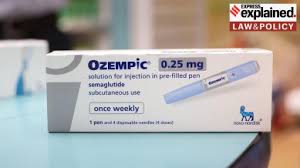
Delhi High Court allowed Dr. Reddy’s Laboratories to manufacture and export generic semaglutide, rejecting Novo Nordisk’s patent infringement plea, citing concerns of evergreening.
Introduction:
Semaglutide, a GLP-1 receptor agonist, is a breakthrough drug for Type 2 diabetes and obesity, marketed by Novo Nordisk as Ozempic and Wegovy. While the original composition patent has expired, the company held a formulation patent to extend its monopoly. The Delhi HC’s ruling in favor of DRL highlights India’s commitment to balancing patent protection and public health, preventing undue extension of drug monopolies through evergreening.
Key Details of the Case:
- Drugs and Patents Involved:
- Semaglutideis a GLP-1 receptor agonist marketed as Ozempic (diabetes) and Wegovy (weight loss).
- Novo Nordisk held two main Indian patents:
- Patent No. 275964: Composition patent, expired in September 2024.
- Patent No. 262697: Formulation/delivery patent, expiring March 2026.
- DRL challenged the second patent on grounds of lack of novelty and inventive step, arguing that minor modifications did not constitute a new invention.
- Legal Arguments:
- Novo Nordisk:Claimed formulation was novel and exhibited significantly higher efficacy.
- DRL:Contended the second patent represented evergreening, prohibited under Section 3(d) of the Indian Patents Act, 1970, as it lacked true innovation.
- Delhi HC’s Ruling:
- Court allowed DRL to continue manufacturing and exporting semaglutide.
- Recognized DRL’s challenge as prima facie valid, indicating potential double patenting by Novo Nordisk.
- Stressed that sales in India remain restricted until the original patent expires.
Relevant Key Issues:
- Patent Law and Public Interest:
- Section 3(d) prevents evergreening, ensuring innovations are genuineand not mere modifications.
- Protects affordable access to essential medicines, aligning with India’s constitutional duty under Article 47(Duty to raise public health standards).
- Impact on Indian Pharma Industry:
- Encourages generic drug production, strengthening India’s position as the “pharmacy of the world”.
- Promotes competition, reducing costs for life-saving drugs in domestic and international markets.
- Opens opportunities for companies like Cipla, Sun Pharma, and Mankind Pharmato introduce GLP-1 drugs, expanding healthcare access.
- Global Pharmaceutical Governance:
- Highlights India’s balanced approachbetween intellectual property rights (TRIPS compliance) and public health priorities.
- Demonstrates judicial intervention as a check on corporate monopolies, ensuring that patents do not unduly extend market exclusivity.
- Science & Technology Angle:
- GLP-1 drugs represent advanced biotechnology, targeting insulin secretion, glucagon inhibition, and appetite suppression.
- Access to generics can enhance diabetes and obesity management, critical given India’s rising non-communicable disease burden.
Additional Perspective:
- Economic Significance:
- Affordable semaglutide could save costs for governments and consumers, reducing dependency on imported patented drugs.
- Generic exports contribute to India’s pharmaceutical trade surplus, reinforcing Make in Indiaand Atmanirbhar Bharat
- Health Policy Implications:
- Facilitates broader NCD control programsunder National Health Mission.
- Aligns with WHO’s emphasis on generic accessfor essential medicines.
- Legal Precedent:
- Strengthens enforcement of Section 3(d) jurisprudence, already invoked in the Novartis Glivec case (2013).
- Sends a signal to multinational pharma about limiting evergreening practicesin India.
Way Forward:
- Strengthen regulatory vigilance to prevent evergreening and promote genuine pharmaceutical innovation.
- Encourage domestic production and export of affordable generic drugs to enhance India’s global pharmaceutical footprint.
- Ensure wider patient access to essential medicines while maintaining incentives for innovation under TRIPS-compliant patent laws.
- Promote public awareness and policy frameworks supporting equitable healthcare and cost-effective treatmentfor non-communicable diseases.
Conclusion:
The Delhi HC ruling is a landmark decision reinforcing India’s commitment to public health over corporate monopolies, ensuring that genuine innovation is rewarded while preventing abuse of patent law. It provides a strategic boost to domestic pharmaceutical capacity, promotes affordable access to critical medicines, and reflects India’s balanced stance in global IP and trade dynamics.
