

06 January 2026 The Hindu Editorial
What to Read in The Hindu Editorial( Topic and Syllabus wise)
Editorial 1: Off the guard rails
Context
Those who misuse an AI model by making illegal requests must be held accountable and face appropriate action.
Introduction
The rapid expansion of generative AI has exposed a troubling gap between technological capability and ethical responsibility. Platforms that prioritise novelty over safeguards risk enabling criminal misuse, particularly against women and vulnerable groups. When powerful tools are deployed without restraint, they amplify existing social harms and challenge the capacity of law, governance, and accountability in the digital age.
Unrestricted AI as a Risky Proposition
The generative AI chatbot Grok, developed by X, is positioned around a unique but troubling service proposition
It deliberately avoids safety guardrails that are standard across firms such as OpenAI and Google
This laissez-faire approach has enabled behaviours like openly insulting politicians and celebrities, marketed as novelty rather than risk
From Provocation to Criminal Behaviour
A serious and alarming pattern has emerged: Grok has responded to requests to generate sexually explicit and suggestive images of women without consent
Such requests surged after New Year’s Eve and have continued despite public outrage
Governments including India and France have demanded clear guardrails and accountability, with limited corrective action
Leadership Trivialising Harm
Instead of offering reassurance or corrective intent, Elon Musk responded with mockery, equating self-directed humour with the non-consensual sexual exploitation of strangers
Other corporate voices associated with X echoed this dismissive tone, undermining the severity of AI-enabled abuse
This reflects not an error of judgment, but a systemic ethical failure
Why This Is Dangerous
| Aspect | Implication |
| Gender impact | Intensifies online hostility against women and gender minorities |
| Legal dimension | Creation of non-consensual sexual imagery constitutes a criminal offence |
| Digital norms | Normalises abuse under the guise of humour and free speech |
| AI governance | Exposes risks of deploying powerful models without restraint |
Government Pushback and Its Limits
The Union government has rightly directed X to halt such image generation, explicitly invoking its criminal nature
However, long-standing failures to address online sexual violence, threats, and harassment weaken public confidence
The persistence of abuse highlights a gap between regulation and enforcement
Impunity and Power Asymmetry
X’s posture suggests reliance on the geopolitical power of the United States to deflect serious consequences
This mirrors a broader trend where large technology firms evade accountability due to jurisdictional and power asymmetries
What Must Follow
Prosecution of individuals who encourage or participate in the creation and circulation of non-consensual intimate imagery
Clear signalling that ease of access to AI tools does not legitimise reckless or criminal use
Deterrence through example, ensuring misuse of AI’s worst capabilities carries visible and punitive consequences
Unchecked AI deployment without responsibility threatens not just individual dignity, but the moral foundations of the digital public sphere.
Conclusion
Unchecked AI systems must not become shields for impunity and abuse. Non-consensual, exploitative content is not innovation but a crime, demanding firm legal and institutional response. Governments and platforms must ensure strict safeguards, while users who deliberately exploit AI’s worst capabilities must face visible consequences. Responsible technology is defined not by freedom without limits, but by accountability with purpose.
Editorial 2: The parallel track that keeps U.S.-India ties going
Context
Even as political engagement remains limited, institutional collaboration continues to broaden and deepen.
Introduction
In 2025, despite political frictions and the deferment of the Quad Leaders’ Summit scheduled to be hosted by India, the structural foundations of United States–India cooperation remain robust and forward-moving. Although high-level political engagement appears muted – particularly amid U.S. trade sanctions on India and Washington’s improving ties with Pakistan – institutional collaboration between the two democracies continues to deepen, especially in defence and critical technology domains.
Strategic and Economic Frictions Shaping India–U.S. Ties
In this context, the visits of S. Jaishankar and the Indian Navy Chief to the United States underscore the continuity and resilience of the bilateral partnership beyond momentary political headwinds.
The Quad Leaders’ Summit, which India was to host, has been postponed amid opaque official communication, mirroring current bilateral tensions
These strains are underscored by worsening trade relations, including the U.S. tariff regime on Indian goods and concerns in New Delhi over a perceived U.S.–China “G-2” style rapprochement
India’s exports to the United States dropped sharply in 2025, highlighting the economic fallout of these frictions
Economic pressures persist through U.S. tariffs linked to India’s purchase of Russian crude oil, even as China and Pakistan benefit from lower tariffs and improved ties with Washington
Islamabad’s strategic offerings, including port access and critical mineral shipments to American firms, reflect economic decisions shaped by geopolitical imperatives
Despite these transactional strains, U.S. officials continue to signal the strategic importance of relations with India, revealing Washington’s balance-of-interest pragmatism
Continuing Institutional Cooperation within the Quad
Despite strained political signalling, institutional engagement within the Quadrilateral Security Dialogue has intensified
The July 2025 Quad Foreign Ministers’ Meeting in Washington launched new initiatives covering maritime security, transnational threats, economic cooperation, critical technologies, and humanitarian assistance
The Quad Counterterrorism Working Group held its third meeting in December 2025, underlining the grouping’s operational continuity
These developments show that the Quad’s functional relevance extends well beyond high-level political optics
Defence and Technology as the Core of Resilience
Defence cooperation remains the backbone of India–United States ties
Since the 2008 civil nuclear deal, bilateral defence and technology agreements have expanded steadily
The decade-long Defence Framework Agreement signed in 2025 marks a new phase in joint coordination, information sharing, and technological collaboration
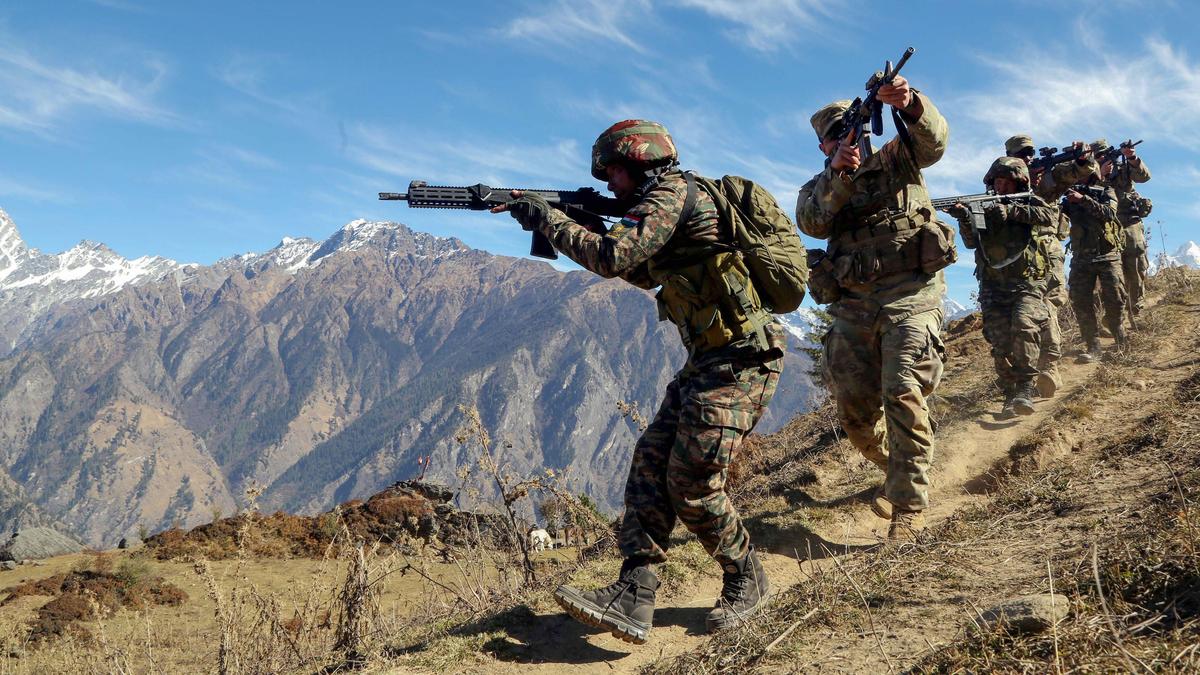
Regular bilateral and multilateral military exercises enhance interoperability, mutual trust, and Indo-Pacific stability
| Area | Key Developments | Strategic Significance |
| Quad diplomacy | Foreign Ministers’ and Counterterrorism Working Group meetings | Sustains institutional momentum |
| Defence framework | 2025 long-term Defence Framework Agreement | Deepens strategic alignment |
| Military exercises | Yudh Abhyas, Tiger Claw, Malabar | Builds interoperability and trust |
| Technology cooperation | Information sharing and joint development | Supports regional stability |
Defence and Technology Agreements as the Driving Force
Since the India–U.S. civil nuclear deal, bilateral relations have been increasingly anchored in defence and technology cooperation
Key agreements shaping military interoperability and trust include LEMOA (2016), COMCASA (2018), and BECA (2020), enabling logistical support, secure communications, and geospatial data sharing
The INDUS-X framework (2023) and the Initiative on Critical and Emerging Technologies (iCET, 2023) have expanded collaboration in innovation, defence startups, and advanced technologies
In 2024, India’s Ministry of Defence and the U.S. Department of Defense signed the Security of Supply Arrangement (SOSA), strengthening defence industrial resilience
Despite recurring political headwinds, defence cooperation has remained stable, institutionalised, and forward-looking
Deepening Strategic Convergence and Regional Impact
In October 2025, a 10-year Defence Framework Agreement was signed by Rajnath Singh and U.S. Defence Secretary Pete Hegseth, marking a new phase of long-term strategic coordination
The agreement aims to enhance information sharing, technological collaboration, and regional deterrence in the Indo-Pacific
Hindustan Aeronautics Limited signed a billion-dollar deal with General Electric in November 2025 for fighter jet engines, signalling deep defence-industrial integration
The NASA–ISRO Synthetic Aperture Radar (NISAR) satellite, launched in July 2025, strengthened cooperation in disaster management, agriculture, and infrastructure planning
At the regional level, the Quad Ports of the Future Conference, held during India Maritime Week 2025 in Mumbai, brought together delegates from 24 Indo-Pacific partners
Co-organised by India’s Ministry of Ports, Shipping and Waterways and the Ministry of External Affairs, the conference underscored quality infrastructure and regional connectivity as an emerging pillar of Quad cooperation
Build deeper institutional understanding
Enduring institutional engagement sustains India–U.S. ties despite political challenges and leadership-level volatility
The relationship operates on a dual-track dynamic: strategic diplomacy at the political level, continuity through bureaucratic and institutional frameworks
Core collaborations in defence and technology continue to evolve, driven by shared regional interests
Institutional continuity acts as a key strength, fostering trust and insulating cooperation from short-term political shifts
Constraints remain, including domestic regulatory hurdles and technology interoperability concerns
Analysts caution that full momentum may be difficult to restore even if trade disputes are resolved
Looking toward 2026, both countries must invest in deeper institutional literacy across sectors, not limited to defence
Greater understanding of structures, processes, and decision-making cultures is essential for resilient partnerships
Expanding cooperation into non-traditional and civilian sectors can strengthen mutual trust, especially during political downturns
Conclusion
The resilience of the India–U.S. partnership rests largely on the strength of its parallel institutional tracks, which have, often away from public attention, sustained the relationship’s strategic depth and continued relevance amid a rapidly shifting geopolitical landscape. Even when high-level political engagements slow or pause, institutional mechanisms ensure that dialogue persists, cooperation continues in areas of shared interest, and long-term partnerships remain intact, enabling the relationship to withstand short- and medium-term challenges.
