

07 April 2026 The Hindu Editorial
What to Read in The Hindu Editorial ( Topic and Syllabus wise)
Article 1: Arrest the grief
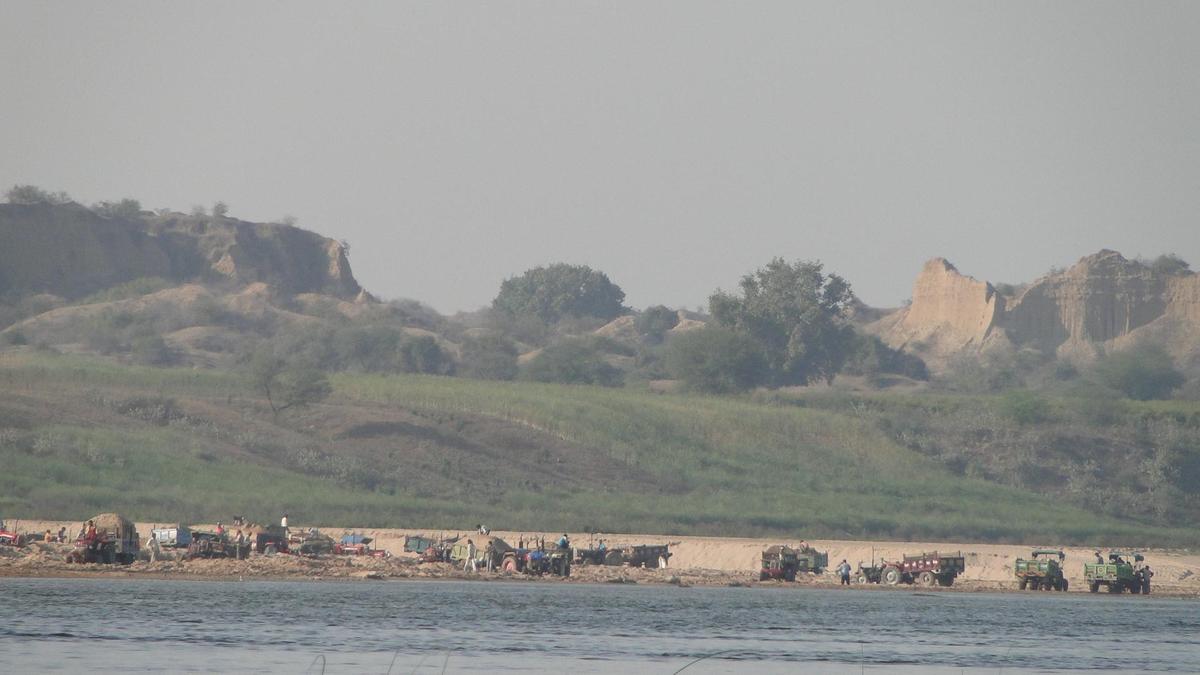
Why in news: The National Chambal Gharial Sanctuary is in news due to rising illegal sand mining, violence, and Supreme Court of India intervention highlighting governance failure and ecological threats.
Key Details
Protects endangered species like gharial and Ganges River Dolphin.
Sand mining destroys critical breeding habitats (sandbars).
Mafia thrives due to inter-state jurisdiction gaps.
Despite bans by National Green Tribunal, enforcement remains weak.
Increasing violence and use of advanced weapons by miners.
Local unemployment fuels recruitment into illegal mining networks.
Ecological Importance of Chambal Sanctuary
The National Chambal Gharial Sanctuary protects a lentic (flowing river) ecosystem across three States.
It is a critical habitat for endangered and critically endangered species.
Key species include:
Gharial (critically endangered)
Red-crowned roofed turtle
Ganges River Dolphin (endangered)
These species depend heavily on sandbanks and sandbars for nesting and survival.
Threat from Illegal Sand Mining
Organised sand-mining mafia has severely damaged the ecosystem.
Sand is extracted to meet construction boom demand in North India.
The Supreme Court of India termed them “modern dacoits.”
Mining directly destroys critical habitats, especially breeding grounds.
Governance Failures and Jurisdictional Gaps
Sanctuary spans Rajasthan, Madhya Pradesh, and Uttar Pradesh, leading to coordination gaps.
Despite bans by courts and the National Green Tribunal, enforcement remains weak.
State governments often shift responsibility, enabling illegal mining.
This regulatory paralysis has allowed mafias to flourish.
Rising Violence and Criminalisation
Illegal miners have turned highly violent and organised:
Ran over forest guards and police (2017–2024)
Opened fire during enforcement raids
Use of technology (GPS, mobile apps) to track police movement
By 2023, syndicates used semi-automatic weapons, overpowering local authorities
Policy Dilemmas and Judicial Intervention
States attempted to legalise limited mining inside the sanctuary:
Madhya Pradesh proposal stalled and withdrawn
Rajasthan proposal blocked by Court
The Supreme Court took suo motu cognisance and warned states using laws like:
National Security Act
Goonda Act
Raises debate on whether courts should regulate or enforce governance
Socio-economic Roots and Way Forward
Chambal ravines have poor agricultural viability, limiting livelihoods
Many youths join mining as economic necessity, aiding mafia networks
Pure force-based crackdowns may backfire by increasing local resentment
Sustainable solution requires:
Alternative livelihoods for locals
Fair and consistent enforcement
Reducing social support for illegal networks
Long-term change depends on balancing ecology with socio-economic justice
Conclusion
The Chambal crisis reflects a deeper governance and livelihood challenge. Mere coercive action cannot dismantle entrenched illegal economies. Sustainable conservation requires strengthening institutions, ensuring inter-state coordination, and providing viable livelihood alternatives. Balanced enforcement with community participation is essential to protect biodiversity while addressing socio-economic vulnerabilities, ensuring long-term ecological security and rule of law.
Prelims Question
- Consider the following with reference to National Chambal Gharial Sanctuary:
The sanctuary spans across Madhya Pradesh, Uttar Pradesh, and Rajasthan.
It is primarily established for the conservation of the gharial.
It is located in the basin of the Ganga River.
How many of the above is/are correct?
Only one
Only two
All three
None
Answer: b
Article 2: Illogical acts
Why in news: The Malda gherao of judicial officers during elections in West Bengal drew condemnation from the Supreme Court of India, highlighting rising electoral tensions and governance concerns.
Key Details
Mob gherao of judicial officers seen as attack on adjudication process.
Probe transferred by Election Commission of India to National Investigation Agency.
West Bengal elections marked by persistent political violence.
Intense rivalry between Trinamool Congress and Bharatiya Janata Party.
Special Intensive Revision (SIR) led to mass voter deletions and disputes.
Allegations of disenfranchisement, especially among minority communities.
Malda Incident and Institutional Concern
Mob gherao of judicial officers in Malda signals serious escalation in election tensions.
The Supreme Court of India termed it a deliberate attempt to obstruct justice.
Probe handed by Election Commission of India to National Investigation Agency.
Incident intensified conflict between State government and ECI over SIR.
Persistent Electoral Violence in West Bengal
Unlike most States, West Bengal continues to witness frequent election-related violence.
High political competition makes elections high-stakes contests.
Violence has become structurally embedded in the electoral process.
Historical Roots of Political Contestation
Earlier rivalry between Left Front and Trinamool Congress centred on “area dominance.”
Strong panchayati system led to deep grassroots politicisation.
Rural economy and limited industrialisation made elections a means of controlling patronage distribution.
Changing Political Dynamics and New Violence
Present politics dominated by TMC vs Bharatiya Janata Party.
TMC follows a “franchise model” built around Mamata Banerjee.
BJP attempts a similar structure with ideological mobilisation.
This evolving competition has introduced new patterns of violence.
SIR Controversy and Rising Public Anger
Special Intensive Revision reduced voters from 7.6 crore to 7.04 crore.
Around 60 lakh cases under scrutiny, with many deletions.
Errors linked to flawed verification processes and software issues.
Allegations of disenfranchisement, especially among minorities.
Delays in grievance redressal led to frustration and unlawful protests.
Need for transparent, inclusive electoral management and restrained political rhetoric.
Conclusion
The Malda incident underscores the fragility of electoral integrity amid political polarisation. Strengthening institutional credibility, ensuring transparent voter roll revisions, and reducing inflammatory rhetoric are crucial. Democratic processes must be safeguarded from coercion and violence. Cooperative engagement between the Election Commission, judiciary, and political actors is essential to restore public trust and uphold free and fair elections.
Article 3: Climate change as a public health emergency
Why in news: Climate change is increasingly recognised as a public health emergency in India, as rising temperatures, extreme weather, and pollution are intensifying diseases, expanding their spread, and straining healthcare systems.
Key Details
Climate change intensifies existing diseases and health risks
Floods and droughts increase waterborne and diarrhoeal diseases
Rising temperatures expand vector-borne diseases like dengue, malaria
Air pollution (PM2.5) causes respiratory and cardiovascular issues
Heat stress impacts vulnerable groups and infant health outcomes
Climate Change as a Public Health Crisis
Climate change is no longer just an environmental issue but a major health emergency.
It intensifies existing diseases and creates conditions for new health threats.
Its impact goes beyond disasters to long-term medical consequences.
Water Extremes and Disease Burden
Urban flooding (e.g., Mumbai) increases waterborne diseases like cholera and typhoid.
Overloaded sanitation systems contaminate drinking water sources.
Drought-hit regions face unsafe water use, raising diarrhoeal diseases and dehydration.
Expanding Spread of Infectious Diseases
Changing climate patterns are increasing vector-borne diseases like dengue and malaria.
Warmer temperatures extend mosquito breeding seasons and regions.
Diseases are spreading to new geographies with low immunity levels.
Air Pollution and Multi-Organ Impact
Rising energy use increases PM2.5 pollution, harming lungs, heart, and kidneys.
Leads to respiratory illnesses, cardiovascular diseases, and kidney damage.
Pollution and heat together create a harmful feedback loop worsening health risks.
Heat Stress and Vulnerable Populations
Increasing temperatures cause heat strokes and cardiovascular strain.
Outdoor workers and poor populations are most affected.
Rising night temperatures reduce body recovery time, worsening health outcomes.
Linked to preterm births and low birth weight in infants.
Food Security and Nutritional Impacts
Climate change disrupts crop production and food supply.
Leads to malnutrition and micronutrient deficiencies, especially in children.
Heat stress reduces milk production, affecting nutrition.
Overall, weak nutrition increases disease vulnerability and poor immunity.
Conclusion
Climate change must be addressed as a public health priority, not merely an environmental issue. Strengthening healthcare systems, improving climate-resilient infrastructure, and ensuring equitable access to resources are essential. Integrating health considerations into climate policies, enhancing early warning systems, and protecting vulnerable populations will be key to reducing risks and building long-term resilience against climate-induced health impacts.
Descriptive Question:
- “Climate change is emerging as a major public health crisis in India.” Discuss the various health impacts of climate change and suggest measures to build a climate-resilient healthcare system. (15 marks, 250 words)
