
09 April 2026 The Hindu Editorial
What to Read in The Hindu Editorial ( Topic and Syllabus wise)
Article 1: A respite
Why in news: The U.S.–Iran conflict has entered a pause after a ceasefire announcement, renewed diplomacy, and global economic disruptions, highlighting miscalculations, regional tensions, and the urgent need for sustainable peace efforts.
Key Details
Donald Trump announced a two-week ceasefire and proposed direct talks with Iran.
Iran agreed to safe passage in the Strait of Hormuz and presented a 10-point peace plan.
U.S. war objectives like regime change and nuclear rollback remained unfulfilled.
Conflict triggered global rise in oil, gas, and food prices.
Benjamin Netanyahu supported military escalation, complicating peace.
Pakistan played a key diplomatic role in facilitating dialogue.
Ceasefire and Diplomatic Shift
Donald Trump agreed to a two-week ceasefire and direct talks with Iran.
Iran accepted the truce and ensured safe passage through the Strait of Hormuz.
The conflict could have been avoided as earlier negotiations were close to success.
Escalation and Strategic Miscalculation
The U.S., supported by Benjamin Netanyahu, launched attacks on Iran.
Iran retaliated by targeting U.S. bases and controlling key maritime routes.
The conflict expanded regionally and disrupted the global economy.
Failure to Achieve War Objectives
U.S. goals like destroying Iran’s nuclear and missile capabilities and regime change were unmet.
Despite heavy damage, Iran remained strategically resilient.
Ironically, reopening the Strait became a key U.S. demand, though it was initially open.
Economic and Geopolitical Consequences
The war caused a surge in oil, gas, and food prices globally.
Iran’s proposal demanded sanction removal and security guarantees.
The conflict ultimately strengthened Iran’s regional position.
Fragile Peace and Way Forward
The ceasefire is only a preliminary step, with major differences still unresolved.
Pakistan played a constructive diplomatic role in easing tensions.
Continued Israeli actions threaten stability; long-term peace requires restraint and responsible diplomacy.
Conclusion
The ceasefire marks only a temporary relief in a deeply fragile West Asian geopolitical landscape. Miscalculations, unmet objectives, and economic disruptions underline the costs of conflict. Sustainable peace requires restraint, inclusive diplomacy, and addressing core issues like sanctions and security guarantees. Long-term stability will depend on cooperation, reduced militarism, and credible commitments from all stakeholders involved.
Descriptive Question:
- “Evaluate the strategic, economic, and diplomatic implications of the recent U.S.–Iran conflict. How can sustainable peace be ensured in West Asia?” (10 marks, 150 words)
Article 2: At long last
Why in news: India’s Prototype Fast Breeder Reactor achieved first criticality, marking progress in nuclear energy, but delays, cost overruns, and regulatory concerns raise questions about efficiency and future policy direction.
Key Details
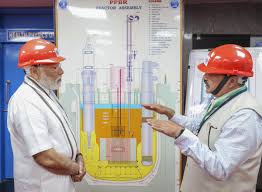
PFBR achieved first criticality, marking entry into second stage of India’s nuclear programme.
Project faced 16-year delay and cost escalation to over ₹8,000 crore.
Uses spent fuel and depleted uranium to generate more plutonium.
Nuclear power contributes only ~3% of India’s electricity currently.
Offers advantages like fuel efficiency, low land use, and energy security.
Raises concerns over regulatory overlap, transparency, and economic viability.
Achievement with Caution
Prototype Fast Breeder Reactor attaining first criticality marks a major technological milestone for India
However, the achievement is qualified by long delays and cost overruns
It reflects both scientific progress and governance shortcomings
Delays and Cost Escalation Issues
Total cost escalated to ₹8,181 crore, over twice the approved budget
The project is delayed by around 16 years, with key facilities still pending
Reasons include poor planning, procurement inefficiencies, and weak oversight
Political insulation reduced accountability and timely corrections
Strategic Role in Nuclear Programme
PFBR is the first commercial step in Stage-II of India’s three-stage nuclear programme
It uses reprocessed spent fuel and depleted uranium to produce plutonium
The long-term goal is to shift towards thorium-based reactors in Stage-III
This strategy is based on India’s large thorium reserves, ensuring future sustainability
Benefits and Emerging Concerns
Nuclear energy provides high fuel efficiency and lower land requirement than solar
It supports energy security and reduced dependence on uranium imports
However, nuclear contributes only ~3% of total electricity generation
Falling costs of renewables like solar and wind challenge nuclear viability
Economic efficiency must guide future energy policy decisions
Way Forward and Institutional Reforms
Ensure transparency, performance audits, and acceptance of operational flaws
Apply lessons from PFBR before expanding to FBR1 and FBR2 reactors
Strengthen regulatory independence by separating promotion and regulation roles
Reform oversight bodies like Atomic Energy Regulatory Board for better governance
Align nuclear expansion with cost-effectiveness, sustainability, and net-zero goals
Conclusion
The PFBR milestone reflects progress in India’s long-term nuclear strategy but also exposes inefficiencies in planning, execution, and oversight. Balancing nuclear energy’s benefits with economic viability and renewable alternatives is essential. Strengthening transparency, regulatory independence, and accountability will be critical. Future expansion must be guided by performance, cost-effectiveness, and sustainability to ensure true energy security.
Descriptive Question:
- “Discuss the significance of Fast Breeder Reactors in India’s nuclear energy programme. Examine the challenges in their implementation and suggest reforms for a sustainable nuclear policy.” (250 words, 15 marks)
Article 3: NITI Aayog
Why in news: NITI Aayog and Foundation for Economic Development released a report highlighting India’s low global share (0.5%) in sports equipment exports despite strong potential, pointing to structural bottlenecks.
Key Details
Introduced the concept of Three-Year Action Agenda, replacing Five-Year Plans
Plays a role in Public-Private Partnerships (PPP) policy formulation
Acts as a platform for resolving inter-sectoral and inter-departmental issues
Supports capacity building and governance reforms in states
Engages with international organizations and global think tanks
Introduction to NITI Aayog
Established in 2015, replacing the Planning Commission
Functions as the policy think tank of the Government of India
Aims to promote cooperative federalism
Focuses on sustainable and inclusive development
Provides strategic and technical advice to the government
Objectives of NITI Aayog
Promote cooperative and competitive federalism
Foster innovation and entrepreneurship
Ensure inclusive growth across regions
Encourage bottom-up planning
Support evidence-based policymaking
Composition
Chairperson: Prime Minister of India
Vice-Chairperson: Appointed by the PM
Governing Council: Chief Ministers of all States and UTs
Regional Councils: Formed for specific issues
Includes experts and specialists in various fields
Key Functions
Formulate long-term policy frameworks
Act as a knowledge hub for best practices
Monitor and evaluate government schemes
Facilitate inter-state coordination
Promote innovation through initiatives
Major Initiatives
Aspirational Districts Programme – development of backward districts
Atal Innovation Mission (AIM) – promotes innovation ecosystem
National SDG Index – tracks Sustainable Development Goals
India Innovation Index – ranks states on innovation
School Education Quality Index (SEQI)
Significance
Replaced centralized planning with dynamic policy-making
Strengthens Centre-State relations
Encourages data-driven governance
Promotes healthy competition among states
Aligns policies with global development goals
Challenges
Lacks statutory/constitutional status
Limited financial powers compared to Planning Commission
Implementation depends on state cooperation
Coordination issues across diverse regions
Measuring outcomes effectively remains complex
Conclusion
India’s sports equipment manufacturing sector holds significant untapped potential despite strong cultural engagement with sports. Structural bottlenecks such as fragmented production, limited technology adoption, and inadequate global integration hinder growth. With targeted policy support, improved infrastructure, and export-oriented strategies, India can enhance its global share. Strengthening this sector will boost employment, promote economic growth, and position India as a competitive player globally.
EXPECTED QUESTION FOR PRELIMS:
- Which of the following best describes the role of NITI Aayog?
(a) Constitutional body for financial distribution
(b) Policy think tank of the Government of India
(c) Regulatory authority for industries
(d) Judicial advisory body
Answer: b
