

10 March 2026 The Hindu Editorial
What to Read in The Hindu Editorial ( Topic and Syllabus wise)
Article 1: Gulf Cooperation Council (GCC)
Why in news: The Gulf Cooperation Council is in news due to discussions on a possible India–GCC Free Trade Agreement, growing energy cooperation, and expanding strategic and economic ties between India and GCC countries.
Key Details
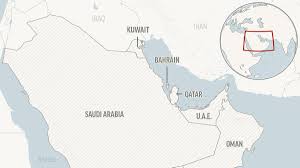
Gulf Cooperation Council is a regional political and economic organization established in 1981.
It has six members: Saudi Arabia, United Arab Emirates, Qatar, Kuwait, Oman, and Bahrain.
Headquarters is located in Riyadh, Saudi Arabia.
Focuses on economic integration, regional security, and political coordination among member states.
The bloc is crucial in global energy markets due to its large oil and natural gas reserves.
Overview
The Gulf Cooperation Council (GCC) is a regional political, economic and security organization of Arab states located in the Persian Gulf region.
It aims to promote regional integration, stability, and cooperation among member states.
Establishment
Established on 25 May 1981 in Abu Dhabi, United Arab Emirates.
Formed during a period of regional instability, particularly after the Iran–Iraq War and the Iranian Revolution.
Member Countries
Saudi Arabia
United Arab Emirates
Qatar
Kuwait
Oman
Bahrain
Headquarters
Located in Riyadh, Saudi Arabia.
Objectives
Achieve coordination, integration, and interconnection among member states.
Promote economic cooperation and unified economic policies.
Strengthen defense and security collaboration.
Encourage scientific, technological, and cultural cooperation.
Enhance political consultation and foreign policy coordination.
Organizational Structure
Supreme Council
Highest decision-making authority.
Composed of heads of state of member countries.
Presidency rotates annually among members.
Ministerial Council
Includes foreign ministers or other ministers of member states.
Responsible for policy formulation and coordination.
Secretariat-General
Administrative body responsible for implementing GCC decisions.
Headed by the Secretary-General.
Economic Cooperation
Creation of GCC Free Trade Area (1983).
Establishment of a Customs Union in 2003 with a common external tariff.
Launch of the GCC Common Market (2008) allowing equal economic rights for citizens of member states.
Proposals for monetary union and a common GCC currency (not yet implemented).
Cooperation in energy, infrastructure, transportation, and digital economy.
Security and Defense Cooperation
Formation of the Peninsula Shield Force, a joint military force for collective defense.
Cooperation in counterterrorism, intelligence sharing, and maritime security.
Coordination on regional conflicts and stability in the Gulf region.
Energy Importance
GCC countries collectively possess around one-third of global oil reserves.
They are major members of Organization of the Petroleum Exporting Countries.
Significant role in global energy supply and oil price stability.
Relations with Other Countries
Maintains strategic partnerships with major powers such as United States, China, and India.
Conducts GCC–India, GCC–EU, and GCC–China dialogues on trade and security.
Importance for India
GCC is India’s major trading partner.
Large Indian diaspora works in GCC countries.
Important source of crude oil and remittances for India.
Cooperation in energy security, maritime security, and investment.
Challenges
Political differences among member states (e.g., Qatar diplomatic crisis).
Dependence on oil-based economies.
Need for economic diversification and deeper integration.
Conclusion
The Gulf Cooperation Council remains a key regional bloc promoting economic integration, political coordination, and collective security in the Gulf region. With vast energy resources and growing global partnerships, it plays a crucial role in regional stability and international energy markets. Strengthening cooperation with partners like India further enhances its strategic and economic significance.
Descriptive question:
- Discuss the role and significance of the Gulf Cooperation Council in promoting regional cooperation and economic integration in the Gulf region. Also examine its importance for India. (10 marks, 150 words)
Article 2: Bitter milk
Why in news: The Rajamahendravaram milk poisoning incident involving ethylene glycol contamination caused 11 deaths and several hospitalisations, highlighting serious food-safety lapses, weak enforcement by the Food Safety and Standards Authority of India (FSSAI), and regulatory failures.
Key Details
Mass poisoning occurred in Rajamahendravaram due to milk contaminated with ethylene glycol, causing 11 deaths and about 20 hospitalisations including infants.
Police invoked provisions of the Bharatiya Nyaya Sanhita (BNS), including Section 103 (murder) and Section 105 (culpable homicide) against the milk vendor.
The vendor allegedly continued selling milk despite complaints of a bitter taste and warnings about possible toxic coolant contamination.
The incident raises serious public health concerns, as children and the elderly are more vulnerable to ethylene glycol poisoning.
It also exposes major regulatory failures, including weak inspections by the Food Safety and Standards Authority of India (FSSAI) and the dairy reportedly operating without a safety licence for 11 years.
Rajamahendravaram Milk Poisoning Incident – Key Issues and Implications
A mass poisoning incident occurred in Rajamahendravaram due to milk contaminated with ethylene glycol.
As of March 8, the incident resulted in 11 deaths and about 20 hospitalisations, including infants.
The contaminated milk was reportedly supplied by a local vendor despite complaints of a bitter taste.
Authorities suspect that a coolant leak containing ethylene glycol contaminated the milk.
Legal Action Taken
Police invoked provisions of the Bharatiya Nyaya Sanhita (BNS) against the accused vendor.
Relevant charges include:
Section 103 – Punishment for murder.
Section 105 – Culpable homicide not amounting to murder.
The State is treating the incident as a serious criminal offence due to gross negligence in food safety.
Public Health Concerns
Ethylene glycol is a highly toxic industrial chemical.
Children and infants are particularly vulnerable because of higher metabolic sensitivity.
Elderly individuals are also at risk due to lower kidney (renal) reserves.
The incident could create public distrust in locally sourced or unbranded milk supplies.
Impact on the Milk Supply Chain
Milk is a staple commodity in Indian households, widely consumed daily.
The crisis may push consumers toward pasteurised milk from regulated cooperatives such as Amul and Vijaya Milk.
However, a significant share of milk distribution in India occurs through small informal vendors.
Strict criminal charges may cause small vendors to exit the market or operate more informally, potentially reducing regulatory oversight.
Regulatory and Enforcement Issues
The case highlights serious weaknesses in food safety monitoring.
The dairy reportedly operated without a safety licence for about 11 years.
Both local authorities and the Food Safety and Standards Authority of India (FSSAI) failed to conduct regular inspections and enforce safety standards.
Weak detection systems make violations less likely to be discovered, undermining deterrence.
Need for Stronger Preventive Measures
Food safety requires both punishment of offenders and systems that make compliance easier.
Possible reforms include:
Subsidised testing kits for detecting contamination.
Cooperative chilling and cold-chain facilities for small dairy operators.
Safe-harbour provisions for vendors who report contamination voluntarily.
Policy Lesson
Effective regulation depends more on consistent monitoring and timely penalties than on extremely harsh punishments that are rarely enforced.
Reliable detection and enforcement mechanisms are essential to prevent food safety disasters and protect public health.
Conclusion
The Rajamahendravaram milk poisoning tragedy highlights serious food-safety and regulatory failures in India’s dairy supply chain. While strict legal action under the Bharatiya Nyaya Sanhita is necessary to punish negligence, long-term prevention requires strong inspections, better licensing, affordable testing, and improved cold-chain infrastructure. Ensuring effective monitoring and timely enforcement is crucial to protect public health and restore trust in milk supplies.
