

12 December 2025 Indian Express Editorial
What to Read in Indian Express Editorial( Topic and Syllabus wise)
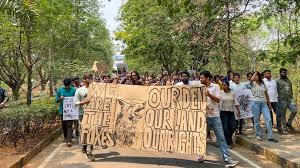
Editorial 1 : Party-State Encroachment into Indian Public Universities
Context:
The role of increasing political interference in Indian public universities, undermining academic freedom and institutional autonomy.
Introduction:
Indian public universities, once vibrant spaces for critical inquiry and intellectual growth, are facing a severe crisis. Long-standing structural weaknesses, underfunding, and declining faculty quality have been compounded by overt political interference. Student and teacher bodies, previously guardians of academic interests, are now largely partisan extensions of political parties. This has led to the erosion of academic freedom, compromised governance, and a decline in the quality of higher education. The editorial warns that without urgent reforms, public universities risk becoming instruments of political control rather than centers of learning.
Key Issues Highlighted:
- Political Interference in University Governance:
- Public universities are increasingly subject to partisan influence in appointments and administrative decisions.
- The removal of vice-chancellors in Rajasthan under ABVP pressure exemplifies the erosion of procedural norms and administrative neutrality.
- Decline of Institutional Autonomy:
- Universities, historically spaces for free intellectual inquiry, are being “domesticated” to serve political agendas.
- Faculties and students are coerced to align with party ideologies, curtailing academic freedom.
- Partisan Student Politics:
- Student unions, previously platforms for representing student interests, are now instruments of political parties.
- ABVP, NSUI, and SFI wield disproportionate influence, often pre-emptively censoring seminars, speakers, and academic discourse.
- Impact on Quality of Education:
- Focus has shifted from pedagogy to political loyalty.
- CUET (Common University Entrance Test) is critiqued as an exam-centric measure rather than an academic reform.
- Faculty appointments and institutional decisions are increasingly ideologically driven rather than merit-based.
- Systemic Structural Weaknesses:
- Public universities face chronic funding shortages, inconsistent faculty quality, and lack of accountability mechanisms.
- Party politics compounds these weaknesses, silencing the two main stakeholders: students and teachers.
Underlying Causes:
- Historical centralization tendencies (e.g., UPA-II reforms) and long-term underfunding.
- The politicization of student and teacher bodies leading to the marginalization of academic objectives.
- Lack of robust institutional frameworks to protect universities from external political pressures.
Implications for Indian Higher Education:
- Erosion of Academic Freedom:Intellectual inquiry and debate are being curtailed.
- Declining Global Competitiveness:Indian universities may fail to emerge as global knowledge hubs.
- Loss of Democratic Values in Campus Life:Students are deprived of genuine civic engagement experiences; student bodies become extensions of party politics.
- Undermining Meritocracy:Recruitment and promotion processes are ideologically influenced rather than merit-based.
Way Forward:
- Strengthen Institutional Autonomy:
- Ensure transparent appointment procedures for vice-chancellors and faculty.
- Limit direct political intervention in administrative matters.
- Decentralize University Governance:
- Empower internal academic councils and boards with real decision-making authority.
- Establish independent oversight bodies to safeguard academic standards.
- Depoliticize Student Unions:
- Prohibit formal affiliations of student bodies with political parties.
- Encourage issue-based, non-partisan student representation.
- Focus on Academic Excellence:
- Align policies like CUET with pedagogy rather than mere examination metrics.
- Increase funding for faculty development, research, and infrastructure.
Conclusion:
The editorial paints a grim picture of Indian public universities being overtaken by party politics, eroding institutional autonomy and academic quality. Without corrective action both structural and policy-oriented India risks losing its public universities as spaces for critical thought, meritocracy, and democratic engagement.
Editorial 2 : Parasocial Relationships
Context:
In the digital age, individuals increasingly form “parasocial” relationships one-sided emotional bonds with celebrities, fictional characters, or imagined entities reflecting social isolation and changing patterns of human interaction.
Introduction:
Parasocial relationships, once limited to media consumption, have become widespread through social media, fan culture, and online interactions. Individuals invest emotional energy in figures who cannot reciprocate, often writing letters, creating fanfiction, or engaging in online stalking. These behaviors provide an outlet for loneliness and the need for connection, while simultaneously highlighting society’s growing emotional isolation. The phenomenon also reflects a cultural and literary shift, where imaginative engagement replaces traditional dialogue, and one-sided communication becomes a medium of self-expression and reflection.
Key Issues:
- Emergence of Parasocial Relationships:
- Parasocial interactions are unreciprocated relationships in which an individual invests emotional energy in a figure who does not or cannot engage back.
- Examples from Roy’s classroom include letters written to Slash, Shakespeare, or fictional entities, illustrating the prevalence of such behaviors among youth.
- Online “stalking” of celebrities and the creation of fanfiction represent modern outlets for parasocial engagement.
- Psychological and Social Dimensions:
- Acute loneliness and the inability to communicate effectively in real life drive people toward constructing detailed “paracosms” (imaginary worlds).
- These interactions provide a sense of control, emotional expression, and companionship in the absence of real-world reciprocity.
- Parasocial connections often serve as coping mechanisms for emotional and social needs unmet in reality.
- Literary and Cultural Implications:
- The editorial traces the roots of epistolary literature, highlighting its role in creating literary culture through communication between writer and reader.
- Historically, letters allowed humans to reach beyond their immediate social circles, forming communities and exchanging ideas.
- Modern adaptations, such as letters to deceased relatives or imagined recipients, signify a shift from dialogue to introspection and imaginative engagement.
- Works like On Earth We’re Briefly Gorgeousexemplify this modern epistolary form, where communication occurs with an audience that may never read the letter, emphasizing the performative and reflective aspects of writing.
- Societal and Ethical Implications:
- Parasocial behaviors underscore the paradox of hyperconnectivity: despite being constantly “connected” online, individuals experience emotional isolation.
- While such interactions can foster creativity, self-reflection, and emotional release, excessive reliance on parasocial bonds may reduce motivation to engage in real-world relationships.
- The trend reflects broader societal issues, including mental health challenges, the erosion of meaningful interpersonal connections, and ethical concerns around online stalking or obsessive fan culture.
Way Forward:
- Promoting Real-World Social Engagement:
- Encourage meaningful interpersonal interactions offline to reduce over-reliance on parasocial relationships.
- Schools, colleges, and community programs can organize activities that foster face-to-face communication, teamwork, and social bonding.
- Mental Health Awareness and Support:
- Increase awareness of loneliness, anxiety, and other psychological challenges arising from digital isolation.
- Provide accessible counseling and helplines to help individuals navigate emotional challenges and develop coping mechanisms beyond parasocial engagement.
- Responsible Use of Digital Platforms:
- Educate youth and social media users about healthy online behavior, including ethical fan culture and avoidance of obsessive online stalking.
- Promote digital literacy programs that emphasize balance between online and offline life.
- Encouraging Creative Outlets with Real Impact:
- Direct the creative impulse found in fanfiction, letters, and parasocial engagement toward activities that encourage real-world contribution, such as community writing projects, volunteering, or collaborative art.
- Leverage literature and arts education to help individuals express emotions while fostering social connections.
- Policy and Institutional Interventions:
- Government and educational institutions can include mental health and digital ethics modules in curriculum to cultivate emotional intelligence and responsible social behavior.
- Media regulators and social media platforms should promote positive engagement and discourage harmful obsessive behaviors.
Conclusion:
Sumana Roy’s article provides a nuanced understanding of how parasocial interactions have become a defining feature of the digital age. They are simultaneously a creative outlet and a reflection of societal isolation. The editorial urges a careful balance between digital engagement and real-world communication, highlighting the importance of emotional awareness, mental well-being, and ethical digital behavior in modern society.
