

14 January 2026 Indian Express Editorial
What to Read in The Indian Express ( Topic and Syllabus wise)
Editorial 1 : India–Germany Relations: Finding Common Ground
Context
The India–Germany relationship is at a significant juncture as German Chancellor Friedrich Merz concluded his official two-day visit to India, marked by substantive engagement with Prime Minister Narendra Modi in Ahmedabad and Gandhinagar.
The visit, captured in the Indian Express editorial “Delhi and Berlin seek common ground”, reflects a broadening and deepening partnership that goes beyond conventional diplomacy towards strategic, economic and people-centric cooperation.
Strengthening strategic and economic ties
High-Level Diplomatic Focus
The editorial underscores that both capitals are committed to building consensus around key areas of mutual interest — from trade and security cooperation to technology, mobility and people-to-people exchange. As Germany’s first official visit to India since Merz assumed office, it signals Berlin’s intention to elevate engagement beyond traditional European priorities.
Economic relations, a long-standing anchor of India–Germany cooperation, took center stage. Trade between the two nations has reached a record high, with bilateral commerce crossing the USD 50 billion mark — a milestone pointing to robust commercial engagement and investment confidence from German companies operating in India.
At the India-Germany CEO Forum, both leaders emphasised expanding cooperation in areas like green technologies, semiconductors, and critical minerals, sectors seen as crucial for future-ready economies in both nations.
Agreements advancing cooperation
During the visit, India and Germany signed 19 agreements and memorandums of understanding covering defence, technology, clean energy, education, infrastructure, and mobility. Crucially, Germany announced a visa-free airport transit facility for Indian passport holders — a move expected to boost connectivity and people-to-people contacts.
Other pacts include collaborative frameworks on postal, express and logistics services aimed at enhancing cross-border e-commerce and trade facilitation, and a Defence Industrial Cooperation Roadmap to deepen industrial collaboration and co-development of defence systems.
Shared Values and People-Centric Initiatives
Mobility, skills and cultural exchange
The editorial emphasises that beyond strategic deals, both nations are keen to strengthen people-to-people ties. This extends to facilitating skilled labour mobility, particularly in sectors like healthcare where Germany faces workforce shortages, and India has a growing pool of trained professionals.
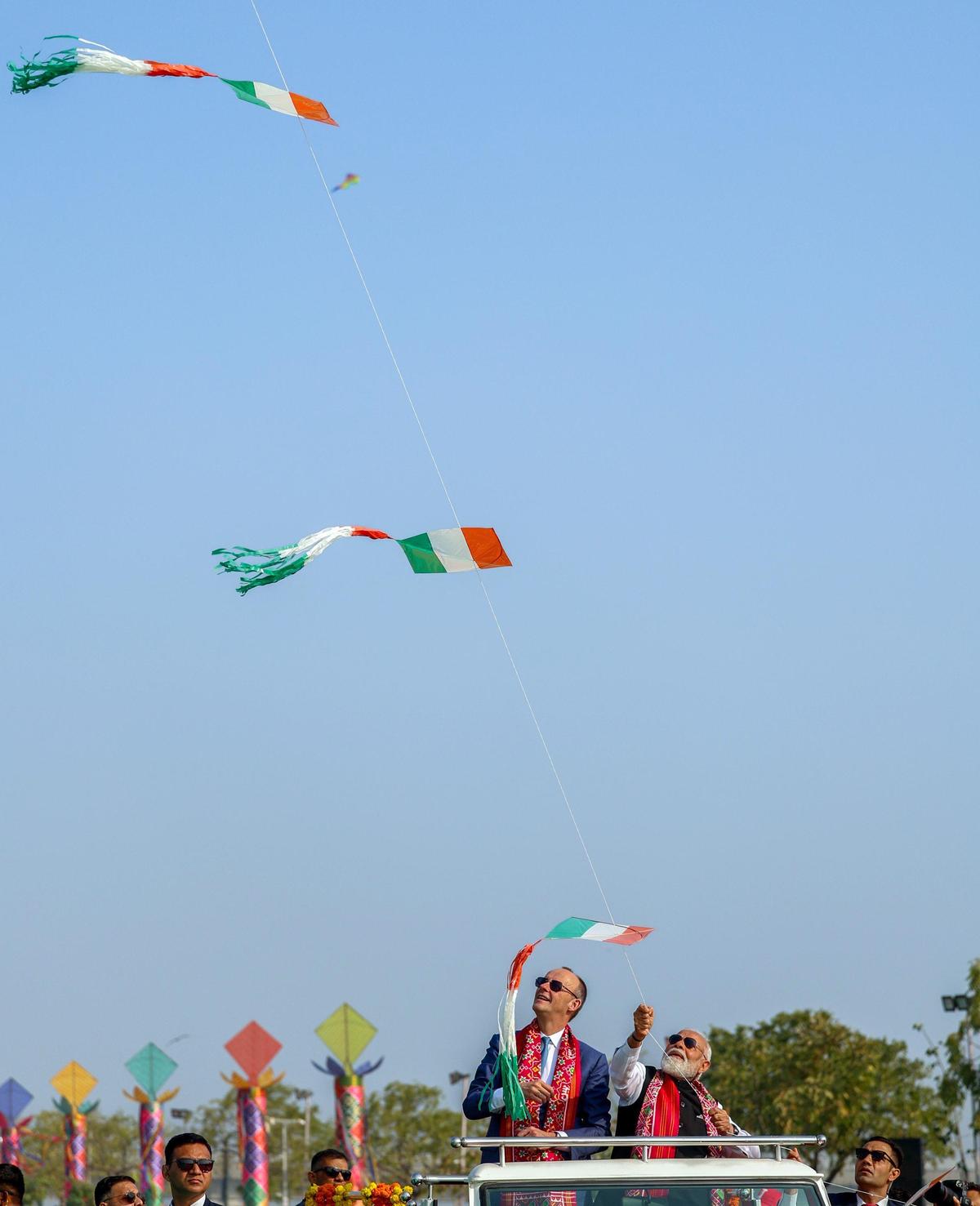
Cultural diplomacy was visible too — with Chancellor Merz visiting the Sabarmati Ashram alongside PM Modi and participating in the International Kite Festival, gestures symbolising mutual respect for heritage and signalling a warmer diplomatic tenor.
Education and workforce skilling feature prominently in the cooperation agenda. An expanded education roadmap and invitations to German universities to establish campuses in India reflect a shared interest in academic exchange and research collaboration.
Global and security cooperation
While India maintains strategic autonomy in foreign policy, both nations reiterated commitment to rules-based international order, and cooperation on global challenges ranging from climate change to multilateral security issues.
Germany also emphasised the need to strengthen security ties and reduce dependencies — especially in defence — even as India balances its engagements with other global partners.
Additionally, discussions included logistics and supply-chain resilience, climate action, and initiatives for renewable and green energy projects — areas where both democracies find common cause in addressing the challenges of the 21st century.
Conclusion
The India–Germany relationship today is not defined by transactional interactions but by strategic alignment across global, economic and people-centric domains. The editorial argues that the ongoing engagement reflects an understanding that democratic values, economic partnerships and collaborative innovation provide a foundation for long-term cooperation.
As the two countries celebrate 75 years of diplomatic relations and look ahead to future milestones, they are finding common ground in shared priorities — sustainable development, secure supply chains, defence and technology partnerships, and enhanced human connectivity. The partnership is thus evolving into a multi-dimensional alliance that contributes not only to bilateral gains but also to broader global stability and growth.
Editorial 2 : Mahasweta Devi’s questions still resonate
Context
The birth centenary of Mahasweta Devi, one of India’s most influential writers whose work transcended literary boundaries to engage deeply with socio-political realities. Her legacy, her voice continues to challenge dominant narratives, inspire rights movements, and provoke critical thought about equity, justice, and power in contemporary India.
Literature as Resistance
Mahasweta Devi’s work was not mere storytelling — it was activism through literature. Her narratives began where official histories ended, exploring sites of marginalisation like forests, mines, railway embankments, and village courts — in spaces where development’s human costs are most visible.
Amplifying Subaltern Voices
Devi sought to reclaim narrative authority for those excluded by mainstream culture.
She gave voice to tribal communities, working-class protagonists, and landless labourers, allowing the rhythms of tribal speech and oral traditions to shape her prose.
Through this, linguistic marginalisation was also addressed — she did not sanitise or flatten her characters’ expression for elite consumption but instead foregrounded their worldviews and grievances.
Documentary Clarity in Storytelling
Her stories such as Draupadi (1978), Hajar Churashir Maa (1974), and Aranyer Adhikar (1979) are characterised by unflinching portrayals of suffering and systemic violence.
Rather than offering consolation, her narratives expose the mechanics of oppression — whether economic, social, or political. This approach blurred the line between fiction and documentary reportage, compelling readers to bear witness rather than retreat into escapism.
Activism Beyond the Page
Mahasweta Devi’s engagement wasn’t limited to writing — she actively organised communities, edited grassroots magazines like Bortika, filed petitions, and accompanied marginalised people to courts. Her belief was that narrative was a form of power, and storytelling could strengthen agency, challenge prejudice, and bolster collective resistance.
Relevance to Contemporary India
She stresses that inequality, state violence, and exclusion — the core themes of Devi’s work — remain deeply relevant. In an era marked by rising wealth gaps, social fragmentation, environmental displacement, and intense debates around identity politics, her questions about land rights, labour dignity, gender oppression, and state authority still resonate. Literature, in her mould, becomes a tool of conscience and confrontation rather than comfort.
Literary Legacy and Pedagogy
The piece suggests Devi’s work should be part of critical pedagogy — not only in literature departments but across disciplines concerned with human rights, social justice, and public policy. Her insistence that justice is a contested, everyday practice rather than an abstract ideal is a lesson for students, scholars, and activists alike.
Conclusion
Mahasweta Devi’s writing remains a potent resource for understanding contemporary India’s complexities. Her legacy challenges readers to rethink the role of literature — not as detached art but as a vehicle for empathy, resistance, and social transformation. The editorial closes with the assertion that her questions aren’t relics of the past but touchstones for ongoing struggles against inequality and silence.
