

15 January 2026 The Hindu Editorial
What to Read in The Hindu Editorial ( Topic and Syllabus wise)
Editorial 1: An exploration of India’s minerals diplomacy
Context
India must leverage a country-by-country strategy to strengthen resilience across the entire value chain.
Introduction
Today, India’s clean energy transition is inextricably linked to access to imported critical minerals and rare earths. The need is immediate, and China’s tightening export controls have only intensified the urgency. Like other countries globally, India is prioritising diversification of mineral trade linkages, promoting responsible and sustainable production, and building transparent, standards-based markets to secure its energy future.
Balancing Domestic Capacity and Global Access
India requires a two-pronged strategy that builds long-term domestic capability while securing immediate access to critical resources abroad.
Recognising this need, New Delhi has, over the past five years, forged nearly a dozen bilateral and multilateral partnerships across continents.
At the same time, it has strengthened domestic mineral policies to support self-reliance.
The key question is what these engagements have delivered for India and whether a strategic recalibration is now necessary.
The Two Sides of Partnerships
Australia: a dependable anchor
Among India’s partners, Australia stands out as the most reliable, combining political stability, large mineral reserves, and a clear strategic outlook.
Cooperation has moved beyond intent to long-term supply discussions, joint research, and targeted investments.
Under the India–Australia Critical Minerals Investment Partnership (2022), five lithium and cobalt projectswere identified for potential investment.
Japan: a model for resilience
Japan offers a template for long-term resilience, grounded in institutional planning rather than reactive deals.
After China restricted rare-earth exports a decade ago, Japan pursued diversification, stockpiling, recycling, and sustained R&D.
Beyond its long-standing cooperation with Indian Rare Earths Limited, the partnership now extends to joint extraction, processing, and stockpiling, including in third countries, under a cooperation agreement signed last year.
Africa: opportunity with conditions
Africa, with its mineral abundance and rising demand for local value addition, presents significant opportunities given India’s historical trade ties.
Recent agreements with Namibia (lithium, rare earths, uranium) and acquisition talks in Zambia (copper, cobalt) signal a renewed push.
India must engage Africa with a long-term industrial mindset, or risk losing ground to more coordinated competitors.
United States: potential amid volatility
Despite earlier enthusiasm around “friend-shoring”, cooperation with the United States has largely remained at the level of dialogue.
Tariffs on Indian goods, shifting trade rules, and Inflation Reduction Act incentives complicate stable engagement.
While the U.S. could be a key technology and downstream innovation partner, policy volatility limits reliability.
Initiatives such as TRUST and the Strategic Minerals Recovery Initiative outline possible collaboration on rare-earth processing, battery recycling, and clean separation technologies.
European Union: standards-driven alignment
The European Union demonstrates how regulation, sustainability, and industrial strategy can reinforce each other through tools like the Critical Raw Materials Act and the European Battery Alliance.
Meaningful progress will require India to align with EU expectations on transparency, lifecycle standards, and environmental norms.
West Asia: midstream promise, thin frameworks
West Asia holds promise but lacks deep institutional and long-term frameworks.
Countries such as the United Arab Emirates and Saudi Arabia are investing heavily in battery materials, refining capacity, and green hydrogen, with sovereign funds acquiring mining assets abroad.
For India, the region could emerge as an important midstream processing partner.
Russia: a hedge, not a base
Russia possesses substantial reserves of rare earths, cobalt, and lithium, and shares long-standing scientific ties with India.
However, sanctions, financing constraints, and logistical uncertainty limit dependability.
Russia can serve as a strategic hedge, but not the foundation of India’s critical mineral strategy.
New frontiers
- Latin America as a strategic focus
Expanded engagement across Argentina, Chile, Peru and increasingly Brazil
These countries are becoming central to global strategies for copper, nickel and rare earths
Indian public and private sector investments have increased in exploration and mining projects
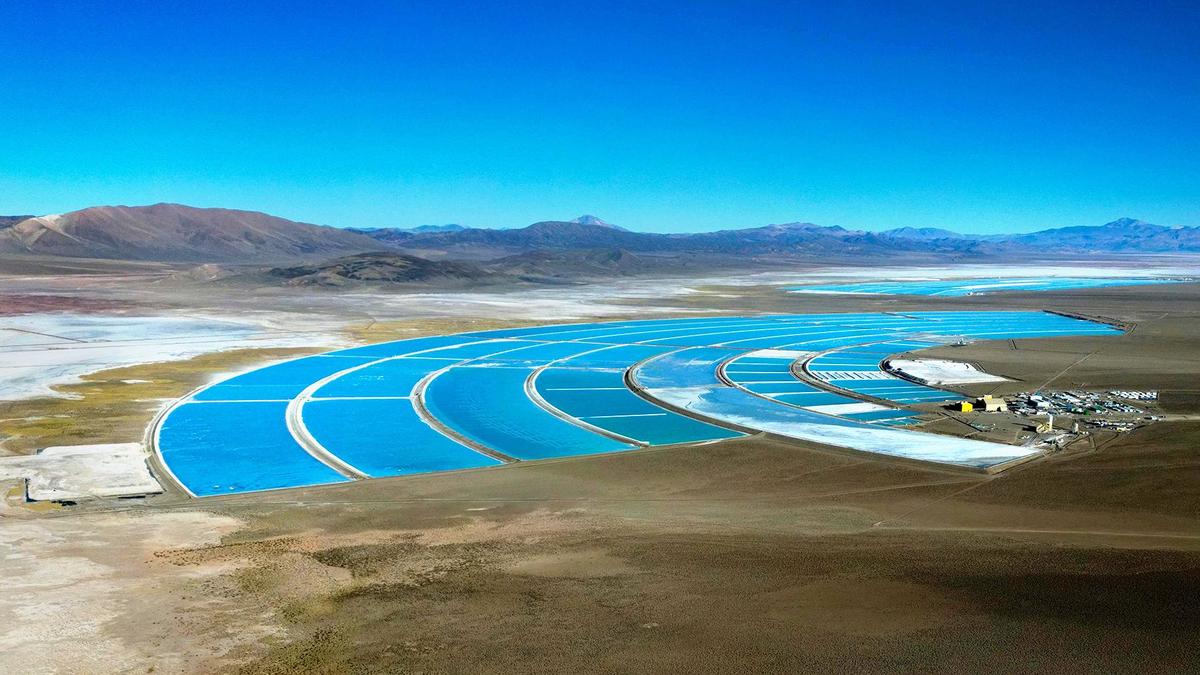
Khanij Bidesh India Limited (KABIL) has signed a ₹200 crore exploration and development agreement with Argentina
Competition is intense, and India’s engagement is still at an early stage
A sustained presence will require value-chain partnerships, local processing, and beyond extraction-only agreements
- Canada as an emerging partner
With the restoration of diplomatic ties, Canada re-emerges as a key minerals partner
Canada holds significant reserves of nickel, cobalt, copper and rare earths
A recent trilateral agreement with Australia and India strengthens cooperation potential
Political stability and consistent relations will be crucial to realise long-term collaboration
Develop integrated partnerships
Securing ore alone is insufficient; the real choke point is processing, especially refining and midstream capacity
Without domestic refining and midstream capability, India remains vulnerable to supply-chain disruptions
Technology, innovation and on-ground execution matter more than announcements
India must pursue a country-by-country strategy to build resilience across the entire value chain
Upstream extraction focus: Africa, Australia, Canada, Latin America
Midstream processing hubs: West Asia (the Gulf) and Japan
Downstream technology and recycling: European Union and the United States
Diversification partner: Russia
While cooperation with South Korea and Indonesia is important, India must first develop a clear strategic vision for existing partnerships
Outcomes will remain limited unless India strengthens its domestic framework for responsible mining
Environmental, Social and Governance (ESG) standards and transparency are becoming decisive factors in global mineral partnerships
Conclusion
India has established an impressive network of critical minerals partnerships, reflecting strategic intent and growing global engagement. The priority now is to deepen arrangements that are delivering results, reassess partnerships that have underperformed, and place stronger emphasis on technology acquisition, processing capacity, and long-term supply certainty to translate diplomacy into durable outcomes.
Editorial 2: Moving on
Context
India is discarding an outdated inflation dataset in favour of a more relevant measure.
Introduction
The retail inflation data for December 2025 marks a turning point in India’s inflation measurement, closing the long-running 2012-base Consumer Price Index series. While headline inflation appears historically low, a widening gap between official data and lived experience raises serious concerns about accuracy, policy relevance, and the need for an updated CPI framework.
Context of the CPI series
The December 2025 retail inflation figure marks the last release of the Consumer Price Index (CPI) based on the 2012 base year.
From the next release, the CPI will move to a new base year with revised weightages.
CPI data over the past year have exposed the limitations of relying on an index that has not been updated for over a decade.
Headline inflation numbers
Retail inflation in December 2025 stood at 1.33%.
Though this was a three-month high, it was also the third-lowest reading since the current CPI series began.
During April–December 2025, average inflation was 1.7%, much lower than the 4.9% average during the same period in 2024.
Mismatch between data and lived experience
Despite low official inflation, people do not feel prices have eased.
Both anecdotal evidence and economic indicators suggest households are facing much higher inflation.
Government’s first advance GDP estimates show slower growth in private consumption compared to last year.
If inflation had truly fallen as sharply as official data indicate, consumption should have increased, but it has not.
Inflation perception among households
According to the December inflation expectations survey by the Reserve Bank of India:
Households perceived current inflation at 6.6%, far above the official 1.33%.
Inflation was expected to rise to 7.6% in three months and 8% over the next year.
The dominant perception is that prices are not only rising, but accelerating.
Official data fail to capture this reality, weakening their usefulness for policymakers.
Structural problems with inflation measurement
A single national inflation figure attempts to represent diverse price movements across India.
Prices from urban and rural areas, and from Kashmir to Kerala, are aggregated into one number.
This process inevitably loses regional and consumption-specific nuances.
Impact of an outdated CPI
CPI weightages are still based on 2012 consumption patterns.
Consumption behaviour has changed significantly, especially due to central and State subsidies and evolving lifestyles.
Using outdated weights magnifies distortions in measuring true inflation.
Upcoming CPI revision
On February 12, the government will release January inflation data using the new CPI series.
The new series will:
Update the base year to 2024.
Use revised weightages derived from the Household Consumption Expenditure Survey 2023–24.
This revision is long overdue and crucial for producing more realistic inflation estimates.
Conclusion
The shift to a new CPI series with a 2024 base year and revised consumption weightages is both necessary and overdue. Accurate inflation measurement is vital for credible policymaking, monetary decisions, and public trust. Bridging the gap between statistical inflation and household price experience will be crucial to ensure that economic signals truly reflect ground realities.
