

17 April 2026 Indian Express Editorial
What to Read in Indian Express Editorial ( Topic and Syllabus wise)
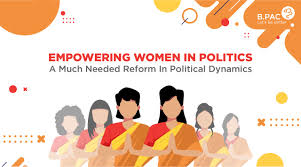
Article 1: Women Political Representation
Why in News: The debate on the implementation and framework of the Women’s Reservation Bill (Nari Shakti Vandan Adhiniyam, 2023) has resurfaced amid discussions on delimitation and electoral reforms.
Key Details
The Nari Shakti Vandan Adhiniyam, 2023 provides 33% reservation for women in Lok Sabha and State Assemblies.
Implementation is linked to delimitation after Census, leading to concerns about delay.
Women’s representation in Lok Sabha is currently around 15% (2024).
Debate continues on timing, structure, and effectiveness of the reservation model.
Status of Women’s Political Representation in India
Low Parliamentary Representation: Women constitute only about 14–15% of Lok Sabha members, far below the global average (~26% as per IPU data). This highlights structural gender inequality in political participation.
Success at Local Level (73rd & 74th Amendments): Reservation of 33–50% seats in Panchayats and Urban Local Bodies has significantly increased grassroots participation, with over 1.4 million elected women representatives.
Global Comparison: Countries like Rwanda (~60%) and Nordic nations (~40%+) show higher representation, indicating that policy intervention can bridge gender gaps.
Barriers to Entry: Social norms, financial constraints, political party biases, and safety concerns limit women’s participation in electoral politics.
Constitutional & Legal Framework
Nari Shakti Vandan Adhiniyam: Provides one-third reservation for women in Parliament and State Assemblies, including SC/ST seats, aiming to institutionalise gender equality.
Link to Delimitation (Article 82 & 170): Implementation depends on fresh delimitation after Census, raising concerns about delay and political uncertainty.
Article 15(3) – Protective Discrimination: Enables the state to make special provisions for women, forming the constitutional basis for reservation.
Democratic Principle of Equality: Balancing substantive equality (reservation) with formal equality (equal opportunity) remains a key constitutional challenge.
Arguments in Favour of Women’s Reservation
Correcting Historical Injustice: Reservation addresses long-standing gender exclusion and ensures inclusive democracy, a core constitutional value.
Better Governance Outcomes: Studies (e.g., Panchayat-level research by Esther Duflo) show women leaders prioritise health, education, and welfare, improving human development indicators.
Critical Mass Theory: A minimum representation (~30%) ensures women’s voices influence policy, preventing tokenism and enhancing decision-making quality.
Political Empowerment: Reservation acts as an entry point, enabling women to gain experience, visibility, and leadership skills in politics.
Concerns and Criticism
Delay due to Delimitation: Linking implementation with Census and delimitation may postpone actual benefits, raising concerns about political intent.
Elite Capture & Proxy Representation: There is a risk of “sarpanch pati” phenomenon, where male relatives control decision-making, especially at local levels.
Lack of OBC Sub-Quota: Critics argue the Bill does not provide reservation within reservation for OBC women, limiting inclusivity.
Rotation of Seats Issue: Frequent rotation may discourage long-term constituency development and weaken political accountability.
Federalism, Delimitation and Political Balance
Delimitation Sensitivity: Seat redistribution based on population may alter North-South political balance, creating federal tensions.
Article 81 Framework: Ensures proportional representation of states in Lok Sabha, maintaining electoral equality.
Expansion of Lok Sabha Seats: Proposed increase (from 543 to ~800+) aims to accommodate population growth while preserving state-wise proportionality.
Regional Concerns: Southern states fear losing influence due to lower population growth despite better development indicators.
Beyond Reservation: Structural Reforms Needed
Political Party Reforms: Parties must voluntarily give more tickets to women, as legal quotas alone cannot ensure effective participation.
Capacity Building: Training, leadership programs, and financial support are needed to enhance women’s political effectiveness.
Addressing Social Barriers: Gender stereotypes, violence, and lack of resources must be tackled through institutional and societal change.
Strengthening Local Success Models: Lessons from Panchayati Raj should be scaled up to state and national levels.
Women’s Reservation as Democratic Deepening
Inclusive Governance: Women’s participation strengthens representative democracy, ensuring diverse perspectives in policymaking.
Constitutional Morality: Promotes values of justice, equality, and dignity, as envisioned by Dr. B.R. Ambedkar.
From Tokenism to Transformation: The goal should be substantive empowerment, not symbolic representation.
Living Constitution Perspective: The debate reflects how the Constitution evolves to address changing social realities.
Conclusion
Women’s reservation is a necessary but not sufficient reform. Its success depends on timely implementation, institutional safeguards, and complementary political reforms. India must move beyond a binary “yes or no” debate and focus on designing a system that ensures effective, inclusive, and sustainable political participation of women. This will strengthen democracy and align with the vision of a just and equitable republic.
EXPECTED QUESTION FOR UPSC CSE
Prelims MCQ
- The Nari Shakti Vandan Adhiniyam, 2023 provides:
(a) 50% reservation in Parliament
(b) 33% reservation in Lok Sabha and State Assemblies
(c) Reservation only in Panchayats
(d) Reservation only for OBC women
Answer: (b)
Article 2: Monsoon Resilience & Climate Variability
Why in News: India Meteorological Department (IMD) has forecast 92% of normal monsoon rainfall for 2026, the lowest in nearly two decades, raising concerns over agriculture and water security.
Key Details
IMD predicts below-normal rainfall (92% of Long Period Average) for 2026 monsoon.
Monsoon contributes ~70% of India’s annual rainfall, critical for agriculture and economy.
Reservoir levels currently above normal (over 100% of 10-year average) due to good rains in 2024–25.
India’s resilience has improved through better forecasting, water management, and conservation efforts.
Indian Monsoon: Backbone of Economy
Primary Rainfall Source: The southwest monsoon (June–September) provides about 70–75% of India’s annual rainfall, making it crucial for water availability and ecological balance.
Agricultural Dependence: Nearly 48% of India’s net sown area is rain-fed, meaning monsoon directly impacts crop output, especially for kharif crops like rice, pulses, and oilseeds.
Economic Linkages: A good monsoon boosts rural income, consumption demand, and GDP growth, while poor rainfall can lead to inflation and rural distress.
Water Resource Replenishment: Monsoon rainfall recharges groundwater, rivers, and reservoirs, supporting drinking water, irrigation, and hydropower generation.
IMD Forecasting & Scientific Advancements
Improved Accuracy: The India Meteorological Department (IMD) has significantly improved forecast accuracy using dynamical models and supercomputing, reducing uncertainty.
Long Period Average (LPA): Monsoon forecasts are expressed as a percentage of LPA (~87 cm), with 92% indicating “below normal” but not drought conditions.
Granular Forecasting: IMD now provides region-wise and monthly forecasts, enabling better planning for agriculture, disaster management, and water use.
Early Warning Systems: Timely forecasts help policymakers take preventive measures, reducing risks associated with climate variability.
Climate Change & Monsoon Variability
Role of El Niño: The El Niño phenomenon in the Pacific Ocean weakens monsoon circulation, often leading to deficient rainfall in India.
Erratic Rainfall Patterns: Climate change has increased extreme rainfall events and dry spells, making monsoon distribution uneven rather than uniformly deficient.
Rising Disasters: India has witnessed at least one major flood or extreme rainfall disaster annually in the last decade, indicating rising climate risks.
Uncertainty in Prediction: Despite improvements, predicting localized extreme events remains a challenge due to complex climate interactions.
India’s Growing Resilience
Improved Reservoir Storage: Current storage in 166 major reservoirs is above normal, providing a buffer against rainfall deficiency.
Water Conservation Initiatives: Schemes like MGNREGA have created assets such as ponds, check dams, and wells, improving groundwater recharge and water security.
Groundwater Management: Assessments by the Central Ground Water Board show improved groundwater levels in several regions due to conservation efforts.
Diversification of Economy: Reduced dependence on agriculture in GDP (now ~15–16%) has enhanced resilience against monsoon shocks.
Spatial & Temporal Variability of Monsoon
Uneven Distribution: A national forecast of 92% does not mean uniform deficiency; some regions may receive normal or above-normal rainfall.
Seasonal Variation: Forecast suggests normal rainfall in June–July but drier conditions in August–September, affecting crop cycles.
Regional Differences: Northeast, northwest, and southern peninsula may receive better rainfall, while other areas may face deficits.
Policy Implication: Regional forecasting helps in crop planning, irrigation scheduling, and disaster preparedness.
Challenges Ahead
Rain-fed Agriculture Risk: Small and marginal farmers remain vulnerable due to dependence on rainfall and lack of irrigation infrastructure.
Groundwater Over-extraction: Despite improvements, India remains the largest groundwater extractor globally, posing long-term sustainability concerns.
Flood vs Drought Duality: India faces both floods and droughts simultaneously, reflecting poor water management and climate variability.
Need for Climate Adaptation: Strengthening climate-resilient agriculture and infrastructure is essential for long-term sustainability.
Data & Coordination Gaps: Need for better coordination between IMD, agriculture departments, and local governance.
Way Forward
Strengthen climate-resilient agriculture through drought-resistant crops and diversification.
Enhance water management systems, including rainwater harvesting and micro-irrigation.
Improve last-mile dissemination of weather forecasts to farmers via digital platforms.
Promote integrated river basin management and groundwater regulation.
Invest in climate adaptation infrastructure and disaster preparedness mechanisms.
Conclusion
India’s preparedness shows that a below-normal monsoon is not necessarily a crisis, but a test of resilience. Strengthening climate-smart agriculture, efficient water management, improved forecasting, and institutional coordination is essential. The focus must shift from monsoon dependence to climate adaptation, ensuring sustainable development amid increasing variability.
EXPECTED QUESTIONS FOR UPSC CSE
Prelims MCQ
- Consider the following statements regarding Indian monsoon:
It contributes about 70% of annual rainfall in India
El Niño leads to stronger monsoon in India
IMD uses Long Period Average (LPA) for forecasting
Which of the statements given above are correct?
(a) 1 and 3
(b) 1 and 2
(c) 2 and 3
(d) 1, 2 and 3
Answer: (a)
Descriptive Question
- Examine the impact of below-normal monsoon on Indian agriculture and economy. Suggest measures to enhance resilience. (150 Words, 10 Marks)
Article 3: Migration Governance Gaps
Why in News: Recent evacuation efforts from West Asia highlight India’s strong crisis response but weak long-term migration governance framework.
Key Details
India evacuated 4.75 lakh+ citizens from West Asia (2026), showcasing diplomatic and logistical strength.
Around 99 lakh Indians reside in Gulf Cooperation Council (GCC) countries (2025 estimates).
The Gulf region contributes nearly 38% of India’s total remittances (2023–24).
Migration governance remains fragmented, reactive, and data-deficient.
Migration Governance in India
Internal and International Migration: India witnesses large-scale migration both within states and abroad, driven by employment, education, and socio-economic factors.
Economic Significance: India is the world’s top remittance recipient (~$125 billion, World Bank 2023), reflecting migration’s role in economic stability.
Labour Market Linkages: Migration supports sectors like construction, services, and manufacturing, especially in urban and Gulf economies.
Development Indicator: Migration is linked to poverty reduction, skill mobility, and regional development, but also exposes vulnerabilities.
Crisis-Driven Approach
Evacuation-Centric Policy: Government response becomes visible during crises like COVID-19 (Vande Bharat Mission) or Gulf evacuations.
Neglect of Migration Lifecycle: Policies focus on return and rescue rather than pre-departure, working conditions, and reintegration.
Short-Term Visibility: Crisis management generates national pride but masks structural governance gaps.
Lack of Preventive Framework: Absence of early warning systems and worker tracking leads to delayed interventions.
Gulf Region Dependency
High Indian Presence: Nearly 99 lakh Indians live in GCC countries, making it a key migration corridor.
Remittance Dependency: Gulf contributes ~38% of India’s remittance inflows, crucial for household consumption and state economies.
Sectoral Employment: Indians are concentrated in construction, domestic work, and services, often low-skilled and vulnerable.
Geopolitical Sensitivity: Instability in West Asia directly impacts Indian economy, employment, and welfare systems.
Fragmented Institutional Framework
Multiple Ministries Involved:
Ministry of External Affairs → Emigration & diplomacy
Ministry of Labour → Worker welfare
State governments → Skilling and welfare schemes
Lack of Coordination: The migrant journey spans district to international level, but governance remains siloed.
Policy Discontinuity: No single authority manages the end-to-end migration cycle.
Implementation Gaps: Variation in state capacity leads to uneven migrant support systems.
Data Deficiency and Visibility Gap
Lack of Real-Time Data: India lacks granular, dynamic migration databases, especially for internal migrants.
Policy Blind Spots: Without accurate data, anticipatory governance and welfare targeting become difficult.
COVID-19 Lessons: The migrant crisis revealed absence of portable benefits and worker registries.
Kerala Model Exception: Kerala’s migration surveys and welfare funds demonstrate data-driven governance success.
Structural Vulnerabilities in Migration System
Precarious Employment: Migrants often face informal contracts, wage insecurity, and poor working conditions.
Rising Cost Pressures: Inflation, LPG prices, and living costs reduce real income and savings capacity.
Recruitment Exploitation: Lack of regulation in recruitment agencies leads to debt traps and exploitation.
Weak Reintegration Systems: Return migrants struggle with employment, skill utilisation, and social security.
Policy Developments & Opportunities
Overseas Mobility Facilitation and Welfare Bill: Aims to create a structured framework for migrant protection and welfare.
Bilateral Labour Agreements: India is strengthening agreements with Gulf countries to ensure worker rights and safety.
Digital Platforms: Initiatives like e-Migrate can improve tracking and transparency, but need expansion.
Skill India & Migration: Aligning skilling programs with global labour demand can enhance safe migration pathways.
Migration as a Continuum
Lifecycle Approach: Migration should be governed across stages: Pre-departure → Employment → Welfare → Return → Reintegration
Integrated Policy Framework: Internal and international migration must be seen as interconnected systems.
Social Protection Systems: Portability of schemes like One Nation One Ration Card is a step forward.
Inclusive Governance: Recognising migrants as economic contributors, not temporary labour, is essential.
Way Forward
Create a Unified Migration Authority: Integrate multiple ministries for end-to-end governance of migration.
Develop National Migration Database: Real-time, district-level data for evidence-based policymaking.
Strengthen Social Security: Ensure portable benefits, insurance, and welfare schemes for migrants.
Regulate Recruitment Systems: Prevent exploitation through strict monitoring of agencies.
Enhance Bilateral Cooperation: Secure better labour rights through international agreements.
Conclusion
India’s migration governance must move beyond a crisis-response model to a comprehensive, lifecycle-based framework. As migration becomes central to economic growth and global engagement, ensuring dignity, security, and welfare of migrants is essential for inclusive development. A proactive and integrated approach will transform migration into a driver of sustainable growth and social justice.
EXPECTED QUESTIONS FOR UPSC CSE
Prelims MCQ
- Consider the following statements:
India is the largest recipient of remittances globally.
Gulf countries account for a significant share of Indian migrants.
India has a unified national migration authority.
Which of the statements given above are correct?
(a) 1 and 2 only
(b) 2 and 3 only
(c) 1 and 3 only
(d) 1, 2 and 3
Answer: (a)
Descriptive Question
- Discuss the importance of migration for India’s economy. Why is there a need for a lifecycle-based migration governance framework? (250 Words, 15 Marks)
