
19 January 2026 The Hindu Editorial
What to Read in The Hindu Editorial ( Topic and Syllabus wise)
Editorial 1: Crisis in education
Context
Higher education institutions require comprehensive systemic reforms.
Introduction
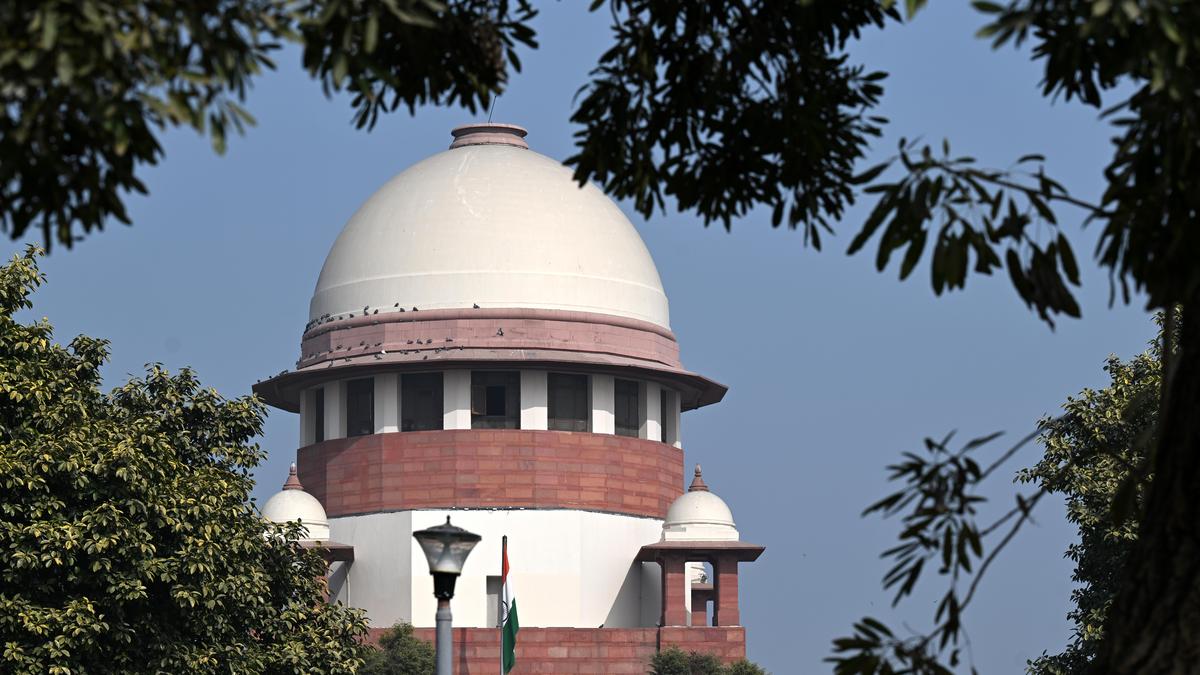
The Supreme Court of India has intervened decisively in the issue of student suicides, highlighting deep-rooted problems in higher education. Rapid privatisation, inadequate institutional capacity, and unresolved faculty and governance vacancies have intensified student distress, compelling the Court to issue firm directions to ensure accountability, data transparency, and urgent systemic reform.
Supreme Court Intervention on Student Suicides
In an ongoing case on student suicides, the Supreme Court of India issued nine directions to the Central and State governments
The Court noted the rapid expansion of higher education, largely due to privatisation, without a corresponding improvement in quality
It acknowledged growing student distress caused by financial pressure, social factors, social injustice, and academic stress
Use of Constitutional Powers
The Court invoked Article 142 to ensure effective implementation of its directions
Seven directions focus on:
Systematic record-keeping
Mandatory reporting
Tracking of student suicides
Separate treatment of data for higher education institutions (HEIs)
The remaining two directions require:
Immediate filling of posts of Vice-Chancellors, Registrars, and faculty vacancies
Recognition of these roles as critical to student well-being
Faculty Vacancies in Public HEIs
Ground reports across India indicate around 50% faculty vacancies in many public universities
This staffing shortage directly harms:
Teaching quality
Research output
Student mentoring and support systems
University of Madras: A Case Study
The University of Madras, a leading State-run HEI in Tamil Nadu, exemplifies the crisis
Tamil Nadu:
Leads India in higher education enrolment
Has a strong legacy in women’s education
Historically, the university was known for:
High-quality research
Conducting examinations for affiliated colleges
Teaching activities expanded significantly from the late 1970s
Institutional Decline Over the Last Decade
Over the past decade, the university has faced severe decline:
No new faculty appointments
Teaching strength reduced to nearly half of sanctioned posts
Research activity reduced to minimal functioning
Erosion of Research Capacity
Centres for advanced studies in philosophy, botany, and mathematics still exist but are greatly weakened
Humanities, science-based, and social science research has suffered
Research focused on Tamil Nadu, vital for evidence-based public policy, has been largely neglected
Governance and Appointment Bottlenecks
Vice-Chancellor appointments have been stalled due to:
Conflicts involving a recalcitrant Governor
Legal uncertainty following the Court’s observations on a Presidential reference concerning Governors’ powers may need resolution before appointments can proceed smoothly
Challenges in Filling Faculty Positions
Faculty recruitment must follow UGC-prescribed procedures, typically requiring at least six months
Recruitment demands substantial financial commitment, which could be supported by the Union government
Additional challenges include:
Limited pool of qualified faculty
Corruption
Political or ideological appointments, weakening academic standards
A Broader Call to Action
Although the Court’s four-month timeline is demanding, it serves as a strong wake-up call
Strengthening institutional foundations—
Adequate staffing
Effective governance
Robust research ecosystems
These are essential prerequisites before pursuing ambitious national goals such as Viksit Bharat
Conclusion
The Court’s directions are a strong reminder that student well-being depends on sound governance, adequate staffing, and vibrant research ecosystems. Filling vacancies, restoring academic integrity, and strengthening public universities are not optional reforms but urgent necessities. Without rebuilding these foundations, ambitious national visions like Viksit Bharat risk remaining aspirational rather than achievable.
Editorial 2: Bullying tactics
Context
Trump’s use of tariffs as a political weapon in the Greenland context risks weakening NATO unity and undermining alliance trust.
Introduction
The escalating use of tariffs by the Trump administration as leverage over Greenland marks a sharp turn in transatlantic relations. By targeting close European allies, the U.S. risks transforming economic tools into instruments of coercion. This strategy raises serious questions about international law, alliance trust, and the long-term stability of NATO at a time of growing global insecurity.
Tariff Threats Linked to Greenland
The Trump administration has announced plans to impose a 10% tariff on all goods from selected European countries starting February 1, rising to 25% by June 1
The tariffs would remain in force until the U.S. demand to purchase or otherwise acquire Greenland, an autonomous territory administered by Denmark, is addressed
These proposed duties would be imposed in addition to existing 15% U.S. tariffs
European Countries Targeted
The countries facing the tariff measures include:
Denmark
Finland
France
Germany
The Netherlands
Norway
Sweden
The United Kingdom
European Political Response
Emmanuel Macron termed the U.S. action “unacceptable”
Keir Starmer described it as “completely wrong”
These reactions underline growing European concern over coercive economic pressure on allies
Military Signalling in Greenland
Several targeted nations have deployed small troop contingents to Greenland
These deployments are framed as reconnaissance missions and military exercises
The objective is to signal and reinforce Europe’s collective commitment to defending the autonomous Arctic territory
Broader Strategic Concerns
European anxiety has been heightened by recent U.S. actions, including:
The forcible removal of Venezuela’s President Nicolás Maduro to the U.S.
Statements by Donald Trump suggesting possible future interventions in Colombia, Cuba, Mexico, and Iran
These developments have deepened fears of a coercive and interventionist U.S. foreign policy
Legal and Trade Implications
The tariff threat raises multiple concerns:
Absence of clear Congressional authorisation and a weak legal basis
Possible adverse judicial rulings on the use of the International Emergency Economic Powers Act
The European Union may activate its anti-coercion instrument, enabling:
Counter-tariffs
Trade restrictions on major U.S. technology firms and service providers
Impact on Transatlantic Relations and NATO
Weaponising tariffs against allies risks:
Undermining decades of transatlantic trade cooperation
Deepening political mistrust between the U.S. and Europe
A prolonged standoff could weaken NATO, limiting its ability to:
Support Ukraine
Respond effectively to an assertive Russia
The Leadership Question
Even if the dispute is resolved, repairing U.S.–Europe relations may take years
At a time of global instability, the episode highlights the urgent need for measured, lawful, and cooperative leadership, which critics argue is currently lacking in Washington
Conclusion
Weaponising trade policy against allies threatens to undo decades of diplomatic cooperation and weaken collective security frameworks such as NATO. Legal uncertainty, retaliatory measures, and deepening mistrust could leave Europe and the U.S. strategically divided. In an era of conflict and instability, sustaining rules-based order, alliance solidarity, and responsible leadership is far more vital than short-term geopolitical brinkmanship.
