
20 April 2026 Indian Express Editorial
What to Read in Indian Express Editorial ( Topic and Syllabus wise)
Article 1: Delimitation & Federal Balance in India
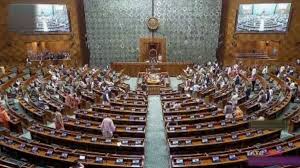
Why in News: Debate has intensified over delimitation linked to women’s reservation, raising concerns about federal balance and political representation in India.
Key Details
The Nari Shakti Vandan Adhiniyam (Women’s Reservation Bill) links reservation to future delimitation after Census.
Concerns arise over population-based seat redistribution, impacting southern and well-performing states.
Delimitation may alter Lok Sabha seat share and federal power balance.
Calls for a national consultation on democratic representation before implementation.
Delimitation in India – Constitutional Framework
Definition & Purpose: Delimitation refers to the redrawing of electoral constituencies to ensure equal representation based on population, a key feature of representative democracy.
Constitutional Basis: Articles 82 and 170 provide for delimitation after every Census, implemented through a Delimitation Commission whose decisions are final.
Delimitation Freeze (1976–2026): Through the 42nd Amendment (1976) and later the 84th Amendment (2001), seat allocation was frozen to promote population control efforts.
Next Delimitation Trigger: The upcoming Census and delimitation post-2026 may significantly alter representation patterns across states.
Federalism vs Population-Based Representation
Principle of “One Person, One Vote”: Democracy demands equal representation, but strict population-based allocation may lead to regional imbalances.
North-South Divide: Southern states like Tamil Nadu and Kerala have achieved population stabilisation, while northern states continue to grow demographically.
Reward vs Penalty Debate: A purely population-based system may reward high population growth and penalise states that performed well in health, education, and family planning.
Impact on Fiscal Federalism: States contributing more to GDP and taxes may face reduced political voice, creating tensions in cooperative federalism.
Women’s Reservation & Delimitation Linkage
33% Reservation Objective: The Women’s Reservation Bill aims to ensure greater gender representation in legislatures, aligning with SDG goals.
Conditional Implementation: Linking reservation to delimitation delays its implementation, despite no constitutional necessity for such linkage.
Political Concerns: Critics argue that combining both reforms creates a “legislative trade-off”, complicating consensus on gender justice.
Governance Implications: Immediate reservation based on existing seats is feasible, ensuring timely empowerment without structural disruption.
Comparative Federal Models
United States Model: The House of Representatives is population-based, while the Senate ensures equal representation for each state.
European Union Model: The principle of degressive proportionality balances population size with minimum representation for smaller states.
Relevance for India: These models highlight the need to balance citizen equality with state equality in large federations.
Indian Context: India’s Rajya Sabha partially performs this role but lacks equal state representation, limiting federal balance.
Challenges of Expanding Representation
Increase in Lok Sabha Seats: Delimitation may expand Lok Sabha strength to 800–850 members, raising concerns about efficiency.
Quality of Parliamentary Debate: Larger legislatures may lead to reduced deliberation quality, affecting law-making effectiveness.
Representation vs Governance Trade-off: While representation improves, governance may suffer due to coordination challenges and time constraints.
Role of State Legislatures: MLAs can handle local issues, while MPs should focus on national policy and macro governance.
Reimagining Indian Federalism
Strengthening Rajya Sabha: It can evolve into a true “House of States”, ensuring balanced representation irrespective of population.
State Reorganisation Debate: Large states like Uttar Pradesh have populations larger than many countries, raising the need for administrative restructuring.
Balancing Political & Fiscal Power: Addressing concerns of tax-contributing states is essential for maintaining federal harmony.
Need for Inclusive Consultation: A national dialogue involving states, parties, and civil society is crucial before major electoral reforms.
Way Forward
Conduct a comprehensive national consultation involving all stakeholders.
Implement women’s reservation independently without linking it to delimitation.
Explore balanced representation models combining population and federal principles.
Strengthen Rajya Sabha’s federal role to ensure state equality.
Ensure delimitation reforms are gradual, consultative, and consensus-based.
Conclusion
Delimitation is not merely a technical exercise but a fundamental restructuring of India’s democratic architecture. Balancing representation, federalism, and governance efficiency is essential to preserve the spirit of the Constitution. A consultative and calibrated approach will ensure that India’s democracy remains both representative and equitable.
EXPECTED QUESTIONS FOR UPSC CSE
Prelims MCQ
- Which Constitutional Amendment froze Lok Sabha seat allocation until 2026?
(a) 42nd Amendment
(b) 44th Amendment
(c) 73rd Amendment
(d) 86th Amendment
Answer: (a)
Descriptive Question
- Discuss the challenges posed by delimitation to India’s federal structure. Suggest measures to balance population-based representation with federal principles. (150 Words, 10 Marks)
Article 2: Gender Economy Gap
Why in News: India’s female labour force participation is rising, but women remain severely underrepresented in leadership roles across sectors.
Key Details
Female Labour Force Participation Rate (LFPR) increased from 33.9% (2022) to 40% (2025).
Still below global average (49%) and countries like Vietnam (69%) and Brazil (53%).
Women hold only 13% of top managerial and legislative roles (PLFS data).
Women’s Reservation Act implementation delay highlights structural barriers in political representation.
Female Labour Force Participation (FLFP)
Rising but insufficient participation: India’s female LFPR reaching 40% in 2025 is a positive trend, yet it remains significantly lower than global standards, indicating underutilisation of human capital.
Growth and development linkage: According to the World Bank, India needs ~8% sustained growth to become a developed economy by 2047, which is not feasible without higher female workforce participation.
Demographic dividend utilisation: Women constitute nearly 48% of India’s population, and their economic inclusion is essential to fully realise the demographic dividend.
Structural shift in employment: Increase in rural and self-employment has partly driven LFPR rise, but quality of jobs remains a concern, with many women engaged in informal and low-paying work.
Sectoral Employment & Labour Market Dynamics
Role of labour-intensive industries: Sectors like textiles, food processing, and electronics can absorb more female workers, improving both employment and wages.
Supply vs demand constraints: Studies show that increasing female labour supply without demand expansion may depress wages, highlighting the need for job creation.
Informal sector dominance: A large proportion of women work in the informal economy, lacking job security, social protection, and fair wages.
Urban-rural divide: Female participation is often higher in rural areas due to necessity-driven employment, whereas urban participation is constrained by social norms and safety concerns.
Glass Ceiling & Leadership Gap
Low representation in top positions: Only 13 women per 100 men are in leadership roles (PLFS), indicating a sharp gender gap in decision-making spaces.
Corporate leadership disparity: Despite mandatory board representation, 77% of companies have only 1–2 women directors, reflecting tokenism rather than meaningful inclusion.
Critical mass theory: Research suggests at least 30% representation is needed for women to influence decision-making effectively.
Academic leadership gap: Women constitute only ~14% faculty in IITs and around 20–30% in IIMs, showing underrepresentation in knowledge leadership.
Political Representation & Governance Impact
Women’s Reservation Act delay: Implementation linked with delimitation has delayed benefits, affecting women’s legislative participation.
Economic benefits of representation: A 2018 study found constituencies with women legislators experienced 1.8% higher economic growth annually.
Policy prioritisation: Women leaders often focus more on health, education, and welfare, leading to inclusive development.
Democratic deepening: Greater participation strengthens representative democracy and gender equality.
Barriers to Women’s Economic Empowerment
Socio-cultural norms: Patriarchal attitudes, unpaid care work, and mobility restrictions limit women’s workforce participation.
Skill and education gaps: Despite improvements, mismatch between education and employable skills restricts opportunities.
Safety and infrastructure issues: Lack of safe transport, workplace security, and childcare facilities discourages workforce entry.
Wage inequality: Gender wage gap persists, reducing incentives for women to join or remain in the workforce.
Government Initiatives & Policy Measures
Skill development programmes: Initiatives like Skill India and women-focused training aim to enhance employability.
Entrepreneurship promotion: Schemes like Stand-Up India encourage women-led enterprises, though ownership remains at ~27%.
Corporate governance reforms: Mandatory women directors on boards aim to improve representation, though effectiveness remains limited.
Labour reforms & social security: Policies focusing on maternity benefits, workplace safety, and flexible work are steps toward inclusion.
Way Forward
Promote labour-intensive manufacturing to generate large-scale employment for women.
Ensure quality jobs with fair wages, social security, and formalisation.
Increase representation in leadership by targeting at least 30% participation.
Invest in care economy (childcare, eldercare) to reduce unpaid work burden.
Strengthen education-to-employment linkage with skill-oriented training.
Fast-track Women’s Reservation Act implementation for political empowerment.
Conclusion
India’s progress in increasing female labour force participation is encouraging, but the persistent leadership gap reflects deep structural inequalities. For India to achieve inclusive growth and become a developed economy by 2047, it must move beyond participation to empowerment, representation, and leadership of women across all sectors.
EXPECTED QUESTIONS FOR UPSC CSE
Prelims MCQ
- Which of the following statements is correct regarding Female Labour Force Participation Rate (FLFPR) in India?
(a) It is higher than the global average
(b) It has remained stagnant in recent years
(c) It has increased but remains below global average
(d) It is higher than Vietnam
Answer: (c)
Descriptive Question
- Discuss the challenges and opportunities associated with increasing female labour force participation in India. (150 Words, 10 Marks)
Article 3: Israel’s Expanding Security Doctrine
Why in News: Israel has established a “Yellow Line” buffer zone in Gaza and is attempting to replicate it in Lebanon, raising concerns over sovereignty, humanitarian law, and regional stability.
Key Details
Israel created the “Yellow Line” as a military buffer zone in Gaza (2025) and extended the idea to southern Lebanon (2026).
It places nearly 58% of Gaza under Israeli military control, according to strategic analyses.
The policy is justified as a security doctrine against Hamas and Hezbollah.
Global organisations, including the UN Human Rights Office, have raised concerns over civilian casualties and violations of humanitarian law.
Buffer Zone Strategy
Forward Defence Concept: The Yellow Line represents a forward defence strategy, where Israel seeks to neutralise threats before they reach its borders, especially from groups like Hamas and Hezbollah.
Territorial Control: Reports indicate nearly 58% of Gaza falls under Israeli military influence, creating a controlled operational theatre rather than a temporary deployment zone.
Static Defence System: Israel has shifted from mobile warfare to fortified static positions, including concrete barriers, surveillance towers, and troop-heavy deployments.
Military Logistics Challenge: Maintaining the Yellow Line requires two full divisions of Israeli forces, making it resource-intensive and strategically demanding.
Gaza Model & Expansion to Lebanon
Replication Strategy: The “Gaza Model” refers to extending similar buffer zones into southern Lebanon, particularly up to the Litani River.
Strategic Depth Creation: Israel aims to create strategic depth by pushing conflict zones away from its borders, a long-standing military objective.
Civilian Displacement Concerns: The model involves infrastructure destruction and displacement, raising ethical and humanitarian questions.
Historical Continuity: The approach draws parallels with past demarcations like the 1967 Green Line, but differs as it is a military enforcement boundary, not a political agreement.
International Humanitarian Law (IHL) Concerns
Violation of Sovereignty: Establishing buffer zones inside another territory challenges the principle of territorial integrity under international law.
Civilian Casualties: The UN Human Rights Office reported over 200 Palestinian deaths near the Yellow Line (2025–26), highlighting humanitarian risks.
Geneva Conventions Applicability: Actions like forced displacement and targeting civilian infrastructure may violate Geneva Convention provisions.
Creeping Annexation Debate: Critics argue the Yellow Line acts as a tool for de facto annexation, gradually altering territorial realities.
Strategic and Military Implications
Security vs Vulnerability: While intended for security, static deployment may expose troops to guerrilla warfare, sniper attacks, and missile strikes.
Historical Precedent: The South Lebanon occupation (1985–2000) showed similar strategies leading to prolonged conflict and attrition.
War of Attrition Risk: Fixed positions may turn soldiers into “sitting targets”, increasing long-term operational risks.
Regional Escalation: Expansion into Lebanon risks wider Middle East conflict, involving multiple state and non-state actors.
Geopolitical Implications
Middle East Instability: The conflict affects global oil prices, trade routes, and regional alliances, impacting global economic stability.
India’s Strategic Interests: India has stakes in the region due to energy security, diaspora, and trade relations with West Asia.
Balancing Diplomacy: India follows a balanced approach, supporting peace, sovereignty, and humanitarian principles.
Global Governance Challenge: The situation highlights limitations of institutions like the United Nations in conflict resolution.
Way Forward
Diplomatic Resolution: Strengthening multilateral diplomacy through the United Nations and regional forums is essential to ensure ceasefire compliance.
Adherence to International Law: All parties must respect Geneva Conventions and sovereignty principles to prevent humanitarian crises.
Humanitarian Access: Ensuring access to food, healthcare, and shelter for civilians should be prioritised.
Confidence-Building Measures: Gradual troop withdrawal and neutral monitoring mechanisms can reduce tensions.
Conclusion
The “Yellow Line” reflects a shift in Israel’s military doctrine towards territorial control and proactive defence, but it raises serious concerns regarding international law, humanitarian impact, and regional stability. This issue highlights the intersection of security, sovereignty, and global governance.
EXPECTED QUESTION FOR UPSC CSE
Prelims MCQ
- The term “buffer zone” in international relations refers to:
(a) Area of economic cooperation
(b) Neutral zone between conflicting parties
(c) Trade corridor
(d) Military alliance zone
Answer: (b)
