

22 December 2025 Indian Express Editorial
What to Read in Indian Express Editorial( Topic and Syllabus wise)
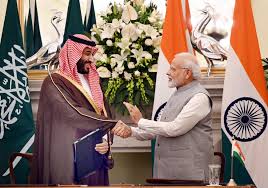
Editorial 1 : India’s West Asia Diplomacy
Context:
India’s proactive diplomacy under PM Modi has transformed its role in West Asia, yielding economic, strategic, and political gains.
Introduction:
India’s engagement with West Asia has undergone a remarkable transformation over the past decade. The recent landmark economic partnership agreement with Oman, offering zero-duty access on over 98% of Indian exports, exemplifies India’s “Think West” policy a strategy integrating economic growth, strategic security, and civilisational diplomacy. This shift reflects India’s intent to diversify its foreign policy, strengthen bilateral ties, and assert itself as a credible regional partner.
Key Analysis:
- Economic Engagement:
- Trade and investment have expanded significantly; India-GCC trade reached $184 billion in 2023-24, while FDI from Gulf countries crossed $20 billion.
- The Oman agreement highlights India’s focus on tariff liberalisation and market access for exports, enhancing competitiveness of Indian goods.
- Beyond the GCC, India has cultivated ties with North African and African Muslim-majority countries, creating new trade corridors and investment opportunities.
- Strategic and Security Dimensions:
- India has positioned itself as a net security provider in the region by safeguarding critical sea lanes and participating in anti-piracy operations.
- Joint military exercises with UAE, Saudi Arabia, and Egypt signal India’s growing defence cooperation and regional credibility.
- This approach also counters China’s expanding naval and port footprint, reflecting strategic foresight.
- Political Diplomacy:
- Modi’s personal diplomacy visiting nine Middle Eastern countries since 2014 has strengthened political ties and trust.
- India has successfully de-hyphenated itself from Pakistan in Gulf diplomacy, gaining support on sensitive issues like Kashmir.
- Gulf countries now view India as a long-term strategic partner rather than through a Pakistan-centric lens.
- Diaspora and Soft Power:
- India’s focus on the welfare, safety, and dignity of its diaspora reinforces bilateral goodwill and enhances India’s cultural and soft power influence.
- Indian diaspora engagement strengthens mutual dependence between India and host countries in West Asia.
- Global and Civilisational Significance:
- India has connected its West Asia policy to broader civilisational, economic, and strategic interests, projecting itself as a responsible and reliable partner.
- This enhances India’s global image as a rising power capable of balancing economic ambitions with strategic realism.
Conclusion:
India’s West Asia policy under PM Modi reflects a comprehensive, multidimensional approach that combines economic growth, strategic security, political engagement, and diaspora diplomacy. Agreements like the Oman trade pact, coupled with strengthened defence and political ties, underscore India’s transformation into a trusted, influential partner in the region. This integrated strategy has firmly established India at the heart of West Asia’s evolving strategic and economic landscape, ensuring long-term regional and global benefits.
Editorial 2 : Rural Employment Reform Debate
Context:
The VB-GRAMG Bill, replacing MGNREGA, has been passed with procedural haste, raising concerns about rural employment, fiscal federalism, and democratic scrutiny.
Introduction:
The VB-GRAMG Bill, passed by voice vote in Parliament without referral to a standing committee, seeks to overhaul the Mahatma Gandhi National Rural Employment Guarantee Act (MGNREGA). While MGNREGA has been instrumental in providing wage employment and social security to millions of rural households, the new legislation introduces structural changes with wide-ranging implications. The manner of its passage, bypassing detailed debate and expert consultation, brings into focus issues of legislative process, governance, and policy effectiveness.
Key Analysis:
- Procedural and Democratic Aspects:
- The Bill was passed without being sent to a parliamentary standing committee, depriving legislators and experts of an opportunity for detailed scrutiny.
- Key leaders, including the Prime Minister and Opposition leader, were absent during the debate, undermining deliberative democracy.
- The rushed passage mirrors the procedural issues seen during the enactment of controversial farm laws, highlighting a trend of expedited legislation at the cost of transparency.
- Policy and Implementation Implications:
- Shift from Demand-Driven to Supply-Driven Model:MGNREGA allowed households to demand work; the new Bill replaces it with a “normative allocation” of funds for states. This top-down approach may not reflect actual local demand.
- Centre-State Fiscal Dynamics:The Centre will cover only 60% of the scheme’s cost, leaving states to bear the remainder, which may strain fiscally weaker states and create uneven implementation.
- Risk of Political Bias:Allocation of funds by the Centre may be influenced by political considerations, potentially affecting equitable access.
- Economic and Social Dimensions:
- MGNREGA has been crucial for rural livelihood, especially during crises like COVID-19, generating hundreds of crores of person-days of employment.
- By providing guaranteed work, it also prevents distress migration, supports rural purchasing power, and promotes asset creation in villages.
- Abrupt policy shifts without adequate safeguards may disrupt the socio-economic stability of nearly 6 crore rural households dependent on wage employment.
- Governance and Efficiency Considerations:
- The Modi government streamlined MGNREGA during its tenure using technology like Aadhaar-linked accounts and geo-tagging of assets, improving efficiency.
- While reform is necessary, a more consultative approach could have preserved operational efficiency while addressing fiscal sustainability and accountability.
- Political and Bipartisan Context:
- MGNREGA has historically received bipartisan support. Proper debate and engagement with opposition parties could have led to a consensus-driven reform, reducing political polarization and increasing acceptance.
- Rushed passage without dialogue risks repeating the mistakes of the farm laws’ enactment, where public opposition and lack of consultation led to policy reversals.
Conclusion:
The VB-GRAMG Bill reflects an attempt to reform MGNREGA but raises serious concerns regarding procedural legitimacy, fiscal federalism, and rural employment security. While streamlining the scheme and ensuring fiscal sustainability are valid objectives, abrupt changes without parliamentary scrutiny and public consultation undermine democratic governance. A balanced approach, preserving the demand-driven nature of employment guarantees, ensuring adequate Centre funding, and fostering bipartisan deliberation, is essential to protect the socio-economic interests of rural households and maintain public trust in policy reforms.
