
23 April 2026 The Hindu Editorial
What to Read in The Hindu Editorial ( Topic and Syllabus wise)
Article 1: Persian deadlock
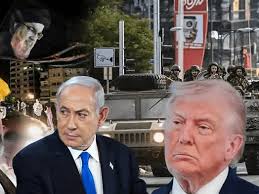
Why in news: Donald Trump extended the ceasefire with Iran amid stalled talks, Strait of Hormuz tensions, and ongoing sanctions, highlighting deepening geopolitical instability in West Asia.
Key Details
Ceasefire Extension: The U.S. extended the truce due to lack of military and diplomatic breakthroughs.
Strategic Blockade: Continued U.S. blockade on Iranian ports has intensified economic pressure and mistrust.
Hormuz Tensions: Iran’s control over the Strait of Hormuz threatens global oil supply routes.
Diplomatic Breakdown: Iran refused negotiations and cancelled talks after U.S. escalatory actions.
Policy Contradictions: U.S. mixed signals—threats alongside calls for talks—have hardened Iran’s stance.
Gap Between Claims and Ground Reality
President Donald Trump’s decision to extend the ceasefire with Iran highlights a clear mismatch between his public victory claims and the actual situation in the Persian Gulf.
Despite claiming that Iran’s military strength has been destroyed, no effective military solution exists to reopen the Strait of Hormuz, which remains blocked.
Diplomatic Setbacks and Strategic Failures
Claims that Iran was desperate for negotiations proved incorrect, as Tehran refused talks and resisted U.S. pressure.
With limited military options and diplomatic rejection, Trump extended the ceasefire while continuing economic pressure through a blockade.
This marks a second policy reversal, indicating attempts to escape the ongoing strategic deadlock.
Escalation Through Policy Contradictions
Earlier, Trump pushed Benjamin Netanyahu to agree to a limited ceasefire in Lebanon, prompting Iran to signal reopening of Hormuz.
However, the continued U.S. blockade on Iranian ports reversed this progress, leading Iran to tighten control again.
The seizure of an Iranian vessel further escalated tensions, resulting in cancellation of talks.
Unresolved Core Issues
The ceasefire extension is only a temporary pause, not a resolution.
Major disputes remain unresolved, including:
Iran’s nuclear programme
Control over the Strait of Hormuz
Ongoing U.S. sanctions
Continued deadlock risks renewed conflict, impacting both regional stability and the global economy.
Need for Realistic Negotiations and De-escalation
A sustainable solution requires reviving diplomatic talks and accepting current strategic realities.
The U.S. should ease the blockade in exchange for Iran reopening Hormuz.
Iran, in turn, should moderate its stance and consider nuclear concessions for sanctions relief.
West Asia’s stability depends on cooperation, not prolonged conflict or “forever wars.”
Conclusion
The ongoing stalemate between the U.S. and Iran reflects a fragile geopolitical balance with serious global implications. Temporary ceasefires cannot substitute for durable solutions. Constructive diplomacy, mutual concessions, and reduced hostility are essential to prevent escalation. Ensuring stability in West Asia requires prioritising economic security, restoring trust, and addressing core disputes through consistent and credible negotiations rather than coercive strategies.
Descriptive question:
- “The U.S.–Iran conflict highlights the limits of coercive diplomacy in resolving geopolitical crises.” Critically examine in the context of recent developments in West Asia. (150 words, 10 marks)
Article 3: The importance of cultural continuity
Why in news: Debate on India’s former royal families has resurfaced amid discussions on cultural representation, inequality, and heritage preservation, questioning their relevance in a modern democratic society balancing reform and continuity.
Key Details
Former royals symbolize both cultural heritage and inherited privilege, creating ideological tensions.
Critics argue their prominence may romanticize inequality and obscure social realities.
Concerns exist over who controls cultural narratives, often sidelining artisans and communities.
Supporters view them as custodians preserving architecture, rituals, and craft traditions.
Core issue: balancing social reform with preservation of lived cultural heritage systems.
Core Debate: Royalty in Modern India
The role of former royal families lies at the intersection of culture, history, and politics.
It is a non-neutral issue, often shaped by ideological and ethical perspectives.
Raises a broader question: how a modern democracy balances reform with cultural continuity.
Reflects tension between heritage preservation and egalitarian values.
Highlights the challenge of integrating past traditions within present systems.
Criticism: Symbol of Inequality
Continued visibility of royals may reinforce historical hierarchies and privilege.
Cultural displays (fashion, ceremonies, palaces) can romanticize inequality.
Such imagery may feel detached from present socio-economic realities.
Risks masking the historical injustices embedded in these systems.
Raises concerns about aestheticizing power structures rather than questioning them.
Cultural Representation and Power
Questions arise over who controls India’s cultural narrative.
Dominance of royals, designers, or global platforms may sideline local voices.
Artisans and regional communities risk being underrepresented.
Culture is seen not as neutral, but as a space shaped by power dynamics.
Highlights imbalance in visibility and cultural authority.
Alternative View: Custodians of Heritage
Former royals no longer hold political power but retain social and cultural influence.
Act as custodians of heritage, preserving architecture, rituals, and traditions.
Maintenance of palaces and traditions involves significant effort and resources.
Without stewardship, many heritage sites risk decay or loss.
Help sustain craft traditions and artisan networks rooted in historical patronage.
Continuity vs Reform
Cultural practices depend on living systems of meaning and participation.
Removing traditional structures abruptly may lead to loss of cultural coherence.
Distinction between tangible, intangible, and lived heritage is crucial.
Reform is necessary, but must consider what may be lost in transition.
Key question: how to achieve progress without breaking cultural continuity.
Conclusion
The debate over India’s former royal families reflects a deeper struggle between equality and cultural continuity. While dismantling hierarchical legacies is essential for a just society, abrupt erosion of traditional frameworks may weaken living heritage. A balanced approach is needed—one that promotes inclusivity and reform while safeguarding cultural systems, ensuring that progress does not come at the cost of identity and historical richness.
Article 2: Common concerns
Why in news: Visit of Lee Jae Myung to Delhi boosted India–South Korea ties through trade, technology partnerships, and strategic cooperation amid global geopolitical and economic uncertainties.
Key Details
Strategic Partnership Upgrade: India and South Korea launched a Special Strategic Partnership visionfocusing on future-oriented cooperation.
Trade Target Expansion: Both countries aim to increase bilateral trade to $50 billion by the end of the decade.
Technology Collaboration: Focus on critical minerals, quantum computing, and manufacturing, combining Korean technology with India’s scale.
Untapped Potential: Current trade (~$27 billion) and low people-to-people exchanges remain below potential despite strong cultural links.
Geopolitical Context: Shared concerns over Indo-Pacific stability, energy security, and global disruptions are driving closer engagement.
Visit and Strategic Significance
The visit of Lee Jae Myung to India, including meetings with Narendra Modi, focused on strengthening trade and technology cooperation.
It marked the first such visit in eight years, making it a long-awaited diplomatic engagement.
The discussions aimed at building future-oriented ties amid ongoing global uncertainties.
Key Agreements and Economic Goals
Both nations committed to increasing bilateral trade to $50 billion by the end of the decade.
A joint vision statement for the India–Republic of Korea Special Strategic Partnership was launched.
Agreements included shipbuilding, maritime logistics, energy security, and sustainability.
Around 15 Memoranda of Understanding (MoUs) were signed across multiple economic sectors.
Technology and Industrial Collaboration
The partnership aims to combine Korean technological expertise with India’s large-scale manufacturing capacity.
Focus areas include critical minerals and quantum computing, alongside existing strengths in heavy industries and consumer goods.
Several South Korean companies have established a strong presence, making India a key production hub.
Cultural Links and Underperformance
Historical ties trace back to Heo Hwang-ok, symbolising ancient connections.
Despite cultural exchanges like K-pop and Korean dramas gaining popularity in India, and Indian influence in Korea, people-to-people ties remain limited.
Trade levels (~$27 billion) remain low for two major global economies.
Tourist flows and expatriate populations are significantly below potential.
Challenges and Future Roadmap
Strengthening ties requires deeper political, strategic, and Indo-Pacific cooperation.
The long-pending CEPA (Comprehensive Economic Partnership Agreement) needs to be expedited.
Both nations share concerns over global conflicts, including the U.S.-Israel war with Iran, and their impact on trade and energy security.
The visit provided an opportunity to develop a shared strategy to navigate global disruptions and reinforce common democratic and economic values.
Conclusion
India–South Korea relations are at a critical juncture, with significant untapped potential despite shared democratic values and economic complementarities. Strengthening ties will require deeper trade integration, faster agreement on CEPA, and enhanced people-to-people exchanges. In an era of global uncertainty, a robust partnership can ensure mutual economic resilience, technological advancement, and strategic stability in the Indo-Pacific region.
Descriptive Question:
- “India–South Korea relations have remained below potential despite strong complementarities.” Analyse the challenges and suggest measures to strengthen bilateral cooperation in the Indo-Pacific context. (250 words, 15 marks)
