

27 November 2025 Indian Express Editorial
What to Read in Indian Express Editorial( Topic and Syllabus wise)
Editorial 1 : Reversing Brain Drain
Context:
The Indian government has proposed a scheme to repatriate Indian-origin faculty and researchers to strengthen the nation’s research and development ecosystem.
Introduction:
The Indian government’s initiative to repatriate Indian-origin faculty and researchers seeks to strengthen the country’s research ecosystem, reverse brain drains, and foster innovation by combining financial incentives with institutional and cultural reforms that ensure academic freedom and long-term career stability.
Significance:
- Addressing Brain Drain:India has historically suffered from a “brain drain,” particularly in STEM fields, as top talent moved abroad for better remuneration, research infrastructure, and academic freedom. This scheme aims to reverse that trend.
- Global Knowledge Economy:In line with India’s ambitions as a global knowledge hub, attracting experienced researchers is essential for innovation, scientific advancement, and competitiveness.
- Strategic STEM Focus:The initial focus on priority STEM areas aligns with national capacity-building needs and strengthens India’s strategic edge in critical technologies.
- Tribute to Indian Talent Abroad:The policy recognizes the intellectual and cultural contributions of the diaspora and seeks to leverage their expertise for nation-building.
Challenges:
- Financial Disparities:Indian salaries for senior faculty (≈ $40,000) are significantly lower than the US ($130,000–200,000) or China (~$100,000). Monetary incentives alone may not suffice; intellectual autonomy, research freedom, and operational ease are critical motivators.
- Institutional and Cultural Barriers:
- Current institutional structures are hierarchical and rigid.
- Procedural delays, funding uncertainties, and limited administrative support hinder seamless integration of returning faculty.
- Previous schemes like VAJRA facilitated short-term collaborations but failed to ensure long-term engagement.
- Global Competition:Countries like China, Taiwan, and European nations are offering structured incentives and promoting academic freedom to attract global talent. India must match not only incentives but also systemic support.
- Family and Social Considerations:Returning faculty often face challenges in securing jobs for spouses, schooling for children, and housing – factors that significantly influence relocation decisions.
Way Forward / Policy Recommendations:
- Institutional Reforms:
- Grant administrative autonomyfor research management, procurement, and human resources.
- Establish clear tenure-track pathwaysto ensure long-term career stability.
- Define policies on intellectual property ownershipfor research outputs.
- Cultural Transformation:
- Shift from rigid hierarchies to a culture fostering merit-based advancement, interdisciplinary collaboration, and academic freedom.
- Encourage integration of international faculty into teaching, mentoring, and institutional governance.
- Operational Support:
- Provide “red carpet” support for logistics, housing, and family needs.
- Extend orientation programs to help returning scholars adapt to Indian academic culture.
- Broad Institutional Engagement:
- Include central, state, and private institutions, not just select research-intensive institutes, to maximize impact.
- Encourage returning faculty to influence institutional culture and governance, beyond research alone.
Conclusion:
The initiative to repatriate Indian-origin faculty represents a strategic inflection point for Indian higher education. Success will depend not merely on financial grants, but on deep policy and cultural reforms, creating a stable, meritocratic, and globally competitive academic environment. If implemented effectively, this scheme could reverse decades of brain drain, strengthen India’s position as a global research hub, and catalyze innovation and intellectual growth.
Editorial 2 : Remembering 26/11
Context:
The 26/11 Mumbai attacks exposed India’s vulnerabilities to transnational terrorism and highlighted the need for intelligence-driven counter-terrorism.
Introduction:
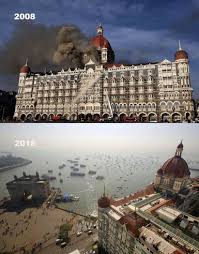
The 26/11 Mumbai attacks of 2008 were a watershed moment in India’s history, exposing critical gaps in urban security and counter-terrorism preparedness. Executed by Pakistan-based Lashkar-e-Taiba with covert support from al-Qaeda, the attacks underscored the transnational nature of modern terrorism. They highlighted how terrorist networks exploit geopolitical tensions and permissive havens to plan high-profile strikes. Over a decade later, India continues to learn strategic lessons in intelligence coordination, urban security, and proactive counter-terrorism measures. Commemorating 26/11 serves as a reminder of these challenges and the need for constant vigilance.
Significance:
- Third-party involvement:Al-Qaeda’s strategic support aimed at provoking India-Pakistan conflict, potentially disrupting NATO operations in Afghanistan, demonstrating the global geopolitical stakes of local terror events.
- Evolving terror networks:Reports by Stephen Tankel and UNSC committees suggest that groups like al-Qaeda continue to operate covertly, maintaining strategic patience, training affiliates, and exploiting permissive havens such as Afghanistan under the Taliban.
- Urban security lessons:The attacks exposed gaps in intelligence coordination, emergency response, and urban counter-terrorism preparedness. Subsequent interventions, such as the prevention of the Red Fort Metro attack in 2024, underscore the importance of proactive intelligence, local vigilance, and inter-agency coordination.
Analytical insights:
- Diplomacy over military response:India’s choice of diplomatic restraint post-26/11 prevented escalation, reflecting strategic maturity.
- Intelligence-driven counter-terrorism:Successful pre-emption of attacks, including the Red Fort Metro plot, demonstrates lessons learned from previous incidents such as the Indian Mujahideen bombings (2005–2008).
- Transnational threat awareness:Indian policymakers must account for the evolving nexus between local terror modules and international terrorist networks when formulating counter-terrorism strategies and diplomatic messaging.
Way Forward:
- Strengthening intelligence networks:Enhanced local and national surveillance, rapid information sharing, and cyber monitoring to identify sleeper cells.
- International cooperation:India must engage allies, especially the US and UN agencies, to monitor cross-border terror funding, training, and movement.
- Urban preparedness:Regular drills, technological integration (CCTV, biometrics, data analytics), and community participation in security can mitigate the impact of attacks.
- Policy and legal frameworks:Continuous updating of anti-terror legislation, counter-radicalization programs, and coordination between Centre and states is crucial.
Conclusion:
26/11 is not only a commemoration of lives lost but a strategic reminder of India’s need for vigilance against both domestic and transnational terrorism. It emphasizes the importance of intelligence-led security, international cooperation, and proactive policy measures in safeguarding national security.
