

28 November 2025 Indian Express Editorial
What to Read in Indian Express Editorial( Topic and Syllabus wise)
Editorial 1 : G20 Adrift Without Great Powers
Context
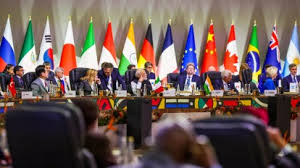
The recent Johannesburg G20 Summit highlighted the declining relevance of the grouping due to the absence of major powers.
Introduction
The G20, once created as a collective platform to manage global financial and economic crises, is losing strategic coherence. The withdrawal—both symbolic and substantive—of the US, China, and Russia from recent summits reflects shifting geopolitical priorities. This drift raises concerns about the group’s ability to address global economic challenges, climate issues, and multilateral trade coordination.
Background: How the G20 Was Born
- The 2008 trans-Atlantic financial crisis exposed limitations of the G8.
- China had become central to global economic stability but the US hesitated to elevate it through the G8.
- France proposed upgrading the G20 finance ministers group to a leaders’ summit.
- From 2008–09, early summits in Washington, London, and Pittsburgh provided coordinated responses, including financial reforms and institutional strengthening.
How Relevance Began to Decline
- Shift from crisis-response to discussion forum
- Initial summits were action-oriented; later ones became largely declaratory.
- Limited progress on climate finance, trade liberalisation, and reform of global institutions diminished credibility.
- Geopolitical tensions paralysed consensus
- Trade war launched by the US against China (2017–21).
- Russia’s invasion of Ukraine intensified divisions.
- Joint statements became contentious since 2022.
- Absence of Big Three
- 2022: Putin absent.
- 2023: Neither Xi nor Putin attended.
- 2025 Johannesburg summit: Absence of Trump, Xi, and Putin made the meeting a “middle powers” gathering.
Why Great Powers Are Disengaging
- US unilateralism under Trump
- Preference for bilateral deals over plurilateral consensus.
- Imposition of tariffs and assertion of US primacy reduced trust in multilateral forums.
- Proposal of G2 (US–China condominium)
- Elevates China above middle powers, undercutting the relevance of G20.
- Push to re-induct Russia into G8
- Reduces Russia’s incentive to prioritise G20 processes.
Implications for Global Governance
- Diminished Capacity for Global Economic Coordination
- Issues like climate change, trade restrictions, and migration require broad, coordinated responses.
- Fragmentation makes meaningful cooperation difficult.
- Rise of alternative platforms
- East Asia Summit (EAS) is emerging as a more relevant grouping with major economic and strategic actors.
- Middle-power coalitions (e.g., I2U2, BRICS expansion) are gaining prominence.
- Risk of institutional atrophy
- G20 may not formally dissolve but could become a symbolic gathering with limited policy outcomes.
India’s Concerns and Policy Dilemmas
- Losing a key platform
- G20 was India’s first entry into a high-level global economic governance forum.
- Enabled India to project leadership, especially on Global South issues.
- Need for recalibration
- India may reassess its approach to the Quad amid changing US–China dynamics.
- Engagement with EAS and ASEAN-centric architectures becomes more important.
- Middle-power diplomacy
- India must sustain coalitions with countries like Japan, Indonesia, Brazil, and South Africa to shape global agendas even without Big Three cooperation.
Way Forward
- Reinvigorate multilateralism:Promote issue-based coalitions (climate finance, digital governance, resilient supply chains).
- Strengthen South–South cooperation:Build on Global South agenda established during India’s presidency.
- Bridge major power divides:Leverage diplomatic outreach to engage both the US and China where possible.
- Promote institutional reforms:Advocate credible timelines for WTO reform, climate finance delivery, and global taxation frameworks.
- Diversify platforms:Actively use EAS, BRICS+, SCO, and Indo-Pacific institutions to secure national interests.
Conclusion
The G20’s diminishing relevance reflects deeper shifts in global power distribution and strategic priorities. Without the active participation of major powers, the group risks becoming a symbolic forum rather than a driver of global economic governance. For India, strategic agility and diversified multilateral engagement will be essential to safeguard its interests in an increasingly fragmented world order.
Editorial 2 : Evolving Childhood Crisis
Context
Recent student suicides have triggered a debate on the widening gap between children’s needs and the support offered by homes, schools, and society.
Introduction
School education in India is undergoing a complex transition. Traditional value systems are weakening, while new social influences—digital exposure, changing family dynamics, and rising academic pressures—shape young minds. The tragic incidents of student distress reveal a deeper systemic imbalance. The editorial stresses that safeguarding children’s well-being requires coordinated responsibility across parents, teachers, schools, and society.
Key Issues
- Shifting Value Systems
- Old norms of discipline, respect, and empathy are eroding.
- New values influenced by digital media and hyper-individualism are yet to stabilise.
- This creates value conflicts between home and school, affecting children’s behaviour and emotional stability.
- Parent–Teacher Disconnect
- Parents often accept their children’s claims unquestioningly.
- Parent-teacher meetings frequently turn adversarial rather than cooperative.
- The child becomes the ultimate casualty of this mistrust.
- Changing School Culture
- In elite private schools, the school often behaves like a service providerand parents like clients.
- Teachers lose authority and autonomy, being treated merely as employees.
- This dilutes discipline and creates an environment where academic and behavioural boundaries weaken.
- Rise in Behavioural and Mental-Health Challenges
- Exposure to violence, social media, and echo chambers influences children from a much younger age.
- Egotism, anger, and early manifestation of aggression are rising.
- Self-harm, peer conflict, and impulsive behaviour have become more common.
- Misinterpretation of Children’s Rights
- Growing rights awareness is positive but at times encourages misuse.
- Some children justify misconduct as “self-expression”.
- Parental over-protection worsens unruly behaviour.
- Digital Influence and Parental Responsibility
- Schools restrict phones, but real exposure occurs at home.
- Children seek visibility and validation on social media, affecting mental health.
- Parents often fail to monitor or guide online behaviour.
- Unequal Realities Across Socio-Economic Groups
- Urban elite children struggle with academic pressure, digital overload, and identity issues.
- Disadvantaged children face poverty, insecurity, and limited opportunities.
- Childhood is fragmented along class lines.
Consequences for Children
- Rising anxiety, loneliness, and emotional volatility.
- Increasing incidents of bullying, aggression, and self-harm.
- Weak social skills and lowered resilience.
- Dependence on online validation rather than real-life relationships.
Way Forward
- Rebuilding Parent–Teacher Collaboration
- Regular communication based on trust and shared responsibility.
- Joint strategies to address behavioural and emotional issues.
- Avoiding blame games and adversarial interactions.
- Strengthening School Ecosystems
- Empower teachers with training, autonomy, and emotional-handling skills.
- Introduce structured counselling systems in all schools.
- Shift focus from “client satisfaction” to “child well-being”.
- Responsible Parenting in the Digital Age
- Active supervision of online activity.
- Setting boundaries for screen time and social media use.
- Encouraging reflective thinking over constant display culture.
- Value Reinforcement at Home and School
- Cultivating empathy, discipline, patience, and respect.
- Aligning behavioural expectations across both spaces.
- Policy-Level Interventions
- Mandatory counsellors and child-psychology training in schools.
- Clear guidelines for parent-school engagement.
- Awareness campaigns on digital literacy and children’s mental health.
- Society’s Role
- Media and platforms must reduce harmful content exposure.
- Community-level support structures for vulnerable children.
- Encourage conversations around mental health without stigma.
Conclusion
Childhood today is shaped by rapid social, technological, and cultural shifts. Schools alone cannot carry the burden. Parents, educators, and society must work collectively to build safe, empathetic, and balanced environments. Only shared responsibility, not confrontation, can protect the emotional and psychological well-being of India’s children.
