

11 December 2025 Indian Express Editorial
What to Read in Indian Express Editorial( Topic and Syllabus wise)
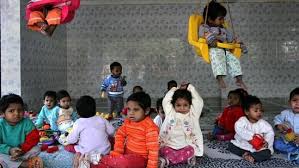
Editorial 1 : Childcare: The Unavoidable Growth Lever for India’s Economy
Context:
It argues that childcare infrastructure, often viewed merely as a social safety net, must be recognized and treated as “soft infrastructure” critical for achieving India’s 8-10% growth ambition by unlocking the economic potential of women and fostering human capital development in children.
Introduction:
It focuses on redefining childcare infrastructure in India—moving it from a mere social safety net to a critical economic “springboard.” The argument posits that India’s ambitious growth targets (8-10%) are unattainable without addressing the systemic productivity drag caused by inaccessible or unaffordable childcare, which compels millions of women to exit the workforce. This piece highlights that investment in quality, hybrid childcare infrastructure (combining physical centres like Anganwadis with digital tools for parents) is an non-negotiable investment for unlocking the full potential of the female workforce and securing the country’s demographic dividend by fostering crucial early childhood development.
The Need for Childcare as Infrastructure:
- Addressing the Productivity Drag:Millions of mothers scale back or exit the workforce due to the unaffordability or inaccessibility of reliable childcare. This “hidden” drag on productivity stalls growth ambition.
- Unlocking Female Labour Force Participation (FLFP):Reliable childcare facilities allow women to work consistently in jobs that match their skills and aspirations. This is proven by states (e.g., the five Southern states) that invested in social infrastructure like childcare and hostels, resulting in almost three-fourths of women in manufacturing coming from these regions.
- Improving Job Quality:Global evidence (e.g., Vietnam, Rio de Janeiro) shows that accessible childcare not only augments maternal employment but also improves job quality (moving women into formal employment and increasing working hours).
Institutional and Demographic Imperative:
- Institutional Anchor:To treat childcare as a market-shaping infrastructure, India needs a unified approach through a National Mission on Early Childhood Care (NMECC). This mission would unite the Ministries of WCD, Labour, Education, Health, and Industry.
- Demographic Deadline:The time for action is critical. With fertility rates already below replacement in several states, and one in five Indians projected to be over 60 by 2050, ignoring childcare will transform the potential demographic dividend into a deficit: fewer children, with poor capabilities, and too few productive workers.
Hybrid Model for the Way Forward:
The proposed strategy is a combination of physical infrastructure and digital technology for holistic development:
| Component | Intervention | Example/Evidence |
| Physical Infrastructure | Converting existing Anganwadi centres and crèches into full-day facilities, especially in industrial belts and service hubs. | Telangana increased Anganwadi workers’ stipend to extend hours. Tamil Nadu doubled instructional time by adding a half-time worker for preschool education. |
| Human Capital Support | Mobilizing para-professionals (from SHGs, local youth) to support Anganwadi workers. | Meghalaya used short-term fellowships; Chandigarh used internships. |
| Early Stimulation (0-3 years) | Leveraging simple parent-child exchanges, as nearly 80% of brain development occurs in the first 1,000 days. | Odisha study showed that weekly digital/peer learning sessions (mothers’ groups) improved children’s cognitive skills. |
| Digital Tools | Using bite-sized media and personalized nudges (e.g., through WhatsApp or Poshan Tracker) to convert daily routines (like cooking) into learning moments for parents. | Government using Poshan Tracker to provide early learning guidance. |
Conclusion:
Childcare is the missing link that ties social justice to economic ambition. Treating Early Childhood Care and Education (ECCE) as critical soft infrastructure—by supporting women’s employment and boosting child capabilities simultaneously—is not just a welfare measure but a non-negotiable investment for India to sustain high growth and realize its demographic potential. The path forward requires a unified, hybrid approach driven by the government, innovation from business, and last-mile reach from civil society.
Editorial 2 : India’s Strategic Opportunity Amidst US Policy Shift
Context:
It shows how the inward-looking shift in US foreign policy, particularly its “America First” ideological impulses, presents both challenges and a significant strategic opportunity for India.
Introduction:
Strategic consequences for India arising from a fundamental shift in US foreign policy, which is characterized by an inward focus and a redefinition of global engagement, particularly as detailed in a hypothetical “National Security Strategy 2025.” This emerging scenario is interpreted as moving beyond typical bilateral anxieties to reveal a strategic opportunity for India: a less interventionist and hegemon-focused US allows India greater geopolitical space to assert its own regional leadership, consolidate strategic autonomy, and actively advance its national interests through effective multi-alignment with diverse global powers. This perspective is highly relevant for the UPSC Civil Services Examination, touching upon global power dynamics, India’s strategic calculations, and the critical imperative for domestic economic and defence reforms.
Five Key Shifts in US Strategy:
- Elevated Western Hemisphere:US security is now treated as foundational on its dominance in Latin America and the Caribbean, focusing US attention away from distant regions.
- Selective Intervention:Abandonment of the idea of global hegemony and the presumed obligation to act everywhere. The emphasis shifts to intervention strictly tied to vital interests.
- Burden Sharing:The US demands that its allies take more responsibility and look less toward Washington as the principal provider of military support.
- Acceptance of Diversity:Liberal universalism is replaced by an emphasis on cultural and political distinctiveness, endorsing each state’s right to choose its own institutional arrangements.
- Economy-Security Fusion:National security is fused with economic revival, making reindustrialisation, resilient supply chains, and fair-trade major policy goals.
India’s Strategic Opportunity:
The inward turn of the US aligns well with India’s historic aspirations for strategic autonomy and non-interference:
| Traditional Anxiety | New Opportunity Created by US Shift |
| Fear of Entanglement: Anxiety of being drawn into an unequal alliance and of the US meddling in internal affairs. | Reduced Cost of Engagement: An America that is less interventionist and accepts diversity is welcomed by Delhi, easing friction over internal policies. |
| Desire for Autonomy: Ambition to play a larger global and regional role. | Burden Sharing Alignment: The US demand for allies to shoulder more responsibility perfectly matches India’s own ambition for regional leadership. |
Challenges for India:
- Despite the opportunity, the editorial flags two major immediate challenges:
- Trade Disputes:The continuation of trade tensions with the US.
- Shifting Alliances:The US administration’s softening tone on China and its renewed enthusiasm for engagement with Pakistan.
India’s Threefold Response:
- To successfully leverage the US policy shift, India must prioritize action on three fronts:
- Economic Acceleration:This is the key to reducing the strategic power gap with China and extending India’s lead over Pakistan. (Focus on domestic structural reforms).
- Defence & Security Reforms:Essential for building adequate capacity to deter threats from China’s superior military power.
- De-escalation with Pakistan:Lowering tensions with Pakistan is crucial to prevent the US administration from having an excuse to “meddle” or exert undue pressure on Delhi.
Conclusion:
The turbulence triggered by US policy provides India with an excellent opportunity. By combining a push for regional leadership with broader engagement of other major powers (Europe, Russia, Japan), India can create favorable terms for engaging the new US administration and consolidate its position as a truly multi-polar power. This requires prioritizing national interests through robust domestic economic and security reforms.
