
24 January 2026 Indian Express Editorial
What to Read in The Indian Express ( Topic and Syllabus wise)
Editorial 1 : India–EU Relations in a Transforming World Order
Context
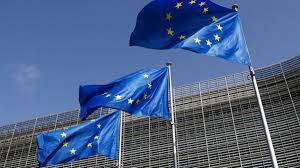
The EU leadership’s Republic Day visit and the EU–India Summit take place amid a shifting global order, highlighting the growing strategic importance of India–EU cooperation in a multipolar and fragmented world.
Introduction
The participation of the European Council President and the European Commission President as chief guests at India’s Republic Day and the EU–India Summit reflects the growing strategic salience of India–EU relations. This engagement is unfolding amid a profound transition in the global order marked by geopolitical uncertainty, economic fragmentation, and declining effectiveness of multilateral institutions.
Nature of the Changing World Order
Weakening of the US-led transatlantic framework, especially in security and trade domains
Impact of the Russia–Ukraine war on European security architecture and energy supply chains
Growing China-centric economic and technological dependencies creating strategic vulnerabilities
Decline of rule-based multilateralism, evident in the paralysis of institutions such as the WTO
Rise of multipolarity, strategic autonomy, and selective partnerships
Strategic Rationale for India–EU Partnership
European Union’s Perspective
Need to build strategic sovereignty in defence, digital technologies, and critical supply chains
Desire to reduce over-dependence on the US and China
Search for stable, democratic, and large-market partners in the Indo-Pacific
India’s Perspective
Recalibration of foreign policy amid geopolitical turbulence
Need to support domestic economic transformation through external partnerships
Pursuit of strategic autonomy while avoiding alliance entanglements
Major Pillars of Cooperation
- Trade and Economic Engagement
Revival of India–EU Free Trade Agreement (FTA) negotiations in 2021 after a decade-long pause
EU is among India’s top trading partners and largest sources of FDI
A comprehensive FTA is expected to:
Expand market access for goods and services
Attract high-quality investments
Strengthen integration into global value chains
Improve supply-chain resilience in response to geopolitical risks
Economic cooperation also supports strategic connectivity initiatives such as the India–Middle East–Europe Economic Corridor (IMEC)
- Technology, Innovation, and Digital Cooperation
Technology increasingly determines economic power and geopolitical influence
India and the EU share concerns about:
Excessive concentration of technological power
Ethical and social consequences of digital technologies
Priority areas of cooperation:
Artificial intelligence (AI)
Semiconductor manufacturing
Digital public infrastructure
Research and innovation ecosystems
Institutional mechanism: EU–India Trade and Technology Council (TTC)
Expansion of mobility programmes for students, researchers, and scientists
- Defence and Security Cooperation
Europe is emerging as a key partner in India’s access to advanced defence platforms
Alignment between:
EU’s need for defence modernisation and rearmament
India’s focus on Atmanirbhar Bharat and defence indigenisation
Expanding cooperation in:
Maritime security and Indo-Pacific stability
Cybersecurity and space governance
Defence manufacturing and joint R&D
Counter-terrorism cooperation remains an essential pillar, including intelligence sharing and capacity building
- Role of Individual European States
France: Long-standing strategic partner in defence, nuclear energy, and space
Germany: Major economic partner with increasing defence engagement
Italy and Spain: Growing trade and industrial cooperation
Nordic countries: Focus on sustainability, innovation, and green technologies
- Cooperation in Global Governance
Shared commitment to a rules-based international order
Joint advocacy for reform of:
UN Security Council
Global financial institutions
World trade and health governance frameworks
Collaboration on:
Climate change mitigation (Paris Agreement)
Sustainable development in the Global South
Infrastructure financing and development partnerships
Key Challenges in the Partnership
Divergent positions on Russia–Ukraine conflict
India’s relations with Russia and EU’s engagement with China
Differences on political values and human rights discourse
Regulatory and market-access concerns
Influence of negative public narratives and perception gaps
Way Forward
Early conclusion of a balanced and forward-looking FTA
Deepening technology and defence industrial cooperation
Strengthening people-to-people and academic exchanges
Coordinated positions in multilateral forums
Promoting cooperation based on shared interests rather than ideological rigidity
Conclusion
The familiar world order shaped by past alliances is unlikely to return. India and the European Union must convert global turbulence into strategic opportunity by building a partnership anchored in democracy, strategic autonomy, and economic resilience. Such cooperation can contribute meaningfully to shaping a stable, inclusive, and multipolar global order.
Editorial 2 : Decoding Washington’s New Coercive Diplomacy
Context
US coercive diplomacy under Trump, exemplified by the Greenland episode, challenges allies and the existing global order.
Introduction
Recent remarks by former US President Donald Trump at the World Economic Forum (WEF), Davos, have once again highlighted the evolving nature of American foreign policy, marked by overt coercion, transactional diplomacy, and public pressure on allies. The episode involving Europe and Greenland underscores a broader shift in US diplomatic conduct that has implications for global governance and India’s foreign policy choices.
Background
Greenland, an autonomous territory under Denmark, has strategic importance due to its geographical location in the Arctic, rare earth resources, and military relevance.
The US has historically maintained a presence in Greenland, particularly during World War II and the Cold War, under NATO’s security architecture.
Trump’s statements at Davos revived earlier claims over Greenland and threatened economic and political consequences for European allies.
Europe responded through political pushback, trade leverage, and strategic diversification, including enhanced engagement with India.
Key Features of Trump’s Coercive Diplomacy
Transactional Approach to Alliances
Alliances are viewed not as strategic partnerships but as cost–benefit arrangements.
Security guarantees are leveraged to extract economic or political concessions.
Use of Economic Coercion
Threats of tariffs, withdrawal from trade agreements, and market access restrictions.
Such actions often bypass multilateral institutions like the WTO, weakening rules-based trade.
Public Diplomacy as Pressure Tactic
Disclosure of private diplomatic conversations to exert psychological and political pressure.
Departure from diplomatic norms of confidentiality.
Unpredictability and Policy Reversals
Agreements are not considered final, as tariffs or sanctions may be reimposed.
This creates uncertainty for allies and global markets.
European Response and Its Significance
Suspension of EU–US trade deal ratification by the European Parliament.
Announcement of trade diversification strategies, including deeper economic engagement with India.
NATO engagement helped de-escalate tensions, preventing a potential rupture in the alliance.
This demonstrates that firm collective resistance, rather than appeasement, can moderate coercive behaviour.
Implications for the Global Order
Trump’s worldview challenges the post-World War II liberal international order, which is based on multilateralism, rule of law, and collective security.
Ironically, the US has been the largest beneficiary of this order in terms of economic growth, military influence, and institutional leadership.
Persistent unilateralism may accelerate relative decline of US influence, especially with the rise of emerging powers.
Implications for India
India has previously experienced similar public pressure tactics, including on trade, defence procurement, and regional security issues.
The episode reinforces the need for:
Strategic autonomy in foreign policy
Diversified economic partnerships
Strong engagement with issue-based coalitions (Quad, G20, EU)
Europe’s renewed interest in India strengthens India’s position as a reliable economic and strategic partner.
Way Forward
Countries must adopt a firm but pragmatic approach while engaging with coercive powers.
Strengthening multilateral institutions and regional groupings can dilute unilateral pressure.
India should leverage global uncertainties to enhance its role as a balancing power committed to rule-based order.
Conclusion
The Greenland episode illustrates that coercive diplomacy, while tactically effective in the short term, carries long-term risks for global stability and trust. For India and the international community, the key lesson is clear: appeasement is ineffective, and strategic firmness combined with multilateral engagement remains the most viable response in an increasingly uncertain world order.
