

06 March 2026 Indian Express Editorial
What to Read in Indian Express Editorial ( Topic and Syllabus wise)
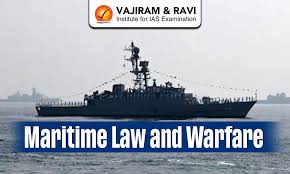
Article1: Maritime Law in Warfare
Why in News: The sinking of the Iranian warship IRIS Dena by a US submarine near Sri Lanka’s Exclusive Economic Zone amid the expanding West Asia conflict has triggered debate on the legal framework governing maritime warfare.
Key Details
An Iranian naval frigate IRIS Dena was reportedly sunk by a US submarine torpedo attack near Sri Lanka’s Exclusive Economic Zone (EEZ) while returning from a multinational naval exercise in India.
The incident has expanded the US–Israel–Iran conflict beyond West Asia, raising security concerns in the Indian Ocean Region (IOR).
The event has sparked discussion about the legality of attacking warships in international waters under international maritime law.
It highlights the role of UNCLOS, the UN Charter, and the law of naval warfare in regulating maritime conflict.
International Maritime Law Framework
United Nations Convention on the Law of the Sea (UNCLOS): UNCLOS (1982) provides the legal framework governing oceans, maritime boundaries, and navigation rights. It defines zones such as territorial seas (12 nautical miles), contiguous zones, and Exclusive Economic Zones (200 nautical miles).
Jurisdiction in Different Maritime Zones: Coastal states have full sovereignty in territorial waters, limited regulatory authority in the contiguous zone, and resource rights in the EEZ. However, international waters beyond these zones remain largely open to all states.
Limitations of UNCLOS in Warfare: UNCLOS mainly regulates peacetime maritime governance and does not comprehensively regulate armed conflict at sea. During wartime, it operates alongside the law of naval warfare.
Status of the United States: Although the United States has not formally ratified UNCLOS, it generally follows many of its provisions as customary international law.
Law of Naval Warfare
Legitimate Military Targets: Under the law of armed conflict at sea, enemy warships are considered legitimate military targets during armed conflict, regardless of their location in international waters.
Principles of Distinction and Proportionality: Naval warfare must follow humanitarian law principles—attacks should target military objectives and avoid excessive civilian harm.
Historical Precedents: Submarine attacks on warships have occurred historically, such as the sinking of INS Khukri during the 1971 India–Pakistan War and ARA General Belgrano during the 1982 Falklands War.
Role of Naval Blockades and Maritime Strategy: Control over sea routes and naval dominance remain central elements of warfare, influencing trade routes and strategic security.
Role of the UN Charter in Use of Force
Article 2(4) – Prohibition on Use of Force: The UN Charter prohibits the threat or use of force against the territorial integrity or political independence of any state.
Article 51 – Right to Self-Defence: States retain the inherent right to individual or collective self-defence if an armed attack occurs.
UN Security Council Authorisation: Military action may also be legally justified if authorised by the UN Security Council under Chapter VII.
Challenges in Enforcement: Geopolitical rivalries and veto powers of permanent members often limit the Council’s ability to authorise or regulate such actions.
Strategic Importance of the Indian Ocean Region
Critical Global Trade Route: The Indian Ocean carries nearly 80% of global maritime oil trade and a significant share of international commerce.
India’s Maritime Security Interests: India maintains a strong naval presence to safeguard sea lanes, protect trade routes, and ensure stability in the region.
Regional Security Concerns: Any escalation of external conflicts into the Indian Ocean Region can threaten shipping routes and regional stability.
Multilateral Naval Cooperation: Exercises like MILAN and International Fleet Reviews aim to promote maritime cooperation, interoperability, and regional peace.
Technological and Strategic Aspects of Naval Warfare
Submarine Warfare Capabilities: Modern submarines equipped with advanced torpedoes such as the Mark-48 heavyweight torpedo are capable of targeting large naval vessels.
Stealth and Surprise Advantage: Submarines remain one of the most effective naval assets because of their stealth and underwater strike capability.
Impact of Technological Warfare: Advances in sonar systems, torpedoes, and missile technology have significantly changed maritime combat dynamics.
Rare Nature of Torpedo Attacks Today: Since World War II, submarine torpedo strikes against major warships have been relatively rare, making such incidents strategically significant.
Implications for India
Security in the Indian Ocean Region: Expansion of external conflicts into the region could increase military tensions and maritime surveillance needs.
Diplomatic and Strategic Balancing: India must maintain balanced relations with major powers while protecting its strategic interests.
Strengthening Maritime Domain Awareness: Enhanced monitoring of sea lanes, intelligence sharing, and naval preparedness are crucial.
Promoting Rules-Based Maritime Order: India supports adherence to international law and freedom of navigation, particularly in the Indo-Pacific.
Conclusion
The evolving nature of maritime conflict highlights the need for stronger adherence to international law and cooperative security mechanisms. Strengthening global maritime governance, promoting transparency in naval operations, and enhancing regional cooperation are essential to prevent escalation. For India, safeguarding the stability of the Indian Ocean Region while upholding a rules-based maritime order will remain a strategic priority.
EXPECTED QUESTIONS FOR UPSC CSE
Prelims MCQ
- Which international convention provides the legal framework governing maritime zones and navigation rights?
(a) Geneva Convention
(b) United Nations Convention on the Law of the Sea
(c) Treaty on the Non-Proliferation of Nuclear Weapons
(d) Antarctic Treaty
Answer: (b)
Descriptive Question
- Discuss the legal framework governing maritime conflict in international waters. How do UNCLOS and the law of naval warfare interact during armed conflict? (150 Words, 10 Marks)
Article 2: West Asia Conflict Diplomacy
Why in News: The escalation of conflict in West Asia following missile strikes on Tehran in February 2026 has raised concerns about regional stability, energy security, and the safety of Indian citizens in the Gulf.
Key Details
The conflict involving Iran, the United States, and Israel has intensified tensions in West Asia, threatening regional stability.
Disruption of oil supply routes such as the Strait of Hormuz has triggered global energy market volatility.
India has significant interests in the region due to energy dependence and a large Indian diaspora.
India has called for diplomacy, restraint, and de-escalation to prevent wider regional conflict.
Strategic Importance of West Asia for India
Energy Security: West Asia supplies nearly 60% of India’s crude oil imports, making stability in the region essential for India’s economic growth and energy availability.
Indian Diaspora: Around 8–9 million Indians live and work in Gulf countries, contributing billions of dollars in remittances to India annually.
Trade and Economic Linkages: Countries such as the UAE and Saudi Arabia are among India’s largest trading partners, with bilateral trade crossing $180 billion annually.
Geostrategic Connectivity: The region is central to initiatives such as the India–Middle East–Europe Economic Corridor (IMEC) and maritime trade routes.
International Law and Principles of Sovereignty
UN Charter Framework: The UN Charter emphasises sovereignty of states and prohibition of the use of force, except in cases of self-defence or Security Council authorisation.
Norms Against Targeting Leaders: Traditionally, international norms discourage direct targeting of heads of state or political leadership to prevent escalation.
Diplomacy over Militarism: Global governance institutions encourage negotiation and conflict resolution mechanisms rather than unilateral military actions.
Risk to Global Order: Ignoring international legal norms can weaken multilateral institutions and the rules-based international order.
Economic and Energy Implications of the Conflict
Oil Price Volatility: Escalation in West Asia pushed global oil prices from around $65 to nearly $80 per barrel, increasing India’s import bill.
Strategic Chokepoints: The Strait of Hormuz, through which nearly one-fifth of global oil trade passes, is highly vulnerable during regional conflicts.
Impact on Global Supply Chains: Disruptions in oil and gas supply affect manufacturing, transport, and inflation worldwide.
Insurance and Shipping Costs: Rising geopolitical risk increases maritime insurance premiums, making energy imports more expensive.
Geopolitical Dynamics in West Asia
US–Iran Rivalry: Long-standing tensions between the United States and Iran continue to shape regional politics and security dynamics.
Israel–Iran Strategic Competition: Israel perceives Iran’s nuclear programme as a threat, while Iran views Israel and its allies as strategic adversaries.
Proxy Conflicts: The region has witnessed conflicts involving non-state actors and proxy groups, increasing instability across multiple countries.
Great Power Competition: External powers such as China, Russia, and the US seek influence over West Asian energy resources and strategic routes.
Implications for India
Threat to Energy Security: Higher oil prices and supply disruptions directly affect India’s current account deficit and inflation levels.
Safety of Indian Diaspora: Escalating conflict increases risks to the millions of Indians living in Gulf countries.
Evacuation and Crisis Response: India has historically conducted evacuation missions such as Operation Rahat (Yemen, 2015) and Operation Ganga (Ukraine, 2022).
Foreign Policy Balancing: India maintains relations with Israel, Iran, and Gulf Arab states, requiring a careful diplomatic balance.
Conclusion
India must continue advocating diplomatic engagement, restraint, and peaceful conflict resolution in West Asia. Strengthening energy diversification, building strategic petroleum reserves, and ensuring the safety of Indian citizens abroad should remain key priorities. Stability in West Asia is crucial not only for regional peace but also for sustaining India’s economic growth and global partnerships.
EXPECTED QUESTION FOR UPSC CSE
Prelims MCQ
- The Strait of Hormuz is strategically important because:
(a) It connects the Mediterranean Sea and the Red Sea
(b) It is a major route for global oil transportation
(c) It is controlled by NATO countries
(d) It connects the Black Sea and the Caspian Sea
Answer: (b)
Article 3: Sustainable Rice Export Strategy
Why in News: India continues to remain the largest producer and exporter of rice globally, but concerns regarding water sustainability and export value realisation have triggered debate on the need to rethink India’s rice production and export strategy.
Key Details
India exported around 21.69 million tonnes of rice in 2024–25, far higher than Thailand and Vietnam.
India’s rice production reached about 150 million tonnes, surpassing China’s output.
Paddy cultivation is highly water-intensive, consuming nearly 3,000 litres of water per kg of rice.
Experts suggest shifting focus towards high-value basmati and GI-tagged rice varieties for sustainable exports.
India’s Dominance in Global Rice Production and Exports
Largest Producer and Exporter: India has been the world’s largest rice exporter since 2011–12, with exports of over 21 million tonnes in 2024–25. This significantly exceeds exports from Thailand (~7.8 mt) and Vietnam (~8 mt).
Major Role in Global Food Security: Indian rice exports support food security in several regions including Africa, West Asia, and Southeast Asia, making India a crucial actor in global agricultural trade.
Diverse Rice Export Basket: India exports both basmati and non-basmati rice, with basmati mainly destined for the Middle East and Europe, while non-basmati supplies developing nations.
Strategic Importance for Economy: Rice exports contribute billions of dollars in foreign exchange earnings and support livelihoods of millions of farmers, especially in states like Punjab, Haryana, Uttar Pradesh, and West Bengal.
Environmental Sustainability Concerns
Water Intensive Crop: Paddy cultivation requires large quantities of water. Around 5 million litres of water per acre may be required under conventional flooding irrigation methods.
Virtual Water Export: Producing 1 kg of rice consumes about 3,000 litres of water, meaning that exporting rice indirectly exports large volumes of India’s scarce water resources.
Groundwater Depletion: States such as Punjab and Haryana face severe groundwater depletion due to paddy cultivation, threatening long-term agricultural sustainability.
Climate Change Implications: High water demand combined with rising temperatures and erratic monsoons increases vulnerability of rice farming systems.
Financial and Economic Sustainability
Higher Value from Basmati: Though basmati exports are only 5–6 million tonnes, their value is comparable to non-basmati exports because basmati fetches much higher prices per kilogram.
Price Realisation Gap: Basmati rice earns around ₹82–₹92 per kg, while non-basmati rice exports earn roughly ₹34–₹39 per kg, highlighting the importance of value addition.
Subsidy and Fiscal Burden: Government support through Minimum Support Price (MSP), fertiliser subsidies, and procurement adds fiscal pressure when large volumes of low-value rice are exported.
Trade Competitiveness: Increasing global competition from countries like Thailand, Vietnam, and Pakistan requires India to improve quality and value rather than focus solely on quantity.
Role of Basmati and High-Value Rice Varieties
Premium Export Commodity: Basmati rice is globally recognised for its aroma, long grain, and cooking qualities, giving India a strong niche in international markets.
Lower Water Requirement: Basmati varieties are usually transplanted during monsoon months, reducing irrigation demand compared to non-basmati varieties planted during peak summer.
Improved Agricultural Varieties: Scientific developments such as Pusa Basmati-1509, developed by researchers at the Indian Agricultural Research Institute (IARI), have increased yields and shortened crop duration.
Expanding Basmati Cultivation Area: India has about 6.2 million hectares designated as the GI region for basmati, but only about 2.1 million hectares are currently under cultivation, indicating expansion potential.
Promotion of GI-Tagged and Specialty Rice
Geographical Indication (GI) Protection: GI tagging helps protect regional varieties and enhances their branding in global markets.
Examples of Specialty Rice Varieties: Varieties such as Kalanamak (Uttar Pradesh), Katarni (Bihar), Gobindobhog (West Bengal), Seeraga Samba (Tamil Nadu), and Jeerakasala (Kerala) possess unique taste and cultural value.
Higher Market Value: Specialty rice varieties can command premium prices in niche markets, particularly among international consumers seeking traditional and organic products.
Rural Development Opportunities: Promoting GI varieties supports local farmers, traditional agricultural practices, and regional economies.
Policy and Agricultural Strategy Challenges
Regional Imbalance in Paddy Cultivation: Excessive rice cultivation in north-western states has led to ecological stress, while eastern states with abundant rainfall remain underutilised.
MSP and Procurement Policies: Government procurement primarily occurs in Punjab and Haryana, encouraging farmers to continue water-intensive paddy cultivation.
Need for Crop Diversification: Policies encouraging millets, pulses, and oilseeds can reduce dependence on rice cultivation in water-scarce regions.
Sustainable Export Strategy: Shifting from high-volume exports to high-value exports can enhance profitability while conserving resources.
Conclusion
India must transition from a quantity-driven rice export strategy to a sustainability-oriented model. Expanding basmati cultivation, promoting GI-tagged specialty rice, improving irrigation efficiency, and diversifying crops in water-stressed regions can ensure both environmental and economic sustainability. Such reforms will help India maintain its leadership in global rice markets while safeguarding its natural resources.
EXPECTED QUESTION FOR UPSC CSE
Prelims MCQ
- Which of the following rice varieties are associated with Geographical Indication (GI)?
Kalanamak
Katarni
Gobindobhog
Select the correct answer:
(a) 1 and 2 only
(b) 2 and 3 only
(c) 1, 2 and 3
(d) 1 only
Answer: (c)
