

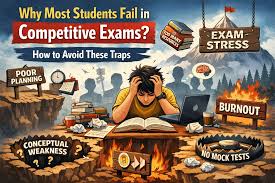
How To Overcome The Fear Of Failure In SSC Exam Preparation
Preparing for competitive exams conducted by the Staff Selection Commission (SSC) often brings a deep fear of failure. This fear can silently affect your confidence, reduce productivity, and even stop you from giving your best effort. The truth is—almost every serious aspirant experiences this fear, but the difference lies in how you handle it.
This article provides a detailed and practical guide to overcoming the fear of failure and building a strong, confident mindset during SSC preparation.
1. Understand What Fear of Failure Really Is
Fear of failure is not just about failing an exam—it often comes from:
- Fear of disappointing family
- Fear of wasting time or effort
- Fear of uncertainty about the future
- Comparing yourself with others
Key Insight:
Fear is often imagined, not real. It is based on “what if” scenarios rather than facts.
2. Accept That Failure is Part of the Process
No successful candidate clears competitive exams without setbacks.
Reality:
- Many toppers fail multiple times
- Improvement comes through mistakes
Mindset Shift:
Don’t see failure as the end—see it as feedback.
3. Focus on Effort, Not Outcome
You cannot control:
- Cut-offs
- Competition level
- Exam difficulty
But you can control:
- Your preparation
- Your discipline
- Your consistency
Rule:
Focus on daily effort instead of worrying about results.
4. Break the Fear Cycle
Fear often creates a cycle:
Fear → Overthinking → Avoidance → Poor performance → More fear
Solution:
Take action immediately:
- Start studying
- Solve questions
- Attempt mock tests
Action reduces fear.
5. Prepare Properly to Build Confidence
Fear increases when preparation is weak.
What to do:
- Cover the syllabus step by step
- Revise regularly
- Practice mock tests
Confidence comes from preparation, not luck.
6. Change Your Inner Dialogue
Your thoughts shape your mindset.
Replace:
- “I will fail” → “I am improving daily”
- “I am not good enough” → “I can get better with practice”
Positive self-talk reduces anxiety and builds confidence.
7. Stop Comparing Yourself with Others
Comparison leads to:
- Self-doubt
- Stress
- Fear
Remember:
Everyone has a different journey, background, and pace.
Focus on your own progress.
8. Take Mock Tests Without Fear
Many students avoid mock tests due to fear of low scores.
Truth:
Mock tests are meant for learning, not judging.
Approach:
- Attempt regularly
- Analyze mistakes
- Improve weak areas
Facing fear reduces it.
9. Visualize Success
Spend a few minutes daily imagining:
- Clearing the exam
- Seeing your name in the result
- Achieving your goal
Visualization builds confidence and reduces fear.
10. Build a Strong Backup Mindset
Fear reduces when you know:
- One failure does not define your life
- There are multiple opportunities
Think:
“I will give my best, and I have options if things don’t go as planned.”
This removes pressure.
11. Maintain a Healthy Routine
a. Sleep Properly
Lack of sleep increases anxiety.
b. Exercise Regularly
Physical activity reduces stress hormones.
c. Eat Healthy
Good nutrition supports mental stability.
12. Stay Connected and Share Your Feelings
Keeping fear inside makes it stronger.
Talk to:
- Friends
- Family
- Mentors
Sharing reduces emotional burden.
13. Take Breaks to Avoid Burnout
Continuous study can increase stress.
Include:
- Short breaks
- Relaxation time
- Hobbies
A refreshed mind handles fear better.
14. Learn from Past Failures
If you have failed before:
- Analyze what went wrong
- Identify weak areas
- Improve strategy
Failure becomes useful when you learn from it.
15. Develop a Long-Term Perspective
SSC preparation is not just about one attempt.
Understand:
- Success may take time
- Consistency matters more than speed
Patience reduces fear.
16. Practice Mindfulness and Calmness
Simple techniques like:
- Deep breathing
- Meditation
- Staying present
Help reduce anxiety and improve focus.
17. Final Mindset Shift
Instead of asking:
- “What if I fail?”
Ask:
- “What if I succeed?”
This simple shift changes your entire outlook.
Conclusion
Fear of failure during preparation for exams conducted by the Staff Selection Commission is natural—but it should not control you. When managed properly, fear can actually push you to work harder and smarter.
Remember:
- Failure is not permanent
- Effort is in your control
- Confidence comes from action
Face your fear, keep moving forward, and trust your preparation—the results will follow.
