

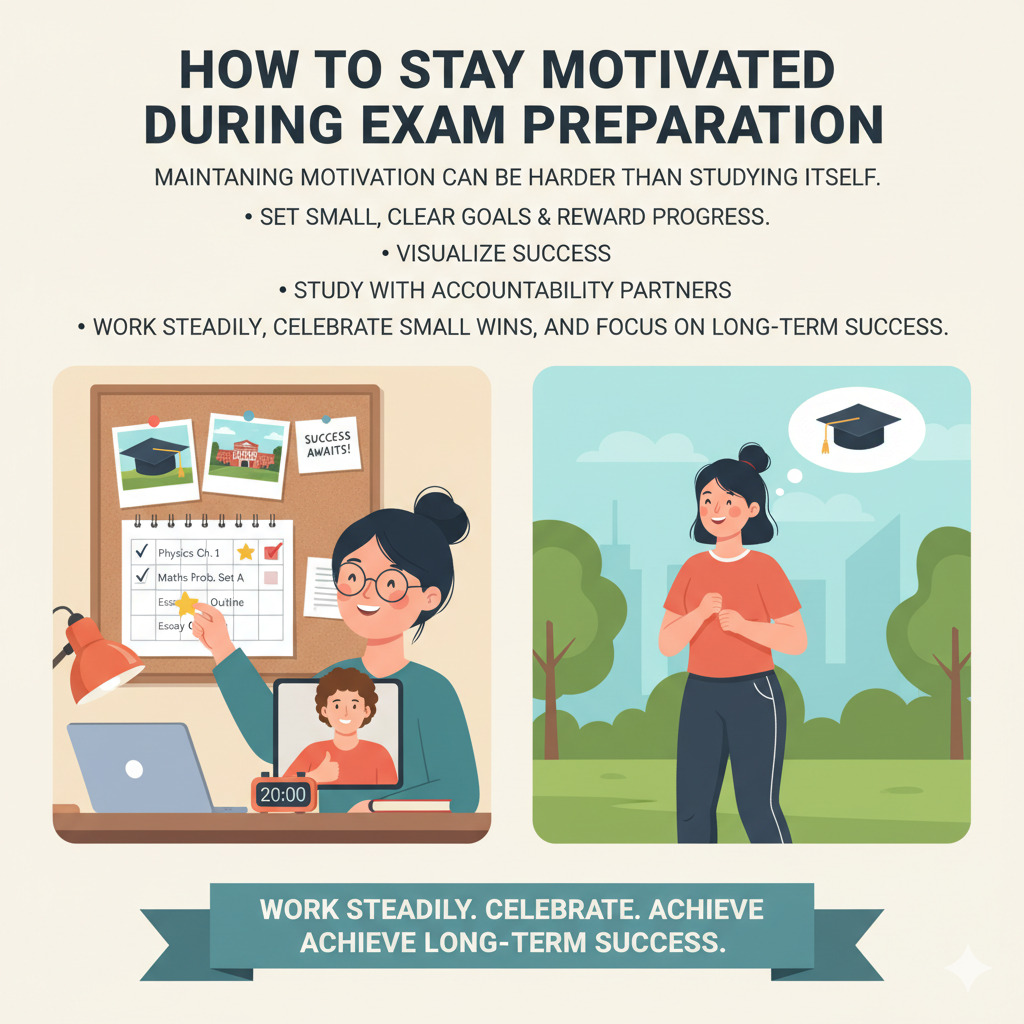
How To Stay Motivated During Long-Term TNPSC Group Exam Preparation
Staying motivated during long-term TNPSC Group exam preparation is one of the toughest challenges—not because the exam is impossible, but because the journey is long, repetitive, and sometimes emotionally draining.
Motivation is not something that stays constant; it rises and falls. What actually keeps toppers going is not constant motivation, but systems, habits, and mindset that carry them through low-energy phases.
Here’s a detailed, practical guide to help you stay motivated throughout your TNPSC preparation.
1. Stop Expecting Motivation Every Day
One of the biggest mistakes is thinking:
👉 “I should feel motivated to study daily.”
That’s not how it works.
- Some days you’ll feel energetic
- Some days you’ll feel lazy or distracted
Instead of waiting for motivation:
- Start studying anyway
- Action often creates motivation, not the other way around
2. Have a Strong and Personal “Why”
Motivation becomes stronger when your reason is clear.
Ask yourself:
- Why do I want to clear TNPSC?
- What will change in my life?
- Who am I doing this for?
Write it down and keep it visible.
Your “why” could be:
- Financial stability
- Government job security
- Family support
- Personal achievement
When motivation drops, your “why” will push you forward.
3. Break the Long Journey into Short Targets
Thinking about the full syllabus can feel overwhelming.
Instead:
- Set daily goals (e.g., 2 chapters + 20 MCQs)
- Set weekly goals (finish one subject portion)
- Set monthly goals (complete revision cycle)
Small wins create continuous motivation.
4. Focus on Consistency, Not Perfection
Trying to be perfect leads to burnout.
- Missing one day is okay
- Studying less on some days is normal
What matters:
👉 Coming back the next day
Consistency builds confidence, and confidence fuels motivation.
5. Track Your Progress Visibly
When you don’t see progress, motivation drops.
Maintain a simple tracker:
- Topics completed
- Hours studied
- Tests taken
Seeing progress—even small—gives psychological satisfaction and keeps you going.
6. Use the “Just Start” Technique
On low-motivation days:
- Tell yourself: “I’ll study for just 10 minutes”
Once you start:
- You’ll likely continue longer
Starting is the hardest part. Reduce that barrier.
7. Create a Fixed Study Routine
A routine reduces decision fatigue.
- Study at the same time daily
- Fix subject slots
- Follow a repeatable schedule
When studying becomes a habit, it requires less motivation.
8. Avoid Comparison with Others
Comparing you to other aspirants:
- Reduces confidence
- Creates unnecessary pressure
Remember:
- Everyone has different backgrounds
- Different learning speeds
- Different responsibilities
Focus on your own progress.
9. Take Breaks without Guilt
Continuous studying without breaks leads to burnout.
Healthy breaks:
- Refresh your mind
- Improve long-term productivity
Examples:
- Short walk
- Listening to music
- Talking to someone
Breaks are part of preparation, not a waste of time.
10. Celebrate Small Wins
Don’t wait for final success to feel good.
Celebrate:
- Completing a subject
- Improving mock test score
- Maintaining consistency for a week
These small rewards keep motivation alive.
11. Surround Yourself with Positive Inputs
Your environment affects your mindset.
- Watch topper talks occasionally
- Talk to serious aspirants
- Avoid negative or discouraging people
Motivation grows in the right environment.
12. Use Mock Tests to Stay Engaged
Preparation without testing becomes monotonous.
Mock tests:
- Add challenge
- Show progress
- Reduce exam fear
Even one test per week can boost motivation.
13. Accept That Motivation Will Fluctuate
There will be phases where:
- You feel stuck
- You doubt yourself
- Progress feels slow
This is normal in long-term preparation.
The key:
👉 Don’t quit during low phases
These phases pass.
14. Take Care of Your Physical and Mental Health
Low energy reduces motivation.
Simple habits:
- Sleep 6–7 hours
- Eat properly
- Do light exercise
A healthy body supports a motivated mind.
15. Reduce Distractions
Distractions silently kill motivation.
- Limit social media
- Avoid unnecessary phone usage
- Create a focused study space
The fewer distractions, the easier it is to stay consistent.
16. Visualize Your Success
Spend a few minutes imagining:
- Clearing the exam
- Getting your posting
- Making your family proud
This emotional connection strengthens motivation.
17. Don’t Depend Only on Mood—Depend on Discipline
Motivation is temporary, but discipline is reliable.
On days when you don’t feel like studying:
- Follow your schedule anyway
- Even minimal study is enough
Discipline keeps you moving when motivation disappears.
Final Thought
Long-term TNPSC preparation is not a sprint—it’s a marathon.
You won’t feel motivated every day, and that’s okay.
What truly matters is:
- Showing up daily
- Doing your planned work
- Staying consistent over months
Even if your motivation is low, your consistency can still carry you to success.
