

Understanding The Negative Marking System In Tamil Nadu TET/TRB Exams
Understanding how negative marking works can make a real difference in your final score—especially in competitive exams like Tamil Nadu Teacher Eligibility Test and Tamil Nadu
Teachers Recruitment Board Exam. Many aspirants lose marks not because they lack knowledge, but because they mismanage attempts and guesswork.
This article breaks down the concept clearly and shows you how to use negative marking to your advantage rather than fear it.
What is Negative Marking?
Negative marking is a system where:
- You gain marks for correct answers
- You lose marks for incorrect answers
It is designed to:
- Discourage random guessing
- Reward accuracy
- Test decision-making skills
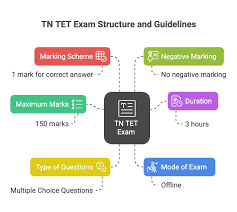
Does TET Have Negative Marking?
In most cases:
- Tamil Nadu Teacher Eligibility Test does NOT have negative marking
What this means:
- You can attempt all questions
- Guessing does not reduce your score
However:
- Accuracy still matters for qualifying marks
- Overconfidence can still lead to unnecessary mistakes
What about TRB Exams?
For Tamil Nadu Teachers Recruitment Board Exam:
- Negative marking may be applied depending on the specific recruitment notification
- The exact marking scheme is always mentioned in the official notification
Typical pattern (varies by exam):
- Correct answer → +1 mark
- Wrong answer → -0.25 (or similar penalty)
Important:
Always verify the marking scheme for your specific TRB exam.
Why Negative Marking Matters
Even a small penalty per wrong answer can significantly affect your score.
Example:
- 10 wrong answers × (-0.25) = -2.5 marks
- That can drop your rank significantly
Conclusion:
Accuracy becomes more important than the number of attempts.
The Real Impact on Your Strategy
Negative marking changes how you approach the exam.
Without negative marking (TET):
- Attempt all questions
- Guess when unsure
With negative marking (TRB):
- Be selective
- Avoid blind guessing
- Focus on accuracy
Smart Attempt Strategy for Negative Marking
To maximize your score, follow a structured approach.
1. Divide Questions into 3 Categories:
- Sure answers → Attempt immediately
- Confusing but solvable → Revisit later
- No idea → Skip
2. Use the Elimination Method
If you can eliminate:
- 2 options → higher chance of correct guess
- 1 option → moderate chance
Only attempt if you can logically narrow choices.
3. Follow the “Risk vs. Reward” Rule
Before attempting, ask:
- What is the chance I’m correct?
- Is it worth the penalty if I’m wrong?
Rule of thumb:
- High confidence → Attempt
- Low confidence → Skip
Common Mistakes Aspirants Make
1. Over-Attempting
Trying to answer everything even when unsure.
2. Blind Guessing
Random selection without logic.
3. Changing Correct Answers
Second-guessing leads to losing marks.
4. Ignoring Instructions
Not reading marking scheme carefully.
How to Improve Accuracy
Focus on:
- Strong conceptual understanding
- Regular practice
- Mock tests with analysis
Build habits:
- Read questions carefully
- Avoid careless mistakes
- Practice under timed conditions
Role of Mock Tests in Handling Negative Marking
Mocks are the best way to prepare for real exam pressure.
During mocks:
- Practice selective attempts
- Track accuracy rate
- Analyze wrong answers
Aim for:
- High accuracy (80–90%)
- Controlled attempts
Psychological Aspect: Stay Calm and Confident
Negative marking creates pressure.
Handle it by:
- Staying calm
- Trusting your preparation
- Avoiding panic attempts
Remember:
A calm mind makes better decisions.
Quick Comparison Strategy
| Aspect | TET | TRB |
| Negative Marking | No | Possible |
| Strategy | Attempt all | Be selective |
| Focus | Qualification | High score & rank |
| Risk | Low | High |
Final Strategy Summary
To handle negative marking effectively:
- Understand the marking scheme clearly
- Prioritize accuracy over attempts
- Use elimination techniques
- Avoid blind guessing
- Practice through mock tests
- Stay calm and think logically
Final Thought
Negative marking in Tamil Nadu Teachers Recruitment Board Exam is not a disadvantage—it’s an opportunity to outperform less strategic candidates.
And in Tamil Nadu Teacher Eligibility Test, the absence of negative marking gives you the freedom to maximize attempts.
If you learn to adapt your strategy based on the system, you can significantly boost your final score.
