

27 February 2026 The Hindu Editorial
What to Read in The Hindu Editorial ( Topic and Syllabus wise)
Article 1: A brittle shell
Why in news: ISRO recently disclosed findings of the NVS-02 satellite failure, nearly a year after launch, raising questions about transparency, internal oversight, and institutional accountability within India’s evolving space sector.
Key Details
ISRO released a limited press statement on the NVS-02 satellite failure, instead of publishing the full technical report.
The failure was caused by a signal not reaching a critical oxidiser valve, likely due to a loose or faulty electrical connection, affecting both primary and backup lines.
The malfunction prevented the engine from firing, so the satellite could not raise itself to the intended orbit.
ISRO claimed that corrective measures were implemented, demonstrated by the successful LVM-3 M5 launch of GSAT-7R (Nov 2, 2025).
However, concerns remain about limited transparency, with calls for clearer disclosure to strengthen public trust and institutional accountability.
Background and Initial Disclosure
A venerable institution facing allegations of opacity attempted to respond with a gesture of transparency.
The Indian Space Research Organisation (ISRO) made public the findings of a technical committee report.
The committee was constituted to examine why the NVS-02 satellite failed to reach its intended orbit.
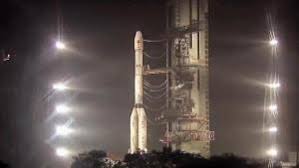
The satellite had been launched aboard a GSLV rocket on January 29, 2025.
Until recently, no formal explanation had been provided for the anomaly.
However, instead of releasing the complete report, ISRO issued only an accompanying press statement with limited details.
Technical Findings of the Apex Committee
An ‘apex’ committee determined that a signal intended to activate a crucial valve in the engine’s oxidiser linefailed to reach its destination.
This valve was essential for firing the engine required to raise the spacecraft to its designated orbit.
The probable cause was identified as a loose or failed electrical connection.
The malfunction impacted both the primary and backup signal lines, preventing transmission altogether.
While the disclosed information is technically relevant, it appears primarily useful for internal corrective measures.
Corrective Measures and Subsequent Success
ISRO stated that the lessons learned from the failure were successfully implemented in a later mission.
On November 2, 2025, the LVM-3 M5 launch vehicle successfully placed GSAT-7R, India’s heaviest communication satellite, into its intended orbit.
This success indicated that corrective steps had been undertaken effectively.
Concerns Regarding Transparency
Greater clarity and fuller disclosure were expected from the institution.
When information is released nearly a year after an event, the emphasis should be on clear illumination, not reluctant declassification.
ISRO should have explicitly clarified whether the issue arose from:
An oversight during assembly
Failures across inspection and quality control mechanisms
A manufacturing defect that evolved over time and went undetected
Need for Institutional Openness
Greater openness would enhance public trust and institutional credibility.
Transparency does not require assigning individual blame.
Sensitive proprietary or strategic details can remain protected while still ensuring meaningful disclosure.
Historically, publishing detailed Failure Analysis reports was routine practice.
Recent trends, however, suggest growing institutional insularity.
Broader Context and Future Direction
ISRO appears to have become more guarded following the back-to-back failures of PSLV missions in January and May 2025.
Beyond technical investigations, another committee has been set up to examine systemic issues behind these failures.
At a time when the global space industry is undergoing rapid transformation and disruption, ISRO must avoid retreating into isolation.
Instead, it should embrace structured transparency, institutional accountability, and reform-oriented governance.
When releasing information about an event a year later, the focus should be on illumination, not reluctant declassification
ISRO should have clarified whether the issue resulted from:
An oversight in assembly
Failure at multiple levels of inspection and quality control
A manufacturing anomaly that developed over time and escaped detection
Conclusion
The NVS-02 episode highlights the need for greater institutional transparency in India’s space programme. While corrective steps and subsequent mission success demonstrate technical resilience, limited public disclosure weakens confidence. In a rapidly evolving global space ecosystem, ISRO must combine scientific excellence with structured openness, robust quality control, and systemic reform to strengthen credibility, accountability, and long-term leadership.
Descriptive question:
- Examine the importance of institutional transparency, accountability, and systemic reform in India’s space programme. How can greater openness strengthen public trust without compromising strategic interests?
Article 2: Taking sides
Why in news: Prime Minister Narendra Modi’s recent Jerusalem visit upgraded India–Israel ties but sparked debate over India’s stance on Palestine and its broader strategic balance in West Asia.
Key Details
PM Narendra Modi’s Jerusalem visit upgraded India–Israel ties to a Special Strategic Partnership, with over 15 MoUs signed in critical sectors and labour mobility agreements.
The visit showed exceptional diplomatic warmth from Benjamin Netanyahu, strengthening bilateral optics amid Israel’s international criticism over Gaza and West Bank policies.
Modi’s speech supported a two-state solution indirectly, but avoided direct reference to Palestinian civilian casualties, raising questions about India’s balanced stance.
Regional initiatives like I2U2 and IMEC were reaffirmed, signalling India’s commitment to broader West Asian connectivity despite regional polarisation.
A visibly pro-Israel posture risks complicating India’s historically calibrated relations with other West Asian powers and its traditional support for Palestine.
Significance of the Visit
Prime Minister Narendra Modi’s 24-hour visit to Jerusalem marked an important bilateral outreach to Israel.
However, it was viewed as a missed opportunity to engage Palestine, carrying complex implications for India’s broader West Asia policy.
Israeli Prime Minister Benjamin Netanyahu had announced and actively facilitated the visit, reflecting Israel’s strong interest.
Mr. Netanyahu personally accompanied Mr. Modi throughout the engagements, signalling the warmth of ties.
Upgrading Bilateral Relations
After bilateral talks, both leaders upgraded ties to a “Special Strategic Partnership.”
Over 15 MoUs were signed, covering AI, agriculture, culture, education, and critical technologies.
India and Israel agreed to facilitate employment for 50,000 Indian workers in Israel over five years.
The diplomatic warmth exceeded even Mr. Modi’s 2017 Israel visit.
Geopolitical Timing and Political Context
The visit occurred as Israel faces growing international isolation over high civilian casualties in Gaza and controversial West Bank settlement plans.
Several countries, including Germany, France, and the U.K., have recently criticised Israel’s West Bank proposals.
Mr. Netanyahu heads into elections later this year, amid allegations of corruption and scrutiny over security lapses in 2023.
Mr. Modi’s visit could politically strengthen Mr. Netanyahu ahead of these elections.
India’s Position on the Israel–Palestine Conflict
In his address at the Knesset, Mr. Modi referred only indirectly to Palestinian sovereignty.
He endorsed the U.S.-led Gaza Peace Initiative supporting a two-state solution, calling it a pathway to durable peace.
While expressing solidarity with victims of the October 2023 Hamas attack, he did not mention the large civilian toll in Gaza.
Observers expect India to clarify its position, possibly through a follow-up visit to Palestine.
Regional and Strategic Implications
The visit took place amid heightened tensions, including potential U.S. military action against Iran, raising concerns about perceived alignment.
Mr. Modi announced renewed momentum for regional groupings such as:
India-Israel-UAE framework
I2U2 (India-Israel-UAE-U.S.)
India-Middle East-Europe Economic Corridor (IMEC)
These initiatives suggest India believes regional cooperation remains viable despite deep polarisation.
However, a strong pro-Israel stance could strain India’s relations with other West Asian powers.
Traditionally, India has maintained a carefully balanced approach, guided by principles of peace, strategic autonomy, and moral positioning in the Israel–Palestine conflict.
Conclusion
Prime Minister Modi’s visit underscores deepening India–Israel strategic ties but also highlights the delicate balance India must maintain in West Asia. While bilateral cooperation in technology, labour, and connectivity strengthens national interests, India’s long-standing support for Palestinian aspirations and regional stability requires careful diplomatic calibration to preserve credibility, strategic autonomy, and balanced engagement across the region.
Article 3: I2U2 Group
Why in news: I2U2 is in news due to renewed discussions on joint projects in food security, clean energy, and regional connectivity, amid evolving West Asian geopolitics and supply chain realignments.
Key Details
I2U2 brings together India, Israel, United Arab Emirates and United States for economic and strategic cooperation.
Focuses on food security, including UAE-backed integrated food parks in India using Israeli agri-tech and US innovation.
Promotes clean energy transition, especially large-scale solar and hybrid renewable projects.
Encourages technology, water management, space, and infrastructure collaboration through private-sector investment.
Represents a shift toward geo-economic minilateralism, prioritizing development partnerships over military alliances.
About I2U2
I2U2 stands for India, Israel, United Arab Emirates, and United States
Informally called the West Asian Quad
Launched at the leaders’ level in July 2022
Focused on economic, technological and strategic cooperation, not a military bloc
Member Countries
India
Israel
United Arab Emirates
United States
Background and Evolution
Originated from the “International Forum for Economic Cooperation” (October 2021) meeting of foreign ministers
Emerged after the Abraham Accords, which normalized relations between Israel and UAE
Reflects growing minilateralism in global politics (small, issue-based groupings)
Part of a broader U.S. strategy to deepen engagement in West Asia while reducing direct military footprint
Core Objectives
Promote joint investments in infrastructure
Ensure food security and supply chain resilience
Advance clean energy transition
Strengthen technological collaboration
Enhance private sector participation
Priority Sectors
Food Security
UAE to invest in integrated food parks in India
Use of Israeli agri-tech and American innovation
Aim: Stabilize regional food supply chains
Renewable Energy
Focus on solar and hybrid renewable projects
Proposed 300 MW clean energy project in Gujarat
Supports global climate commitments
Water & Agriculture Technology
Israeli expertise in drip irrigation and desalination
Climate-resilient farming techniques
Space Cooperation
Collaboration in satellite data, space research, and innovation
Transportation & Logistics
Strengthening connectivity between South Asia and West Asia
Complementary to emerging economic corridors
Strategic Significance
For India
Deepens engagement in West Asia (critical for oil, remittances, diaspora)
Attracts sovereign wealth fund investments from UAE
Strengthens ties with both Israel and Arab world simultaneously
Supports India’s ambition to become a global manufacturing and food hub
Enhances role in emerging multipolar order
For the United States
Promotes burden-sharing in the region
Counters rising influence of China through economic cooperation
Encourages regional stability via economic interdependence
For UAE and Israel
Expands economic footprint into Indian markets
Enhances technology collaboration
Diversifies strategic partnerships
Geopolitical Importance
Reflects shift from security-based alliances to geo-economic partnerships
Promotes issue-based coalitions instead of rigid blocs
Strengthens India’s position in both:
Indo-Pacific
West Asian strategic space
Nature of the Group
Not a military alliance
No formal treaty structure
Project-driven and flexible
Focus on practical outcomes rather than ideological alignment
Challenges
Regional instability in West Asia
Iran–Israel tensions
Balancing relations with other regional powers
Ensuring projects move beyond announcements to execution
Conclusion
I2U2 represents a new model of minilateral, economic-first diplomacy. It highlights India’s growing role as a bridge between West Asia and the Indo-Pacific, combining development, technology, and strategic cooperation in a rapidly changing global order.
Descriptive question:
- “I2U2 marks a shift from traditional military alliances to geo-economic minilateralism.” Discuss. (150 words, 10 marks)
