

28 February 2026 The Hindu Editorial
What to Read in The Hindu Editorial ( Topic and Syllabus wise)
Article 1: Bad publicity
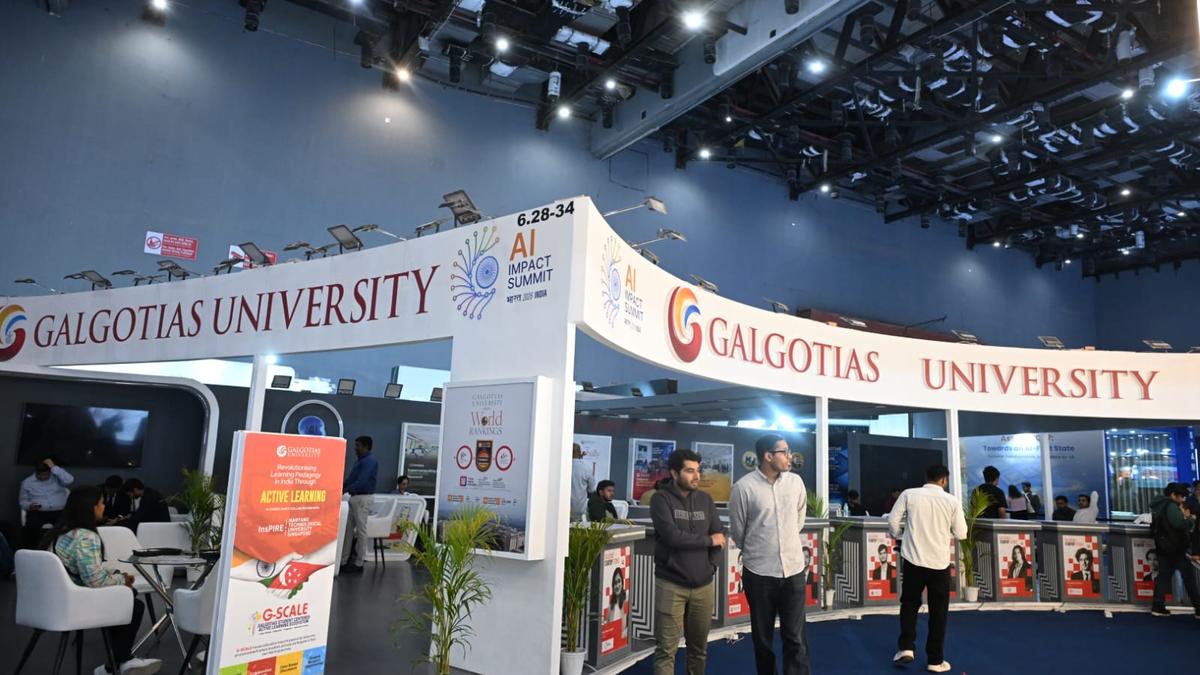
Why in news: The India AI Impact Summit 2026 is in news due to controversies over false innovation claims, VIP restrictions, and arrests of Youth Congress activists after a protest against the India–U.S. trade deal.
Key Details
India AI Impact Summit 2026 held in New Delhi to showcase AI advancements and global tech collaboration.
A private university falsely claimed a Chinese-made robot as its own innovation.
VIP culture and restricted access limited participation of developers and AI enthusiasts.
Indian Youth Congress activists staged a non-violent protest against the India–U.S. interim trade deal.
Delhi Police filed multiple serious charges, raising concerns about disproportionate action and shrinking space for dissent.
India AI Impact Summit 2026 – Purpose and Optics
The India AI Impact Summit 2026, held in New Delhi, was presented as a major gathering of global and Indian technology leaders.
It aimed to showcase AI advancements and raise public awareness about how artificial intelligence is transforming economies worldwide.
However, beyond its technological focus, the summit exposed certain flawed aspects of official conduct and public spectacle.
Controversies During the Summit
A private university falsely claimed a Chinese-made robot as its own innovation, raising concerns about credibility.
Several VIPs and officials dominated the event, limiting access for genuine product developers and AI enthusiasts on certain days.
The atmosphere reflected elements of exhibitionism and bureaucratic overreach, rather than pure technological promotion.
Political Protest and Its Fallout
Activists from the Indian Youth Congress (Congress Party) staged a non-violent flash mob-style protest at the venue.
The protest targeted the India–U.S. interim trade deal.
While using the summit platform for protest was arguably inappropriate, the reaction of authorities escalated tensions.
Police Action and Legal Escalation
The Delhi Police arrested the protesters and registered multiple serious charges.
Charges included rioting, promoting enmity, prejudicial assertions against national integration, criminal conspiracy, unlawful assembly, and common intention.
The wide range of charges appeared disproportionate to the peaceful nature of the protest.
The arrests triggered an unusual standoff between Delhi and Himachal Pradesh police, particularly over detentions in Shimla.
Pattern of Handling Dissent in Recent Years
In recent years, peaceful dissent has frequently been treated as criminal activity by Union and BJP-led State/UT governments.
Student activists protesting policies such as the Citizenship (Amendment) Act were charged under stringent laws and detained without trial.
There has been a perceived attempt to demonise dissent and silence opposition voices, including civil society groups.
Democracy and the Importance of Dissent
Dissent is a core pillar of democracy, especially in a country that gained independence through non-violent resistance and protest movements.
Equating peaceful protest with violent crime undermines democratic values.
Law enforcement authorities should avoid filing excessive or unrelated charges in cases of peaceful dissent.
Courts should carefully review such FIRs and ensure that constitutional freedoms are protected.
Conclusion
The India AI Impact Summit 2026 aimed to showcase technological progress but was marred by controversies, including false innovation claims and restricted access due to VIP culture. A peaceful protest by Indian Youth Congressactivists led to severe police charges, reflecting growing intolerance toward dissent. The episode highlights politicisation of public events and concerns over safeguarding democratic freedoms.
Descriptive question:
- Discuss how the events surrounding the India AI Impact Summit 2026 reflect the tension between technological promotion and democratic dissent in India. (15 marks, 250 words)
Article 2: Up in the air
Why in news: Charter aviation is in news after multiple recent crashes and a helicopter crash-landing, prompting the DGCA to tighten safety norms, enhance audits, and propose stricter oversight of non-scheduled operator.
Key Details
Multiple charter flight incidents in Baramati, Simaria, and the Andamans exposed safety concerns in India’s expanding non-scheduled aviation sector.
The DGCA oversees 133 Non-Scheduled Operators (NSOs) and has proposed safety-based ranking and mandatory public safety disclosures.
Stricter checks include CVR audits, ADS-B scrutiny, fuel record checks, and flight duty limits enforcement.
Past crashes linked to adverse weather highlight need for improved pilot training and weather awareness.
Sector faces weak audits, limited simulators, poor training standards, and regulatory staff shortages, requiring consistent enforcement and transparency.
Recent Flight Incidents Raise Alarm
Within a month, multiple aviation incidents occurred:
Two small aircraft crashes at Baramati (Maharashtra) and near Simaria (Jharkhand).
A helicopter crash-landing in the Andaman and Nicobar Islands.
These incidents highlight that charter aviation cannot remain lightly regulated.
The expanding charter sector requires stronger regulatory oversight.
Growth of Non-Scheduled Operators (NSOs)
The Directorate General of Civil Aviation (DGCA) lists 133 Non-Scheduled Operators (NSOs) (as of September 30, 2025).
NSOs operate both fixed-wing aircraft and helicopters.
A DGCA meeting with NSO permit holders on February 24 was long overdue.
Proposed Regulatory Reforms
DGCA plans to rank charter operators based on safety performance.
NSOs may be required to publicly disclose:
Aircraft age
Maintenance history
Pilot experience
Emphasis that commercial pressures (VIP schedules/business demands) must not compromise safety.
Focus on improving maintenance standards, especially for in-house facilities.
Introduction of stricter checks:
Cockpit Voice Recorder (CVR) audits
Fuel record verification
ADS-B data scrutiny
Enforcement of flight duty time limits
Greater accountability of senior management for systemic failures.
Role of Adverse Weather in Past Accidents
Weather has contributed to several charter accidents, including:
The Bell 430 helicopter crash (2009, Andhra Pradesh).
The Beechcraft C-90 King Air crash (2001) involving political leaders.
DGCA has directed recurrent pilot training to focus on:
Weather awareness
Decision-making in uncontrolled environments.
Structural Challenges in the Sector
Presence of some operators with poor safety records.
Gaps in:
Pilot training and aircraft-type experience
Availability of simulator training centres
Quality instructors
Strength of safety audits
The DGCA itself faces staff shortages in safety-critical departments.
Way Forward
The Civil Aviation Minister has proposed a thorough study of NSO operations, especially at uncontrolled airfields.
Effective reform requires:
Consistent enforcement
Transparent safety disclosures
Strong institutional commitment to aviation safety.
Conclusion
Recent charter flight incidents underscore urgent gaps in oversight, training, and accountability within India’s non-scheduled aviation sector. While the DGCA has proposed stronger audits, transparency norms, and safety-based rankings, reforms must move beyond announcements to strict, consistent enforcement. Ensuring adequate staffing, better pilot training, and management accountability is essential to restore confidence and safeguard passenger safety.
Article 3: High Seas Treaty
Why in news: The High Seas Treaty is in news as more countries move toward ratification, bringing it closer to entry into force and strengthening global efforts to conserve marine biodiversity beyond national jurisdictions.
Key Details
The High Seas Treaty (BBNJ Agreement, 2023) was adopted under the United Nations to protect biodiversity in areas beyond national jurisdiction.
It complements UNCLOS (1982) and covers nearly two-thirds of the world’s oceans.
Enables creation of Marine Protected Areas (MPAs) to achieve the 30×30 conservation target.
Mandates Environmental Impact Assessments (EIAs) for high seas activities.
Ensures equitable sharing of marine genetic resources and supports capacity building for developing countries.
About High Seas Treaty
The High Seas Treaty is a landmark international agreement adopted under the framework of the United Nationsin 2023.
Officially titled the Biodiversity Beyond National Jurisdiction (BBNJ) Agreement, it aims to protect marine life in areas beyond national boundaries.
It complements the United Nations Convention on the Law of the Sea (UNCLOS).
Covers nearly two-thirds of the world’s oceans, known as the high seas.
Why the Treaty Was Needed
High seas account for nearly 95% of ocean volume but lacked a comprehensive biodiversity protection framework.
Increasing threats:
Overfishing and illegal fishing
Deep-sea mining
Marine pollution and plastic waste
Climate change impacts (warming & acidification)
Fragmented governance under multiple sectoral bodies created regulatory gaps.
Core Objectives
Ensure conservation and sustainable use of marine biological diversity.
Establish a legal framework for creating Marine Protected Areas (MPAs) on the high seas.
Regulate access to and sharing of Marine Genetic Resources (MGRs).
Strengthen Environmental Impact Assessments (EIAs) for high seas activities.
Promote capacity building and technology transfer for developing countries.
Key Provisions
Marine Protected Areas (MPAs)
Allows countries to designate MPAs in international waters.
Aims to protect at least 30% of oceans by 2030 (30×30 target).
Decisions taken through a Conference of Parties (COP) mechanism.
Marine Genetic Resources (MGRs)
Regulates access to genetic material from marine organisms.
Ensures fair and equitable benefit-sharing, especially for developing nations.
Addresses concerns over monopolisation by technologically advanced countries.
Environmental Impact Assessments (EIAs)
Mandatory EIAs for activities that may cause significant harm.
Enhances transparency and scientific scrutiny before exploitation.
Capacity Building & Technology Transfer
Supports developing countries with:
Marine research infrastructure
Data-sharing mechanisms
Scientific training
Promotes equitable participation in ocean governance.
Institutional Framework
Establishes:
A Conference of Parties (COP) for decision-making
A Scientific and Technical Body
A Secretariat
Encourages cooperation with regional fisheries and maritime organisations.
Significance for India
India, as a maritime nation with a vast coastline and blue economy ambitions, benefits from:
Stronger global ocean governance
Protection of marine biodiversity
Access to marine genetic resources
Aligns with India’s commitment to sustainable development and climate action.
Challenges and Concerns
Balancing conservation vs commercial interests (fishing, mining, shipping).
Enforcement in international waters remains complex.
Need for ratification by at least 60 countries for entry into force.
Potential geopolitical competition over deep-sea resources.
Way Forward
Early ratification and domestic legal alignment.
Strengthening marine scientific research collaboration.
Enhancing monitoring using satellite and digital tracking systems.
Integrating treaty goals with the Sustainable Development Goal 14 (Life Below Water) framework.
Conclusion
The High Seas Treaty marks a historic step toward strengthening global ocean governance and conserving biodiversity beyond national jurisdictions. By enabling marine protected areas, regulating genetic resources, and mandating environmental impact assessments, it fills long-standing legal gaps under UNCLOS. However, its success will depend on timely ratification, effective enforcement, and genuine international cooperation to balance conservation with sustainable use.
EXPECTED QUESTIONS FOR PRELIMS:
Consider the following statements regarding the High Seas Treaty (BBNJ Agreement):
It was adopted under the framework of the United Nations Convention on the Law of the Sea (UNCLOS).
It applies to marine areas within the Exclusive Economic Zones (EEZs) of coastal states.
It provides for the creation of Marine Protected Areas (MPAs) in areas beyond national jurisdiction.
Which of the statements given above is/are correct?
(a) 1 and 3 only
(b) 2 and 3 only
(c) 1 only
(d) 1, 2 and 3
Answer: a
