
What Is Financial Literacy And Why Is It Important For Banking Exams
BANKING AWARENESS AND FINANCIAL KNOWLEDGE
What is Financial Literacy?
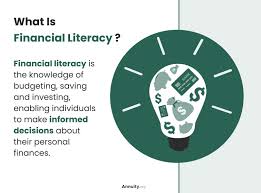
Financial Literacy refers to the knowledge and understanding of financial concepts, products, and systems that allow individuals to make informed and effective financial decisions.
It includes the ability to:
- Manage personal finances
- Understand banking and investment products
- Handle credit and debt responsibly
- Plan for long-term goals like retirement, education, or home ownership
- Protect oneself against frauds and financial risks
Key Components of Financial Literacy
|
Why is Financial Literacy Important for Banking Exams?
1. Core Syllabus in Awareness Sections
In exams like IBPS PO/Clerk, SBI PO/Clerk, RBI Assistant, and NABARD, the General Awareness /
Financial Awareness section includes:
|
Topics from Financial Literacy |
Appearance in Exams |
|
Basics of Banking |
Frequently asked (Bank types, RBI functions) |
|
Financial Products |
Questions on PPF, NSC, Mutual Funds, etc. |
|
Digital Payments |
UPI, IMPS, NEFT, QR codes |
|
Government Schemes |
PMJDY, PMJJBY, APY, Mudra Yojana |
|
Financial Abbreviations |
CRR, SLR, NPA, GDP, etc. |
|
Recent Financial News |
RBI Monetary Policy, Budget Highlights, Repo Rate changes |
Scoring well in this section improves overall marks and chances of selection.
2. Bank Interview Questions
Panel interviewers often test candidates’ financial literacy through questions like:
- How does a savings account differ from a current account?
- What are the benefits of a PPF account?
- What is the difference between NEFT and IMPS?
- How does the RBI control inflation?
- What is financial inclusion?
Good financial knowledge shows readiness for a banking career.
3.Banking Professionals Need It Daily
Even after selection, financial literacy is crucial on the job:
|
Role |
Financial Literacy Usage |
|
Clerk |
Explaining financial products to customers |
|
PO |
Evaluating loan proposals, advising customers |
|
SO (Marketing, IT, Credit) |
Creating campaigns, assessing credit, implementing digital services |
Examples of Financial Literacy Questions in Banking Exams
|
Sample Question |
Answer |
|
What is the full form of NEFT? |
National Electronic Funds Transfer |
|
Which financial product offers a fixed return for a fixed period? |
Fixed Deposit |
|
What is the current repo rate set by RBI? |
Varies with latest policy |
|
What is CIBIL Score used for? |
Assessing creditworthiness for loans |
|
What does PMJDY stand for? |
Pradhan Mantri Jan DhanYojana |
Regularly reading newspapers and RBI updates boosts your awareness.
Benefits of Financial Literacy for Aspirants
|
Benefit |
Explanation |
|
Exam Readiness |
Direct questions from financial literacy topics |
|
Better Interview Performance |
Shows confidence and practical knowledge |
|
Career Confidence |
Easier transition from student to banker |
|
Personal Finance Management |
Helps manage your own salary, savings, and investments post-joining |
How to Improve Financial Literacy for Exams
|
Source |
Use |
|
RBI Website |
Learn policy, functions, and regulations |
|
Financial Express / The Hindu Business Line |
For daily updates |
|
Banking Awareness Books |
Lucent, Arihant, and Banking Digest |
|
YouTube Channels / Podcasts |
CA Guruji, StudyIQ, RBI Kehta Hai |
|
Mock Tests & PDFs |
Practice MCQs on Adda247, Testbook, Gradeup |
Must-Know Financial Terms for Exams
|
Term |
Meaning |
|
Repo Rate |
Rate at which RBI lends to banks |
|
CRR/SLR |
Regulatory reserve requirements |
|
KYC |
Know Your Customer – identity verification |
|
NPA |
Non-Performing Asset – loan not repaid |
|
Debit vs Credit Card |
Debit = own money; Credit = borrowed money |
|
FD/RD |
Fixed Deposit / Recurring Deposit |
Conclusion
Financial literacy is the backbone of both your banking exam preparation and banking career.
“A financially literate candidate is not only an ideal banker but also a well-informed citizen.”
Mastering it helps in:
- Cracking awareness sections
- Answering confidently in interviews
- Understanding your role after selection
- Managing your own finances smartly
