

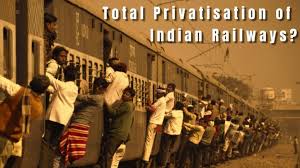
How Privatization Is Impacting The Future Of Indian Railways
The Indian Railways has long been a symbol of national integration and public service in India. As one of the largest rail networks globally, it has traditionally operated as a government-owned entity focused on affordability and accessibility. However, in recent years, privatization and private participation have emerged as key strategies aimed at modernization, efficiency, and financial sustainability.
This article provides a detailed analysis of how privatization is shaping the future of Indian Railways—its benefits, challenges, and long-term implications.
1. Understanding Privatization in Indian Railways
Privatization in Indian Railways does not mean complete transfer of ownership to private companies. Instead, it refers to partial privatization or Public-Private Partnerships (PPP) where private players participate in specific areas such as:
- Train operations
- Station redevelopment
- Infrastructure development
- Freight services
The government still retains ownership and regulatory control.
2. Key Areas of Private Participation
a. Private Train Operations
The government has allowed private companies to operate select passenger trains on certain routes. These trains aim to provide:
- Better onboard services
- Modern coaches
- Improved punctuality
A prominent example is the introduction of premium trains operated by subsidiaries like Indian Railway Catering and Tourism Corporation (IRCTC), which operates trains such as Tejas Express.
b. Station Redevelopment
Private firms are being invited to modernize railway stations into world-class hubs with:
- Shopping complexes
- Food courts
- Improved passenger amenities
Projects are managed through PPP models, where private players invest and earn revenue through commercial activities.
c. Freight Sector Reforms
The freight segment has seen increasing private participation through:
- Dedicated freight corridors
- Private container operators
- Logistics parks
This has improved efficiency and reduced congestion.
d. Infrastructure Development
Private investment is being encouraged in:
- High-speed rail projects
- Electrification
- Track modernization
These initiatives aim to bring global standards to Indian Railways.
3. Advantages of Privatization
a. Improved Efficiency
Private companies often operate with:
- Better management practices
- Performance-driven systems
This can lead to:
- Reduced delays
- Faster services
b. Enhanced Passenger Experience
Privately operated services focus on:
- Cleanliness
- Catering quality
- Customer service
This improves overall travel experience.
c. Investment and Modernization
Privatization attracts large-scale investment, reducing the financial burden on the government and accelerating modernization.
d. Innovation and Technology
Private players introduce:
- Digital ticketing systems
- Smart infrastructure
- Advanced safety technologies
4. Challenges and Concerns
a. Fare Increase
One major concern is that private operators may increase ticket prices, making travel less affordable for common people.
b. Social Responsibility
Unlike private firms, Indian Railways has a social obligation to:
- Serve remote areas
- Provide subsidized travel
Privatization may weaken this focus.
c. Job Security
Railway employees fear:
- Job losses
- Contractual employment replacing permanent jobs
This has led to resistance from unions.
d. Unequal Development
Private players may focus only on profitable routes, neglecting less lucrative regions.
5. Impact on Employees and Workforce
Privatization could significantly change workforce dynamics:
- Increased demand for skilled labor
- Performance-based contracts
- Reduced government job security
However, it may also create new employment opportunities in allied sectors.
6. Global Comparisons
Countries like:
- United Kingdom
- Japan
Have experimented with railway privatization.
For instance:
- Japan Railways Group achieved high efficiency and profitability
- The UK model faced criticism due to high fares and fragmentation
India aims to adopt a balanced approach, learning from these examples.
7. Government’s Approach
The Indian government is focusing on strategic privatization, not full privatization.
Key initiatives include:
- Allowing private train operators on selected routes
- Monetizing railway assets
- Encouraging PPP investments
The goal is to combine public control with private efficiency.
8. Future Outlook
Privatization is likely to shape Indian Railways in several ways:
a. Hybrid Model
A mix of public ownership and private participation.
b. World-Class Infrastructure
Modern stations and faster trains.
c. Increased Competition
Better services due to competition among operators.
d. Digital Transformation
Integration of AI, automation, and smart systems.
9. Balancing Growth and Inclusivity
The biggest challenge will be maintaining:
- Affordable fares
- Nationwide connectivity
- Social equity
While embracing modernization.
Conclusion
Privatization is transforming the future of Indian Railways by introducing efficiency, investment, and innovation. However, it also raises important concerns regarding affordability, job security, and social responsibility.
The success of this transformation depends on how well India balances public welfare with private efficiency. A carefully regulated and inclusive approach can ensure that Indian Railways continues to serve as both an economic engine and a lifeline for millions.
