

Understanding The Role Of Different RRB Zones In Indian Railways
The Indian Railways is one of the largest railway networks in the world, employing over a million people and connecting the length and breadth of the country. Managing recruitment for such a vast organization is a complex task—this is where the Railway Recruitment Boards (RRBs) come in. Divided into multiple zones across India, RRBs play a crucial role in hiring personnel efficiently and regionally.
This article explores the structure, purpose, and functioning of different RRB zones and how they contribute to the smooth operation of Indian Railways.
1. What Are RRB Zones?
Railway Recruitment Boards (RRBs) are regional offices set up by the Government of India under the Ministry of Railways. Their primary responsibility is to recruit Group C (non-gazetted) staff for Indian Railways.
Each RRB operates within a specific geographical zone, ensuring:
- Efficient recruitment processes
- Better accessibility for candidates
- Region-specific administration
2. Why Are There Multiple RRB Zones?
India’s size and diversity make centralized recruitment impractical. Multiple RRB zones help in:
a. Decentralization
Instead of one central authority, recruitment is distributed across regions to reduce workload and delays.
b. Regional Accessibility
Candidates can apply through the nearest RRB, making exams and communication easier.
c. Language & Cultural Adaptation
RRBs conduct exams in multiple regional languages, improving inclusivity.
d. Administrative Efficiency
Each board handles a manageable number of applicants, improving speed and accuracy.
3. List of Major RRB Zones
There are 21 RRBs across India, each covering specific regions. Some key ones include:
- RRB Ahmedabad
- RRB Ajmer
- RRB Allahabad (now Prayagraj)
- RRB Bangalore
- RRB Bhopal
- RRB Bhubaneswar
- RRB Bilaspur
- RRB Chandigarh
- RRB Chennai
- RRB Gorakhpur
- RRB Guwahati
- RRB Jammu & Srinagar
- RRB Kolkata
- RRB Malda
- RRB Mumbai
- RRB Muzaffarpur
- RRB Patna
- RRB Ranchi
- RRB Secunderabad
- RRB Siliguri
- RRB Thiruvananthapuram
Each of these serves candidates within its jurisdiction but follows standardized guidelines.
4. Structure and Functioning of RRBs
a. Organizational Structure
Each RRB consists of:
- Chairman
- Members
- Secretary
- Supporting staff
They operate under the Railway Recruitment Control Board (RRCB), which ensures uniform policies.
b. Key Functions
1. Recruitment Notifications
RRBs release official job notifications for posts such as:
- Assistant Loco Pilot (ALP)
- Technician
- Junior Engineer (JE)
- Non-Technical Popular Categories (NTPC)
- Group D staff
2. Conducting Exams
They organize:
- Computer-Based Tests (CBT)
- Skill tests
- Physical efficiency tests (for certain posts)
3. Result Processing
RRBs evaluate candidates and publish:
- Merit lists
- Cut-off marks
- Final selection lists
4. Document Verification
Ensuring candidates meet eligibility criteria before final appointment.
5. Role of RRB Zones in Recruitment Process
The recruitment process is centralized in design but decentralized in execution.
Step-by-Step Role:
- Central Notification
Issued jointly but managed region-wise. - Application Allocation
Candidates choose their preferred RRB zone. - Exam Management
Each RRB conducts exams in its region. - Evaluation
Done locally but based on national standards. - Final Allotment
Candidates are assigned to railway zones/divisions.
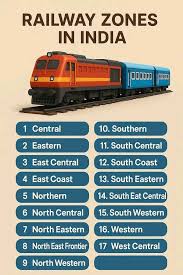
6. Difference Between RRB Zones and Railway Zones
This is a common confusion:
|
Aspect |
RRB Zones |
Railway Zones |
|
Purpose |
Recruitment |
Train operations |
|
Function |
Hiring staff |
Running trains |
|
Authority |
Ministry of Railways |
Indian Railways divisions |
|
Example |
RRB Chennai |
Southern Railway |
So, RRBs recruit employees, while railway zones manage train operations.
7. Importance of RRB Zones
a. Fair Recruitment
RRBs ensure transparency with standardized exams and procedures.
b. Massive Employment Generation
They recruit lakhs of candidates, making Indian Railways one of the largest employers.
c. Regional Representation
Candidates from different states get opportunities within their regions.
d. Efficient Workforce Allocation
Ensures the right number of employees are hired for different regions.
8. Challenges Faced by RRB Zones
Despite their importance, RRBs face several challenges:
a. High Competition
Millions apply for limited posts, increasing pressure on the system.
b. Exam Logistics
Managing large-scale exams across multiple cities is complex.
c. Delays
Recruitment cycles can sometimes be lengthy.
d. Technological Issues
Online exams require robust infrastructure.
9. Recent Developments in RRB Recruitment
- Shift to Computer-Based Testing (CBT)
- Increased transparency through online result systems
- Centralized notifications for uniformity
- Use of normalization techniques in scoring
10. How to Choose the Right RRB Zone
Candidates should consider:
- Proximity to home
- Language comfort
- Competition levels (though largely uniform)
- Preferred posting region
Conclusion
RRB zones are the backbone of the recruitment system in Indian Railways. By decentralizing recruitment across regions, they ensure efficiency, fairness, and accessibility for millions of job aspirants across the country.
Understanding how these zones function not only helps candidates navigate the recruitment process better but also highlights the scale and complexity of managing one of the world’s largest railway networks.
